
Lieferung heute & morgen

Qualitätsgarantie

Willkommens-Angebote freischalten: KOSTENLOSE Lieferung | Bis zu 80 % RABATT | Kostenlose 30-Tage-JoyPlus-Testphase
App herunterladen
Long hours at a desk are a daily reality for many professionals and students. An unsuitable chair can quickly lead to back and neck tension and impair concentration. An ergonomic office chair is designed to support the body and promote a healthy sitting posture.
This article serves as a guide. We will introduce a selection of models and explain which features are important when choosing a new chair for your home office or workplace. Our goal is to provide you with objective information so you can make an informed decision.
The right choice of chair depends on individual needs. Three key criteria can make your decision easier.
An ergonomic desk chair should adapt to your body, not the other way around. Look for the following adjustable components:
The maximum weight capacity is an important indicator of a chair's stability and durability. Models like an executive chair for up to 150 kg are often equipped with reinforced components. Look for certifications such as BIFMA or SGS for gas lifts and chair bases. These standards confirm that the components have been tested for safety and long-term durability.
Sitting rigidly for long periods places one-sided strain on the body. An office chair with a rocking function or synchronous mechanism encourages movement. The rocking function allows the backrest to tilt backwards, while a synchronous mechanism coordinates the tilt of the seat and backrest. This stimulates circulation and relieves pressure on the intervertebral discs.
Based on the criteria above, we have compiled a selection of models that stand out for their functional features.
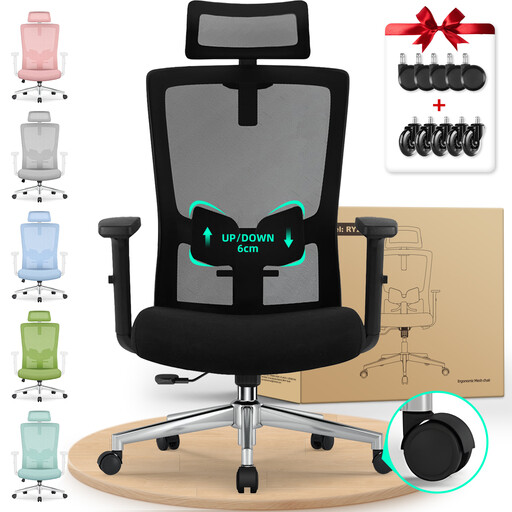
What sets it apart: This model combines a high weight capacity with comprehensive adjustment options. The S-shaped backrest is modelled on the human spine. According to the manufacturer, the gas lift and base are BIFMA and SGS certified and tested for over 120,000 cycles. The backrest can be tilted up to 135° and locked in the upright position.
Pros:
Best for: Individuals who need a robust and versatile chair for long workdays and value a high maximum weight capacity.

What sets it apart: This model is a practical solution for the home office, especially where space is limited. The flip-up armrests allow the chair to be pushed neatly under the desk to save space. Despite its slim design, it offers adjustable lumbar support and a tilt function from 90° to 105°.
Pros:
Best for: Users in home offices or smaller office spaces who are looking for a functional chair with space-saving features.
View the Ochama Mesh Swivel Chair
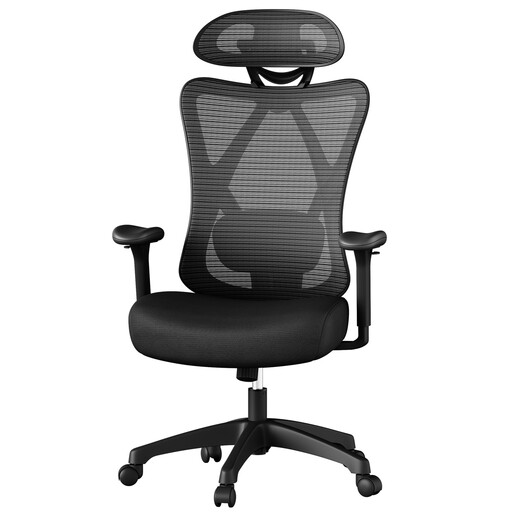
What sets it apart: This chair is designed for high weight capacity and flexible adjustment. It supports a weight of up to 150 kg and offers numerous adjustment options, including an adjustable headrest, armrests, and a soft lumbar pillow to support the lower back. The backrest can be locked at multiple angles to accommodate various postures, from focused work to relaxed reclining.
Pros:
Best for: Users who require a chair with a high load capacity and maximum flexibility in adjustments for various tasks at their desk.
View the Ochama Computer Chair
The models presented already cover many requirements. However, if you are looking for more specific features, such as an integrated footrest or different designs, you can find more alternatives in our broader selection.
? Explore our entire category of Fully Adjustable Office Chairs with Footrests.
An office chair is considered ergonomic if it can be adapted to the user's individual body measurements and needs. Key features include adjustable seat height, seat depth, customisable armrests, and a backrest with integrated lumbar support. Additionally, mechanisms for dynamic sitting (e.g., rocking or synchronous mechanisms) encourage movement and prevent rigid postures.
A basic setup can be done in a few simple steps:
Lumbar support is an essential feature of an ergonomic chair. It fills the gap between the backrest and the natural inward curve of the lumbar spine. This helps to stabilise the lower back and prevents the user from slumping into a rounded-back posture. This can reduce the strain on the intervertebral discs and contribute to a more upright sitting position.