
Lieferung heute & morgen

Qualitätsgarantie

Willkommens-Angebote freischalten: KOSTENLOSE Lieferung | Bis zu 80 % RABATT | Kostenlose 30-Tage-JoyPlus-Testphase
App herunterladen
Long days at a desk, whether in the office or at home, place significant strain on the body. Poor posture often leads to tension in the neck and back. An ergonomic office chair is designed to support the body and promote a healthy posture. This article serves as a guide to help you understand the essential features of a suitable chair and make an informed decision.
Selecting the right model depends on your individual needs. Two key aspects are adjustability and material quality.
A chair is only truly ergonomic if it can be adapted to your body. Look for the following features:
The materials determine not only the chair's durability but also its comfort during long periods of use.
Based on the criteria mentioned, we have selected a few models that stand out for their functionality and adaptability.
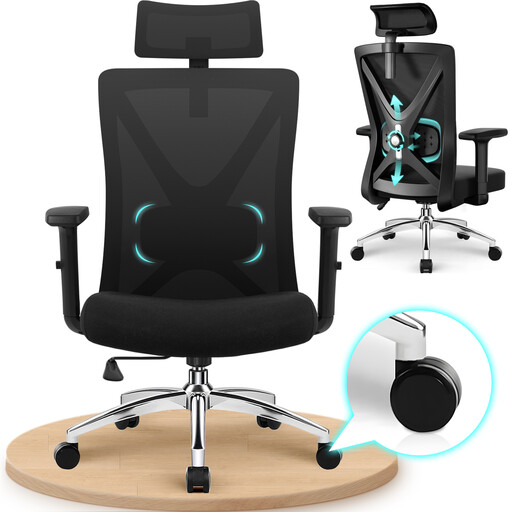
View Product: GTIMEX Ergonomic Office Chair
Why it stands out: This model is distinguished by its extensive adjustment options, particularly the lumbar support, which is adjustable in height (up to 6 cm) and depth (up to 3 cm). The S-shaped backrest is designed to support the natural curve of the spine.
Pros:
Who is it for? This chair is an excellent choice for individuals who spend many hours at their desk and require precise, customisable support for the lumbar region. Its high load capacity makes it a robust home office chair for daily use.
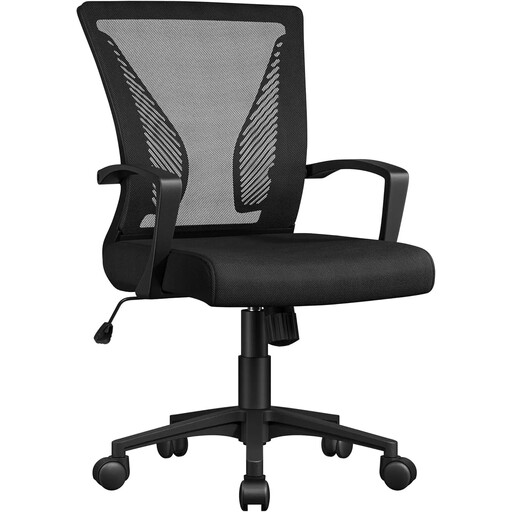
View Product: Yaheetech Ergonomic Office Chair
Why it stands out: The Yaheetech office chair offers a solid foundation for ergonomic sitting. Its focus is on functionality and breathability, achieved through the full mesh upholstery on both the backrest and seat.
Pros:
Who is it for? This model is suitable for users looking for a functional and breathable office chair for their study or workspace. It covers the essential ergonomic requirements without complex additional features, making it a practical solution for students and professionals alike.
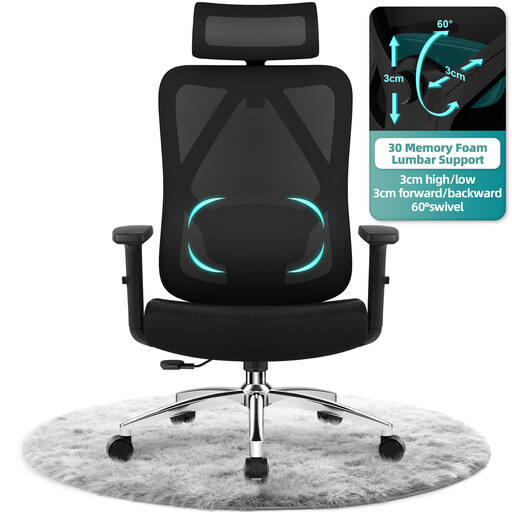
View Product: GTIMEX Ergonomic Executive Chair
Why it stands out: This chair combines a very high load capacity with advanced adjustment features. The 3D-adjustable memory foam lumbar support and the aluminium alloy base set it apart from other models.
Pros:
Who is it for? This executive chair is designed for demanding users who require maximum stability and a very high weight capacity. The advanced 3D lumbar support and lockable recline angles make it ideal for individuals who work long hours in various sitting positions.
Didn't find the right model, or are you looking for more specialised solutions? An orthopaedic seat can be a valuable addition or alternative.
Discover our other seating solutions here.
An office chair is considered ergonomic when it has multiple adjustment options to fit the user's individual body dimensions and needs. These include an adjustable seat height, seat depth, backrest, armrests, and customisable lumbar support. The goal is to support a natural, healthy posture and minimise physical strain.
Lumbar support is a central feature of an ergonomic office chair. It fills the gap between the backrest and the natural curve of the lumbar spine. This prevents the lower back from slumping and adopting an unhealthy, rounded posture. A well-adjusted support reduces pressure on the spinal discs and can help prevent back pain.
Start with the seat height, ensuring your feet are flat on the floor. Adjust the seat depth so there is a gap of about two to three fingers' width between the back of your knees and the edge of the seat. Fit the lumbar support to the curve of your lower back. The armrests should be positioned so that your forearms rest at a 90-degree angle and your shoulders are relaxed. The backrest should support your upper body, with a slightly reclined position often being the most comfortable.