
Lieferung heute & morgen

Qualitätsgarantie

Willkommens-Angebote freischalten: KOSTENLOSE Lieferung | Bis zu 80 % RABATT | Kostenlose 30-Tage-JoyPlus-Testphase
App herunterladen
A suitable office chair is the foundation for focused and physically supportive work. Anyone who spends many hours at a desk every day knows the consequences of poor posture: neck tension, lower back pain, and waning concentration. However, the market for ergonomic office chairs is overwhelming and full of marketing promises that often obscure more than they clarify.
As your Joybuy Product Recommendation Officer, I will help you identify the crucial features and avoid common purchasing pitfalls. This guide shows you what really matters when making your selection, so you can make an informed decision for your health and productivity.
Before we delve into the important features, let's highlight the three most common traps that lead to bad purchases.
To avoid these pitfalls, you should focus your attention on three core areas. These objective criteria will help you separate the wheat from the chaff.
The human spine has a natural S-curve (lordosis) in the lumbar region. An office chair with lumbar support is designed to stabilise this exact area and reduce pressure on the intervertebral discs. Effective lumbar support is more than just a curve in the backrest. Make sure it is height-adjustable so you can position it precisely at the correct point on your lower back. Some models even offer depth-adjustable support for even more precise customisation.
A height-adjustable desk chair is an absolute must. Your feet should be able to rest flat on the floor while your knees form an angle of about 90 degrees. But the mechanics go further:
The stability of a chair is directly related to the quality of its components.
Based on the criteria mentioned, we have identified a few models that are suitable for different user profiles and requirements.
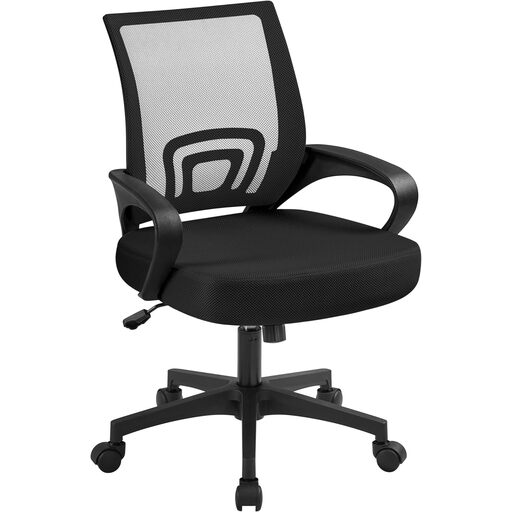
Why This Fits Their Persona: Ideal for students or home office beginners looking for a functional and affordable entry-level solution. The chair focuses on essential ergonomic features without costly extras.
It avoids the pitfall of inferior components with a gas lift that, according to the manufacturer, has passed SGS and BIFMA tests. The focus is on core functions rather than unnecessary design.
Breathable mesh backrest and integrated lumbar support. The weight capacity of up to 136 kg offers a solid foundation for its price.
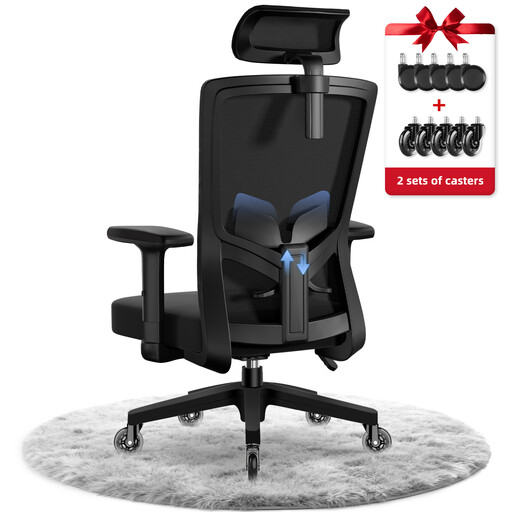
Why This Fits Their Persona: Perfect for individuals who work more than eight hours a day at their desk and require maximum adjustability to prevent back problems.
This chair avoids the "one-size-fits-all" trap through comprehensive adjustment options: the headrest, armrests, and the 6 cm adjustable lumbar support allow for precise personalisation.
High weight capacity of up to 150 kg thanks to a BIFMA and SGS-certified gas lift. The S-shaped backrest actively supports the natural shape of the spine.
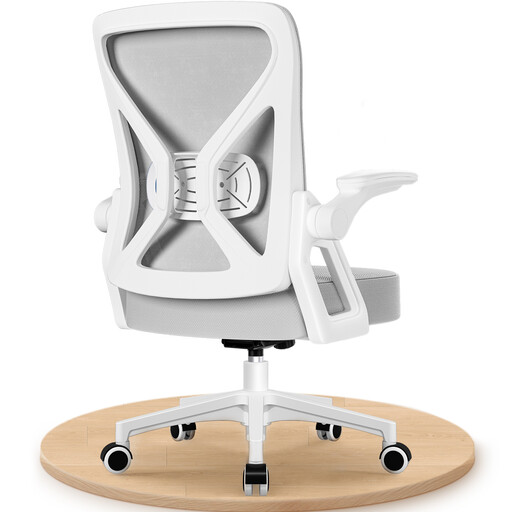
Why This Fits Their Persona: Suitable for users in smaller apartments or multi-functional spaces where the chair needs to be stored away to save space after work.
It avoids the trap of bulky designs by offering a genuinely useful feature: the flip-up armrests are a practical advantage, not just a design gimmick.
The flip-up armrests allow it to be stored under almost any desk. It also offers a solid set of basic features, including a rocking function, adjustable lumbar support, and a weight capacity of up to 150 kg.
We have compiled a complete, up-to-date list of products that fully meet these strict selection criteria and comply with relevant safety standards.
Correct adjustment is crucial for ergonomic benefit. Follow these steps:
The lifespan heavily depends on the intensity of use and the quality of the components. Models with certified components (e.g., BIFMA/SGS for the gas lift) and a robust metal base generally last longer. For daily use in a home office, a high-quality chair can have a lifespan of five to ten years. Pay attention to the warranty period offered by the manufacturer.
Both materials have their pros and cons. A mesh office chair is ideal for people who tend to sweat or work in warmer environments, as it offers unmatched breathability. A padded chair can provide a softer, more cushioned feel. However, the quality of the foam is critical: high-density cold foam is more dimensionally stable and durable than simple foam, which quickly loses its volume. The choice ultimately comes down to personal preference and the work environment.