By a Joybuy Product Recommendation Officer, August 28, 2026
Long hours at a desk, whether in a home office or a corporate setting, often lead to one central question: How do I find a chair that won't cause tension and discomfort after just a few months? The office chair market is saturated, and many products fail to deliver on their marketing promises. Before you make a purchase, it's crucial to understand the common pitfalls that can lead to a bad investment.
- Pitfall 1: The 'Ergonomic' Empty Promise: Many chairs are advertised as ergonomic but lack the necessary adjustment features. A truly back-friendly office chair must adapt to your body, not the other way around. If adjustable supports or a customisable seat are missing, the term is just an empty marketing buzzword.
- Pitfall 2: Poor Material Quality in Critical Components: A weak gas lift, an unstable base, or casters that scratch the floor are common defects in cheaper models. These components are essential for safety and longevity. A chair whose gas lift loses pressure after a year is not a sustainable purchase.
- Pitfall 3: The 'One-Size-Fits-All' Illusion: An office chair is like a pair of shoes—it has to fit. A model designed for someone who is 1.90 m (6'3") tall may be unsuitable for someone who is 1.60 m (5'3"). A lack of information on recommended user height or a non-adjustable seat depth often leads to an unhealthy posture.
What Really Matters When Making Your Choice
To avoid these pitfalls, you should focus on verifiable, technical features. These parameters determine whether a desk chair is truly ergonomic and suitable for prolonged sitting.
1. Individual Adjustability: The Foundation of Ergonomics
Adaptability is the most important criterion. A chair should offer at least the following adjustment options to provide optimal body support:
- Lumbar Support: A height-adjustable (and ideally depth-adjustable) chair with lumbar support is essential. It supports the natural S-curve of the lumbar spine and prevents lower back pain.
- Head and Neck Rest: A swivel chair with a headrest and armrests relieves tension in the neck and shoulder muscles, especially during reclined periods. The headrest should be adjustable in height and angle.
- Armrests: Height-adjustable armrests allow you to rest your forearms at a right angle to the desk surface. This relaxes the shoulders and prevents tension.
- Seat Height and Depth: The seat height must be adjustable so that your feet are flat on the floor and your thighs are parallel to it. An adjustable seat depth ensures there is a gap of about three fingers between the back of your knees and the front edge of the seat.
2. Load Capacity and Certified Safety
The maximum load capacity is a direct indicator of the stability and quality of the components used. For high durability and safety, an office chair with a 150 kg capacity is a solid choice, even if your own body weight is significantly lower. Look for recognised safety certificates:
- BIFMA/SGS Certification: These standards confirm that components like the gas lift, base, and casters have undergone extensive stress and endurance tests. A certified gas lift offers protection against sudden sinking.
3. Seat Mechanism for Active Sitting
Static sitting fatigues the body. A good seat mechanism encourages movement and supports a dynamic posture.
- Rocking Function: An executive chair with a rocking function allows you to tilt the backrest, providing short-term relief. The angle between the seat and the backrest usually remains the same.
- Synchronous Mechanism: With this more advanced mechanism, the backrest and seat tilt in a coordinated ratio. This opens up the seating angle, promotes circulation, and supports the body with every movement. This feature is particularly recommended for an office chair for long hours of sitting.
Top Picks for Different Users
Based on these objective criteria, we have identified several models that are suitable for different needs and budgets.
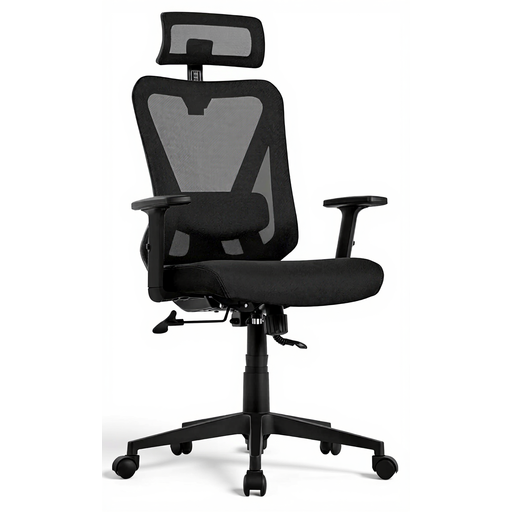
MATCH FOR: Budget-Conscious Beginners
Why it's a match: Ideal for a first home office or for students who need a solid ergonomic foundation without a major investment. It offers the essential adjustments for healthy posture during moderate daily use.
How It Avoids the Pitfall
This model goes beyond a simple marketing label by offering concrete, adjustable components like a customisable headrest (8 cm height, 45° tilt) and lumbar support.
Key Advantage
Its EN1335 and SGS certification for a load capacity of up to 136 kg provides proven stability and safety, which is not a given in this price range.
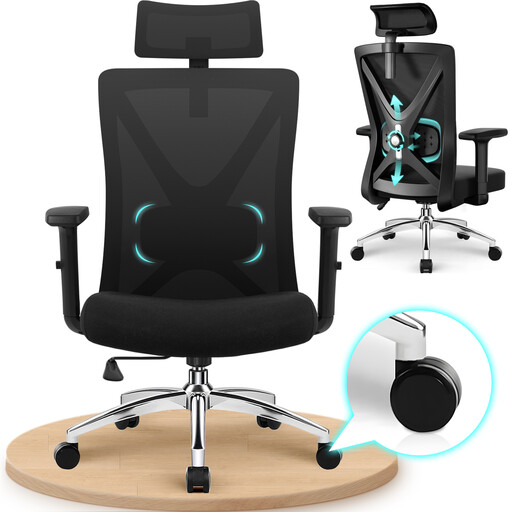
MATCH FOR: Intensive, All-Day Users
Why it's a match: Designed for individuals who spend eight hours or more at their desk each day. The advanced adjustment options, particularly the lumbar support, allow for precise customisation to the individual's spinal shape.
How It Avoids the Pitfall
This model refutes the "one-size-fits-all" assumption with a lumbar support that is adjustable in height (6 cm) and depth (3 cm). This 3D customisation is crucial for personalised support.
Key Advantage
The combination of an S-shaped backrest, breathable mesh back, and depth-adjustable lumbar support offers an excellent balance of support and climate comfort for long sitting sessions.
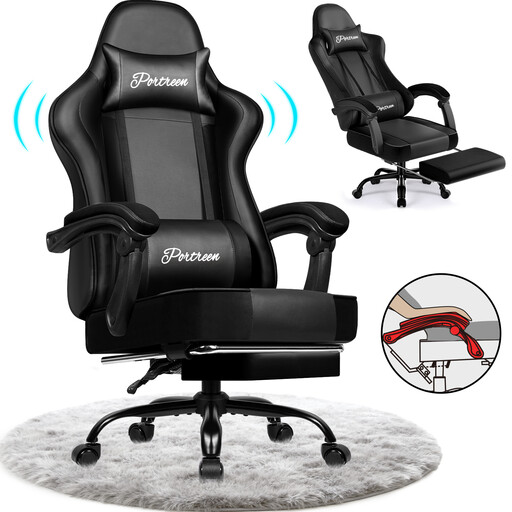
MATCH FOR: Work and Relaxation
Why it's a match: For users who need one chair for focused work and relaxed breaks or gaming sessions. The deep-reclining backrest and integrated footrest offer functionality that goes beyond a standard office chair.
How It Avoids the Pitfall
While many gaming chairs prioritise aesthetics over function, this model focuses on material quality. It uses high-density foam and is BIFMA/SGS certified, ensuring its durability.
Key Advantage
The combination of a backrest that reclines up to 170° and a retractable footrest allows for a near-flat position for relaxation, which is a clear value-add for taking breaks.
Looking for More Options?
We have compiled a complete, up-to-date list of products that fully meet these strict selection criteria and safety regulations.
Frequently Asked Questions
How long does the gas lift in an office chair last?
The lifespan of a gas lift depends heavily on its quality and usage. For models with certifications like BIFMA or SGS, which are designed for a high number of test cycles, a gas lift can remain functional for many years (often 5 to 10) with normal use within the weight limits. On non-certified, cheaper models, performance can decline after just 1 to 2 years.
Is a mesh back or a cushioned back the better choice?
Both options have specific pros and cons that depend on personal preference.
- Mesh Back: The main advantage is high breathability. Air can circulate freely, which is particularly pleasant in warmer environments or for people who tend to sweat.
- Cushioned Back: A padded back often provides a softer, more enveloping feel. Many users find this more comfortable and supportive, especially on models with high-quality foam.
How do I correctly adjust an ergonomic office chair?
Proper adjustment is crucial for comfort. Follow these steps in order:
- Seat Height: Adjust the height so your feet are flat on the floor and your knees are at an approximate 90-degree angle.
- Seat Depth: Sit all the way back. There should be a space of two to three finger-widths between the back of your knees and the front edge of the seat.
- Lumbar Support: Adjust the support's height so it fills and supports the natural curve of your lower back.
- Armrests: Set the height so your shoulders are relaxed and your forearms rest comfortably on them while you work at your desk.
- Headrest: Position the headrest to support your neck and the lower part of your head when you lean back.