
Lieferung heute & morgen

Qualitätsgarantie

Willkommens-Angebote freischalten: KOSTENLOSE Lieferung | Bis zu 80 % RABATT | Kostenlose 30-Tage-JoyPlus-Testphase
App herunterladen
By the Joybuy Product Recommendation OfficerPublished July 28, 2026
An ergonomic office chair is more than just a seat; it's a tool that critically impacts your concentration and well-being during long work hours. Yet, the market is flooded with models that over-promise and under-deliver. Many buyers invest in a chair only to find that their back pain has worsened or the chair is already showing signs of wear after just a few months.
Before you make a decision, it's crucial to understand the common pitfalls that lead to a poor purchase.
To avoid a bad buy, you should focus on objective and verifiable criteria. These three features are indispensable for a truly functional ergonomic office chair.
A good lumbar support is not just a rigid cushion in the lower back area. It must adapt to the natural S-curve of your spine and actively support it. Ideally, it is adjustable in height and depth or—in more advanced models—dynamic, so it moves with you. This is especially important for a chair for long hours of sitting, as it prevents a static posture and relieves pressure on the intervertebral discs. Ensure the support specifically targets the lumbar region without exerting pressure.
Armrests are crucial for preventing neck and shoulder tension. Fixed or height-only adjustable models are often insufficient. So-called 3D or 4D armrests, which can be adjusted in height, width, depth, and angle, allow for perfect adaptation to your sitting position and desk height. A desk chair with flip-up armrests also offers a practical advantage in the home office: it can be pushed completely under the desk to save space.
The foundation of a durable chair is its construction. A mesh office chair offers excellent breathability and prevents heat buildup. At the same time, the material should be robust enough not to lose tension even after years of use. Look for official certifications like BIFMA (Business and Institutional Furniture Manufacturer's Association) or SGS. These standards test the stability, durability, and safety of components like the gas lift and casters. Also, check the maximum load capacity, especially if you need an office chair for up to 150 kg.
Based on these objective criteria, we have identified several models that are well-suited for specific user profiles and their requirements.
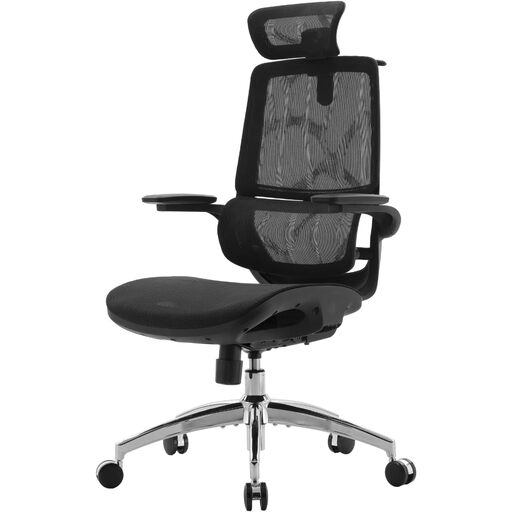
Why It's a Match: Perfect for users who work from home and need both full-featured ergonomics and a space-saving solution. The chair adapts to the workday and can be easily stowed away when not in use.
The 80° flip-up armrests and the adaptive, dual-panel backrest debunk the "one-size-fits-all" myth. The breathable mesh material prevents heat buildup, and the BIFMA/SGS certification confirms its 150 kg weight capacity.
The combination of a space-saving design, thanks to the flip-up armrests, and dynamic, adaptive lumbar support offers flexibility for modern work environments.
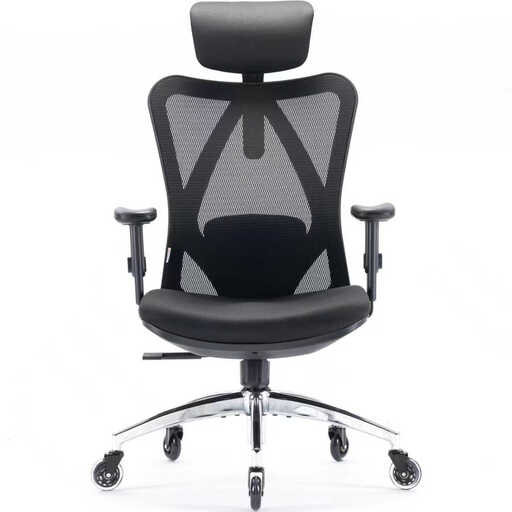
Why It's a Match: Designed for individuals who spend eight hours or more at their desk each day. The high backrest and multiple adjustment options provide comprehensive support for the entire body.
This chair offers five separate adjustment points (backrest, headrest, seat height, tilt, armrests) for precise customisation. The BIFMA certification and its successful 1136 kg static pressure test prove its robustness and longevity.
The high backrest, combined with an adjustable headrest and lumbar support, ensures continuous relief for the spine from the neck to the pelvis.
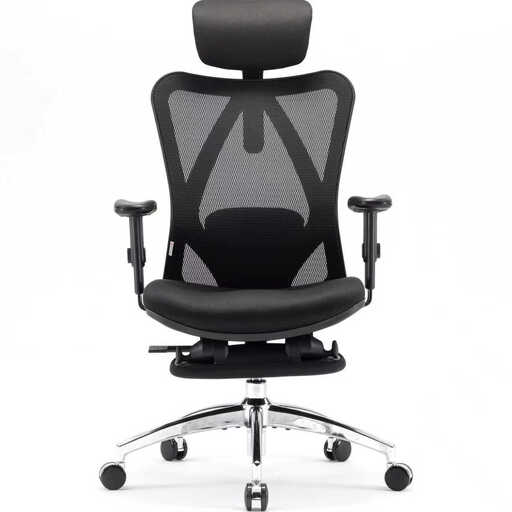
Why It's a Match: For users who want moments of relaxation between periods of focused work. The integrated footrest allows for a comfortable reclining position during breaks.
This model combines the full ergonomic adjustments of the M18 with a functional extra feature. The footrest is not a gimmick but a stable extension for genuine relief. The quality standards (BIFMA/SGS, 150 kg capacity) are maintained.
The integrated, adjustable footrest transforms the work chair into a recliner when needed, promoting recovery during short breaks without having to leave your workspace.
We have compiled a complete, up-to-date list of products that fully meet these strict selection criteria and German safety regulations.
The lifespan of an office chair depends heavily on the quality of its materials and construction. A model with a steel frame and BIFMA-certified components can easily last 5 to 10 years with normal use. Cheaper models without certified parts often show signs of wear on the gas lift or casters after just 1 to 2 years. Also, pay attention to the manufacturer's warranty period as an indicator of expected durability.
There is no universally better choice, as it depends on personal preference and usage. A mesh office chair offers unparalleled breathability, which is crucial for dissipating heat and moisture during long periods of sitting. Mesh fabric is also flexible and conforms well to the body. Leather or synthetic leather can offer a more premium look and is often easier to clean, but it is significantly less breathable and can lead to sweating in warmer temperatures.
Proper adjustment is critical for achieving the ergonomic benefits. Follow this simple checklist: