
Lieferung heute & morgen

Qualitätsgarantie

Willkommens-Angebote freischalten: KOSTENLOSE Lieferung | Bis zu 80 % RABATT | Kostenlose 30-Tage-JoyPlus-Testphase
App herunterladen
By a Joybuy Product Recommendation Officer, August 29, 2026
Sitting at a desk for long hours, whether in a corporate office or a home office, is a daily reality for many of us. An unsuitable chair can quickly lead to tension and discomfort. However, the search for the right ergonomic office chair is often overwhelming. Many models are advertised with ergonomic features, but not all deliver on their promises. Before you make a decision, it's helpful to know the most common pitfalls that can lead to a bad buy.
To find a chair that will support you in the long run, you should pay attention to a few core features. These objective parameters are more crucial than lofty marketing claims.
A good ergonomic desk chair promotes dynamic sitting. The synchronous mechanism is a key feature here. It ensures that the backrest and seat move in sync as you lean back. This supports the body's natural movement and can relieve pressure on the intervertebral discs.
A swivel chair with lumbar support is just as important. This support in the lower part of the backrest should ideally be height-adjustable to conform to the natural S-curve of your spine. It helps maintain an upright posture and prevents lower back pain, making it a suitable chair for long sitting periods.
A chair is only truly ergonomic if it adapts to you—not the other way around. Look for the following adjustment options:
The longevity of an office chair depends heavily on the materials used. A mesh back office chair is breathable and promotes air circulation, which is particularly pleasant on warmer days. Look for a tightly stretched, durable mesh fabric. For upholstered chairs, high-density moulded foam is a good choice as it retains its shape even with intensive use. The base should be made of a sturdy material like steel or robust nylon, and the gas lift must be rated for your body weight. Always check the specified maximum static load capacity.
Based on these objective criteria, we have identified a few models suitable for different user profiles and requirements.
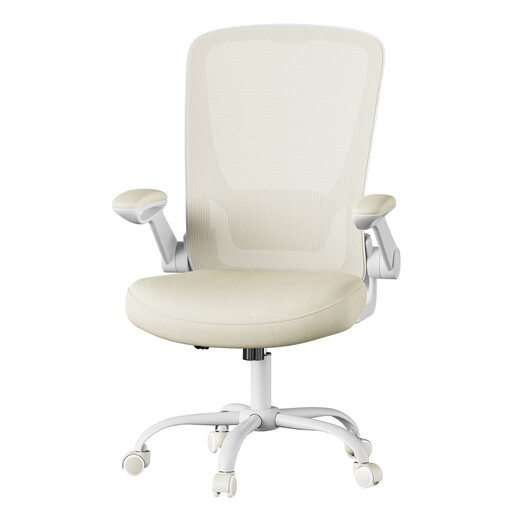
Why This Fits Their Persona: This model is ideal for users with limited space in a home office or student room. It combines fundamental ergonomic features with a thoughtful, space-saving design.
Thanks to its flip-up armrests, this chair avoids the bulky design trap. It can be pushed completely under the desk, creating more room to move when needed.
Offers adjustable lumbar support and a rocking function for relaxing breaks. The maximum static load capacity is 120 kg.
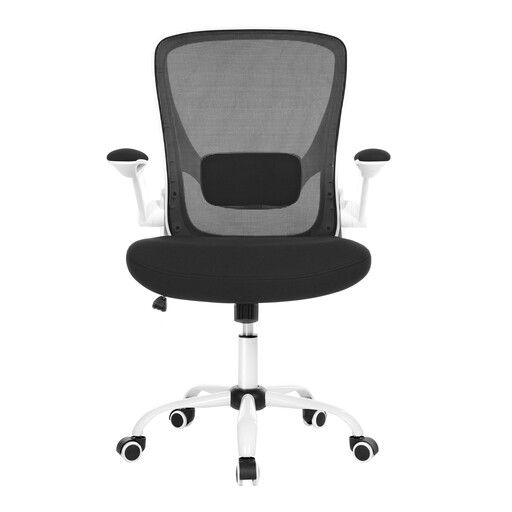
Why This Fits Their Persona: A well-balanced choice for daily, multi-hour use in the office or home office. It provides the necessary adjustment options for reliable ergonomic support without superfluous extras.
This chair escapes the "one-size-fits-all" trap with its customisable lumbar support and adjustable seat height. This allows it to be configured for different body proportions.
The combination of a breathable mesh back and a thick, shape-retaining seat cushion ensures lasting comfort. The flip-up armrests offer added flexibility.
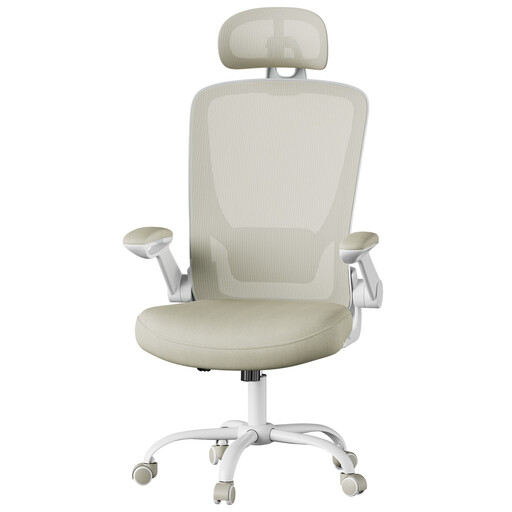
Why This Fits Their Persona: Designed for individuals who spend very long workdays at their desk and require comprehensive support for the entire upper body, including the head and neck.
This model counters the wear-prone materials trap with a robust construction that includes a metal base, a reliable gas lift (up to 120 kg), and high-quality foam.
It offers an adjustable headrest in addition to lumbar support for holistic relief. The S-shaped backrest is modelled on the natural shape of the spine.
We have compiled a complete, real-time list of products that fully satisfy these strict selection criteria and UK safety regulations.
The lifespan depends heavily on the intensity of use and the quality of the components. A chair with a solid steel or nylon base, a high-quality gas lift, and durable upholstery can last an average of 5 to 7 years with daily use. Regular maintenance and adherence to the maximum load capacity contribute to its longevity.
Both styles have their advantages. A mesh back office chair is very breathable and ideal for people who tend to sweat or for warmer office environments. An upholstered back often provides a softer, more cushioned feel. The choice is ultimately a matter of personal preference and the work environment. More important than the material itself are the ergonomic shape and the supportive function of the backrest.
Start with the seat height: Place your feet flat on the floor so that your upper and lower legs form an angle of approximately 90°. Next, adjust the lumbar support so that it comfortably supports your lower back curve. Finally, adjust the armrests so that your forearms rest loosely on them and your shoulders are relaxed.