
Lieferung heute & morgen

Qualitätsgarantie

Willkommens-Angebote freischalten: KOSTENLOSE Lieferung | Bis zu 80 % RABATT | Kostenlose 30-Tage-JoyPlus-Testphase
App herunterladen
Long days at a desk, whether in the office or at home, have become the norm for many. This is often accompanied by neck tension, lower back discomfort, and a decline in concentration. A suitable ergonomic office chair is not a luxury purchase, but a fundamental component for a healthy and productive workspace.
This article serves as a guide. It explains the key objective features to look for when making your selection and presents a range of models with different functions to help you make an informed decision.
Choosing the right chair depends on individual needs. However, you should always consider three key aspects to find a model that supports your body rather than strains it.
An ergonomically designed desk chair must adapt to your body, not the other way around. Look for the following adjustment options:
Lumbar support is a crucial feature for anyone looking for a chair for back pain. This support is a curve in the lower part of the backrest that conforms to the natural curvature of the lumbar spine. An office chair with lumbar support fills the gap between your lower back and the backrest, preventing you from slouching and reducing pressure on the spinal discs. Ideally, this support is adjustable in height and depth.
The chair's material significantly impacts seating comfort, especially during long periods of use. A breathable mesh chair is often an excellent choice here. The mesh fabric allows for continuous air circulation, which prevents heat build-up and sweating. Compared to upholstered or leather chairs, a mesh back ensures a consistently pleasant seating climate, which is particularly advantageous in warmer months or in poorly air-conditioned rooms.
Based on the criteria mentioned, we have compiled a selection of models that cover different requirements and use cases.
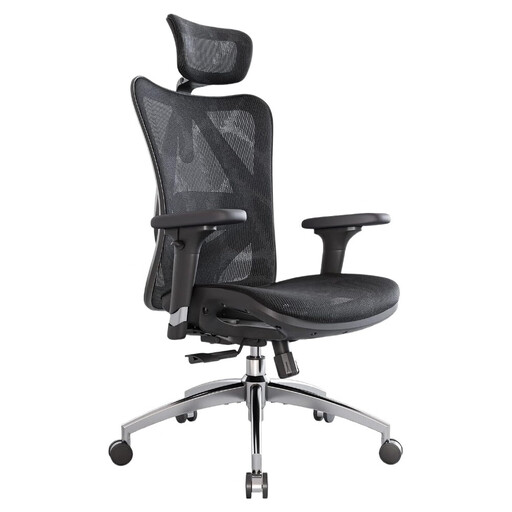
What sets it apart: The Sihoo M57S is designed for comprehensive adjustability. Its S-shaped backrest with an adjustable lumbar support and headrest promotes a healthy posture during long sitting sessions. The 3D armrests can be adjusted in height, depth, and rotation, offering flexible support. The construction, featuring breathable mesh fabric and an aluminium alloy frame, is built for durability. According to the manufacturer, the gas lift is certified for a load of up to 150 kg.
Benefits at a glance:
Who is this model for? This model is an option for users who spend a significant part of their workday sitting and are looking for a chair with versatile adjustment features and a robust construction.
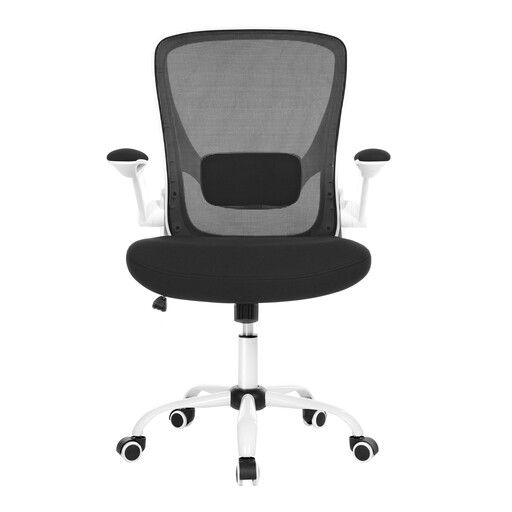
What sets it apart: This home office chair combines functional ergonomics with a space-saving design. A special feature is the flip-up armrests, which allow the chair to be pushed completely under the desk when not in use. The curved backrest with adjustable lumbar support provides essential support. An integrated rocking function allows for relaxation during short breaks. The thick seat cushion and breathable fabric cover are designed for comfort.
Benefits at a glance:
Who is this model for? This model is aimed at users with limited space, such as students or professionals working from home, who are looking for a functional and straightforward seating solution.
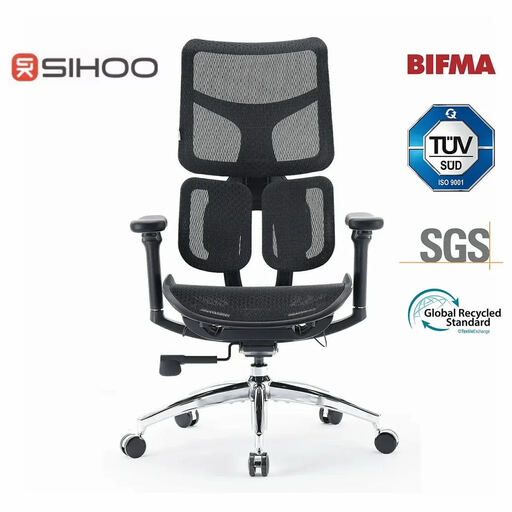
What sets it apart: The Sihoo Doro S100 focuses on advanced ergonomic technologies. According to the manufacturer, its dual, dynamic lumbar support system automatically adapts to different body shapes and postures. The 4D armrests are adjustable in four directions, allowing for precise relief of the shoulders and arms. The waterfall seat edge is shaped to reduce pressure on the thighs and promote blood circulation. The backrest is height-adjustable in five stages and is suitable for individuals with a height of 150 cm to 190 cm.
Benefits at a glance:
Who is this model for? This model is designed for users who value highly advanced ergonomics and maximum personalisation to precisely tailor the chair to their body measurements and sitting habits.
The search for the right chair is highly personal. If the models presented here don't quite meet your expectations or if you are looking for other options with specific features, it's worth taking a look at a broader selection.
If you'd like to explore more options with breathable mesh fabric, you can find a wider selection of models in our ergonomic mesh category.
An office chair is considered ergonomic if it can be comprehensively adjusted to the user's body measurements and movements. Key features include adjustable seat height, seat depth, backrest, and armrests, as well as integrated lumbar support. The goal is to promote a healthy sitting posture and minimise physical strain.
A basic adjustment can be done in a few steps:
Lumbar support is a very important feature, especially for long periods of sitting. It supports the natural inward curve of the lumbar spine (lordosis). Without this support, the lower back tends to flatten or curve outwards, leading to poor posture and increased pressure on the spinal discs. Good lumbar support helps to reduce this strain and prevent back pain.