
Lieferung heute & morgen

Qualitätsgarantie

Willkommens-Angebote freischalten: KOSTENLOSE Lieferung | Bis zu 80 % RABATT | Kostenlose 30-Tage-JoyPlus-Testphase
App herunterladen
Published on August 29, 2026 by Joybuy Product Recommendation Officer
Long hours of sitting—whether at home, in the office, or while gaming—often lead to tension and back pain. An ergonomic office chair is not a luxury item, but a fundamental investment in your health and productivity. However, the market is flooded with models whose marketing promises are often more style than substance. Many users invest in a chair that becomes uncomfortable after just a few months or whose supposed ergonomic benefits prove to be ineffective.
This guide will help you recognize the common pitfalls. We'll show you the crucial features to look for to make an informed decision that pays off in the long run.
Before we dive into the important features, let's look at the three most common mistakes that lead to a bad purchase.
To avoid the pitfalls mentioned above, you should check three core technical aspects. These determine whether a chair is truly ergonomic.
The engine of a good office chair is its mechanism. Look for a synchronous mechanism. With this feature, the backrest reclines at a greater angle than the seat (e.g., at a 2:1 or 3:1 ratio). This has two advantages:
A chair is only ergonomic if it can be precisely adjusted to your body. The following settings are essential:
The material of the backrest and seat has a major impact on comfort. A mesh office chair offers clear advantages here over padded fabric or leather versions:
Based on the criteria above, we have identified a few models that are suitable for specific needs and user profiles.
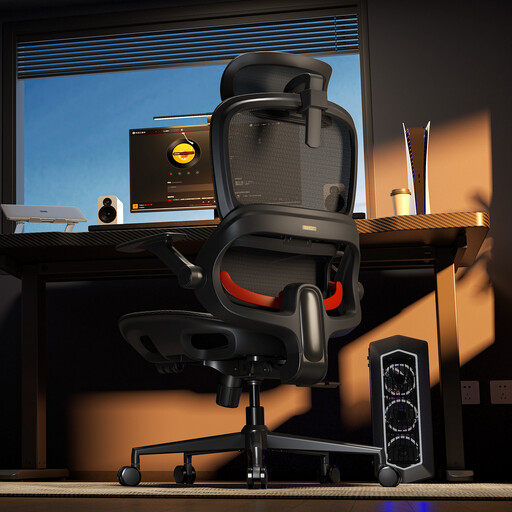
Why This Fits Their Persona: Ideal for users who spend more than eight hours a day at their desk. The integrated footrest allows them to change their sitting position regularly and elevate their legs, which promotes circulation and reduces pressure on the lower back.
It escapes the 'one-size-fits-all' trap with an adaptive lumbar support, a wide headrest, and adjustable armrests. The breathable mesh back prevents overheating.
The combination of full-featured ergonomics and a retractable footrest offers a comprehensive comfort package for long and intensive workdays.
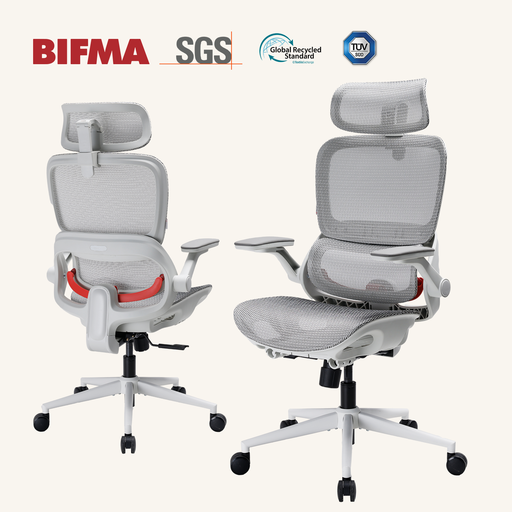
Why This Fits Their Persona: Suitable for users seeking a functional and reliable chair for mixed activities like office work, studying, and occasional gaming. The focus is on core ergonomic features without extra frills.
This model focuses on the essentials: a high-quality synchronous mechanism and adaptive lumbar support. It forgoes aesthetic gimmicks, prioritizing functional spinal support instead.
Delivers all key ergonomic adjustments in a minimalist design. The flip-up armrests create extra space when needed.
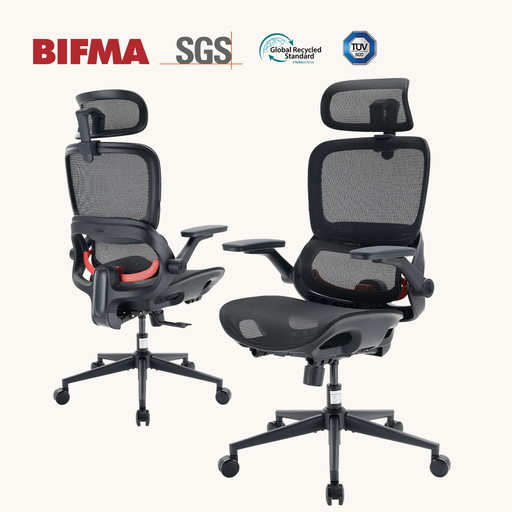
Why This Fits Their Persona: Perfect for users with a multifunctional workspace. The 360° rotating and flip-up armrests allow the chair to be tucked away to save space or accommodate activities that require freedom of movement (e.g., playing the guitar).
This model solves the problem of rigid armrests that limit flexibility on many standard chairs. It offers a thoughtful feature that significantly enhances its everyday utility.
The flip-up armrests provide maximum flexibility, transforming the chair from a focused work tool into an unobtrusive and adaptable seating option.
We've compiled a complete, up-to-date list of products that fully meet these strict selection criteria and German safety regulations.
No, the term ergonomic executive chair is often used as a marketing tool. While many of these models are large and softly padded, they lack crucial adjustment options like an adaptable lumbar support, seat depth adjustment, or a modern synchronous mechanism. Always pay attention to the specific adjustment functions and not just the appearance or the name.
The lifespan depends on the quality of the components. A chair with a sturdy steel base, a high-quality gas lift, and a robust synchronous mechanism can last 5 to 10 years with normal use. Models with mesh fabric upholstery are often more durable than those with bonded faux leather, which can become brittle over time.
Follow this simple checklist for a basic setup: