
Lieferung heute & morgen

Qualitätsgarantie

Willkommens-Angebote freischalten: KOSTENLOSE Lieferung | Bis zu 80 % RABATT | Kostenlose 30-Tage-JoyPlus-Testphase
App herunterladen
Long days at a desk, whether in the office or at home, have become the norm for many. This often leads to neck and back strain. A proper ergonomic office chair isn't an afterthought—it's a fundamental component of a healthy and productive workspace.
This article serves as your guide. It outlines the objective criteria to consider when choosing a chair and presents a selection of models with various features to help you make an informed decision.
The selection of office chairs is vast. To find the right model for your individual needs, you should pay attention to a few key features.
An ergonomic desk chair must adapt to your body—not the other way around. Look for the following adjustment options:
The material affects both the comfort and the durability of the chair. A swivel chair with a mesh back offers excellent breathability, which is especially beneficial on warmer days or during long periods of sitting.
Another crucial factor is the maximum weight capacity. Standard models are often rated for up to 110 kg or 120 kg. If you require greater stability, an office chair rated for up to 150 kg is the right choice. Look for information on the gas lift's certification (e.g., BIFMA/SGS), which indicates its tested load capacity.
Beyond the basic ergonomic adjustments, many models offer additional comfort features:
Based on the criteria mentioned, we have compiled a selection of models that cater to different needs and use cases.
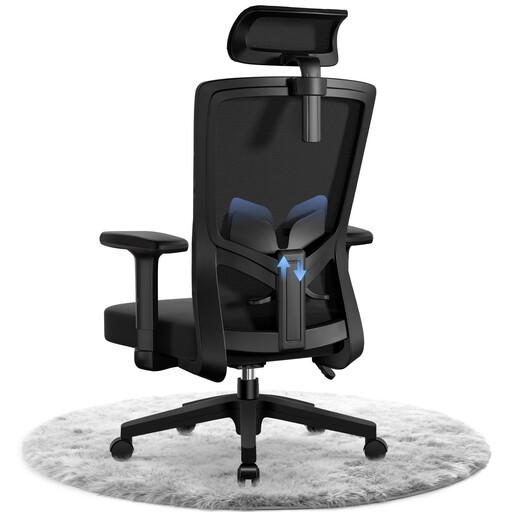
Why it stands out: This model is distinguished by its high weight capacity and comprehensive adjustment options, allowing for precise customisation to the user.
Pros:
Who it's for: Users looking for a robust and highly adjustable home office chair with a high weight capacity.
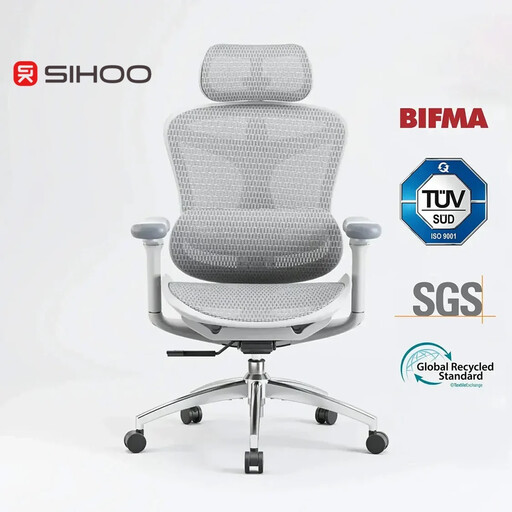
Why it stands out: The Sihoo Doro C300 features a dynamic, self-adjusting lumbar support and an intelligent weight sensor that calibrates the chair to the user.
Pros:
Who it's for: Individuals who prefer a technologically advanced chair that dynamically adapts to their posture without requiring constant manual adjustments.
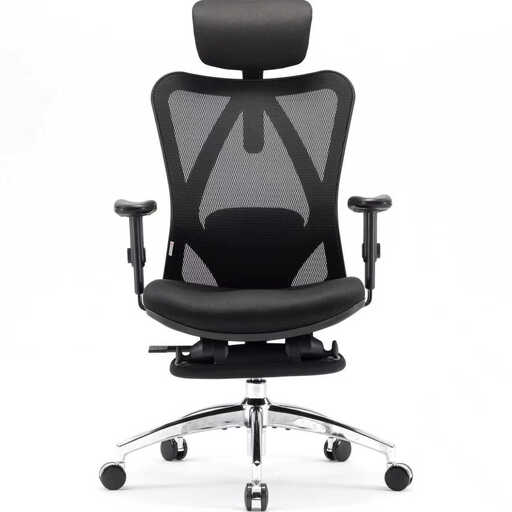
Why it stands out: The integrated and adjustable footrest makes this model a hybrid between a work chair and a recliner.
Pros:
Who it's for: Home office or office users who value maximum relaxation during work breaks and want a chair that supports both focused work and recovery.
An ergonomic chair only reaches its full potential when paired with the right desk. A height-adjustable desk allows you to alternate between sitting and standing, further promoting movement throughout your workday.
Discover our selection of adjustable gaming desks, which can be flexibly adapted to your sitting or standing position and are an ideal complement to your new office chair.
An office chair is considered ergonomic if it offers a wide range of adjustment options to fit the user's individual body measurements and needs. These include adjustable seat height, backrest, armrests, and lumbar support. The goal is to promote a healthy sitting posture and provide optimal support for the body during long periods of sitting.
Start with the seat height, ensuring your feet are flat on the floor. Adjust the seat depth so there is a gap of about two to three fingers' width between the back of your knees and the edge of the seat. Adjust the office chair with lumbar support to fit the natural curve of your lower back. The armrests should be positioned so that your shoulders are relaxed and your forearms rest at a right angle on the desktop.
Lumbar support is a very important feature. It fills the gap between the backrest and the natural inward curve of the lumbar spine. This stabilises the lower back, relieves pressure on the spinal discs, and helps prevent unhealthy slouching. A height-adjustable support is particularly beneficial as it can be positioned precisely.