
Lieferung heute & morgen

Qualitätsgarantie

Willkommens-Angebote freischalten: KOSTENLOSE Lieferung | Bis zu 80 % RABATT | Kostenlose 30-Tage-JoyPlus-Testphase
App herunterladen
By the Joybuy Product Recommendation Officer, August 29, 2026
Anyone who spends many hours at a desk every day knows the consequences of poor posture: neck tension, lower back pain, and decreased concentration. An ergonomic office chair isn't a luxury—it's a fundamental investment in your health and productivity. But the market is confusing and full of marketing promises.
Many chairs advertised as "ergonomic" turn out to be shams that do more harm than good. To help you avoid a costly mistake, we'll show you the most common traps and which objective criteria you should really focus on when making your choice.
Before we dive into the important features, you should be aware of the typical pitfalls that often lead to disappointment and discomfort.
To evaluate a desk chair ergonomically, you should focus on verifiable facts. These three core features are essential for long-lasting sitting comfort.
One of the most critical components is the office chair with lumbar support. This feature supports the natural S-curve of your lumbar spine, preventing slouching and lower back pain. A good lumbar support isn't just present; it's also adjustable in height and, ideally, in depth. This allows you to align the support precisely with the curve of your spine. Rigid, non-adjustable supports can, in the worst case, apply pressure in the wrong place.
A good swivel office chair adapts to you, not the other way around. Look for the following adjustment features:
The durability and safety of a chair depend directly on the materials used and their testing.
We have selected a few models from our range that meet the criteria above and are suitable for different needs.
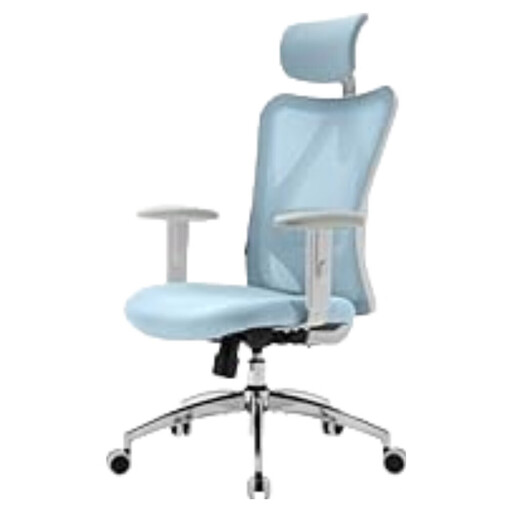
Why it's a good fit: Ideal for the home office, as it offers essential ergonomic functions and solid construction at an accessible price point. It's a sensible first investment in healthy posture.
This model is BIFMA and SGS certified and features an adjustable lumbar support—it's more than just a chair with an 'ergonomic' sticker.
The high load capacity of up to 150 kg (330 lbs) and the W-shaped seat design with a waterfall edge provide stability and comfort that are not standard in this price range.
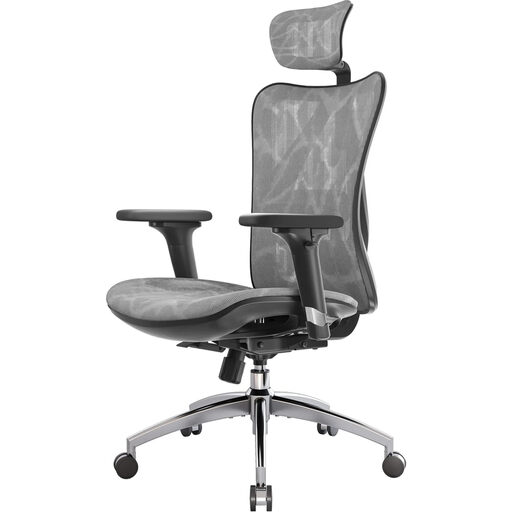
Why it's a good fit: For individuals who work more than eight hours a day at their desk. The advanced adjustment options, especially the 3D armrests, allow for precise customisation and effectively prevent fatigue.
This chair solves the 'one-size-fits-all' problem with its comprehensive adjustability. The breathable mesh back and certified mechanics (Class-3 gas lift) guarantee comfort and durability.
The combination of 3D armrests, adjustable lumbar support, and a W-shaped seat with a waterfall edge ensures holistic pressure relief for the shoulders, back, and legs.
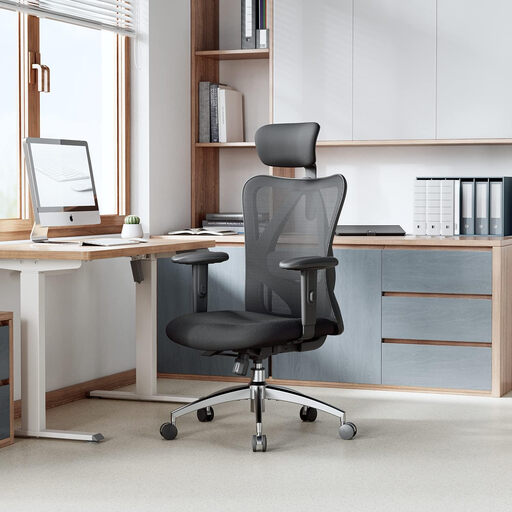
Why it's a good fit: This executive-style chair combines a professional look with robust functionality. It is explicitly designed for a load capacity of up to 150 kg (330 lbs) and offers optimal support for taller individuals thanks to its high backrest.
The trap of inferior mechanics is avoided here through BIFMA/SGS certification. According to the manufacturer, the chair has passed a static pressure test of 1136 kg (2500 lbs), proving its exceptional stability.
The combination of a high load capacity, a high backrest with an adjustable headrest, and a backrest that reclines up to 126° with a locking function offers maximum stability and comfort.
We have compiled a complete, up-to-date list of products that fully meet these strict selection criteria and safety regulations.
The BIFMA certification is awarded by the Business and Institutional Furniture Manufacturer's Association. It confirms that an office chair has passed rigorous tests for safety, durability, and structural performance. This includes stress tests for the backrest, base, casters, and gas lift. A BIFMA-certified chair is an indicator of a durable and safe construction.
A basic setup for a healthy posture involves four steps:
Caring for a mesh back is straightforward. Dust and light dirt can be removed with a vacuum cleaner on a low setting. For stains, a soft, slightly damp cloth is usually sufficient. Avoid aggressive cleaning agents, as they can damage the material. Additionally, regularly check all screw connections and tighten them if necessary to ensure stability.