
Lieferung heute & morgen

Qualitätsgarantie

Willkommens-Angebote freischalten: KOSTENLOSE Lieferung | Bis zu 80 % RABATT | Kostenlose 30-Tage-JoyPlus-Testphase
App herunterladen
Long days at the desk, whether in a corporate office or a home office, place high demands on our bodies. An unsuitable chair can lead to tension, back pain, and reduced concentration. An ergonomic office chair is therefore not just a matter of comfort, but a fundamental requirement for healthy and productive work.
This article serves as a guide. It explains which features to look for when making your selection and presents a range of models that cater to different needs and use cases. The goal is to provide you with an objective basis for your decision.
Choosing the right chair depends on individual needs. Three key criteria will help you make the right decision.
A chair is only ergonomic if it adapts to your body—not the other way around. A height-adjustable desk chair is the bare minimum. Ensure your feet can rest flat on the floor and your knees can form an angle of about 90 degrees.
Other important adjustment options include:
The material affects both the comfort and the durability of the chair.
Certifications can be an indicator of tested safety and quality. Standards like the European EN 1335 define requirements for the dimensions, safety, and durability of office chairs. Products that meet such standards have been tested for their load-bearing capacity and functionality.
Here you will find a selection of chairs that meet different requirements for design, ergonomics, and application.
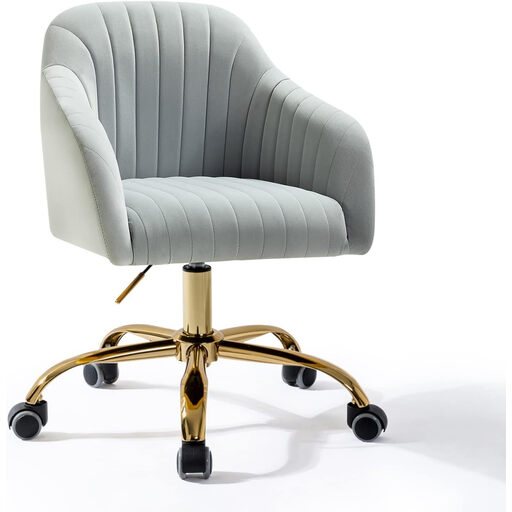
Why it stands out: This model combines the functionality of a simple desk chair with an elegant aesthetic. The velvet cover and gold accents make it a decorative piece of furniture.
Pros:
Who is it for? This chair is a great choice for those looking for a stylish and comfortable seat for occasional use, such as at a vanity, in the living room, or for short work sessions in a home office where aesthetics are a priority.
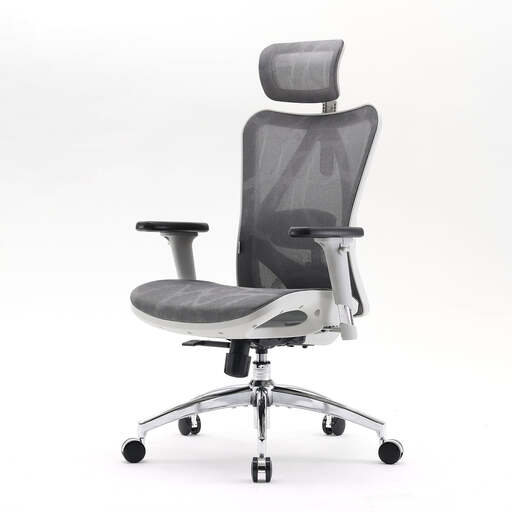
Why it stands out: The Sihoo M57S is a functional ergonomic office chair with comprehensive adjustment options, designed for long and intensive use.
Pros:
Who is it for? Ideal for home office professionals and office workers who spend many hours at their desks daily and need a reliable, customisable solution to prevent back and neck pain.
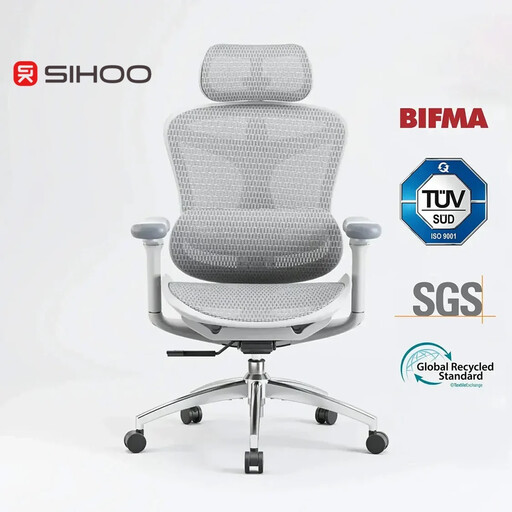
Why it stands out: The Doro C300 is distinguished by its intelligent, self-regulating mechanisms that automatically adapt to the user's movements and weight.
Pros:
Who is it for? This chair is aimed at users who place the highest value on dynamic ergonomics and automatic adjustment. It is an excellent choice for individuals making a long-term investment in their workplace health and wanting to benefit from advanced seating technology.
If you are considering not just a chair but a complete workstation solution, a set might be of interest. Discover matching combinations in our gaming desk and chair category, which are also often designed for ergonomics and long-term use.
An office chair is considered ergonomic if it has multiple adjustment mechanisms that allow it to be tailored to an individual's body size and shape. Key features include adjustable seat height, an adaptable backrest with lumbar support, adjustable armrests, and ideally, an adjustable seat depth.
Start with the seat height: your feet should be flat on the floor with your thighs parallel to it. The lumbar support should fill the natural curve of your lower back. Adjust the armrests so that your forearms can rest on the desktop at a 90-degree angle with your shoulders relaxed.
The lifespan of an office chair depends heavily on the material quality, construction, and intensity of use. Mid- to high-end models are often designed to last for 5 to 10 years. A manufacturer's warranty, such as the 3-year warranty on the Sihoo models, can be an indicator of expected durability.