
Lieferung heute & morgen

Qualitätsgarantie

Willkommens-Angebote freischalten: KOSTENLOSE Lieferung | Bis zu 80 % RABATT | Kostenlose 30-Tage-JoyPlus-Testphase
App herunterladen
The right office chair is fundamental to productive work, whether in a corporate office or at home. However, the market is flooded with models that are advertised as "ergonomic" but quickly lead to disappointment in practice. Before you make a decision, it's crucial to understand the common pitfalls that often only become apparent after a few weeks of use.
Many buyers focus on design or a seemingly low price, overlooking critical flaws. These include:
A good ergonomic office chair is an investment in your well-being. The following sections will help you identify the essential features and make an informed choice.
To avoid a bad buy, you should focus on objective and verifiable criteria. A good ergonomic desk chair is distinguished by three core areas.
The ability to adapt a chair to your own body measurements is the most important feature. Look for the following adjustment options:
The material affects both the comfort and the longevity of the chair.
A chair's base is crucial for safety and durability.
Based on these objective criteria, we have compiled a few models for different user profiles.
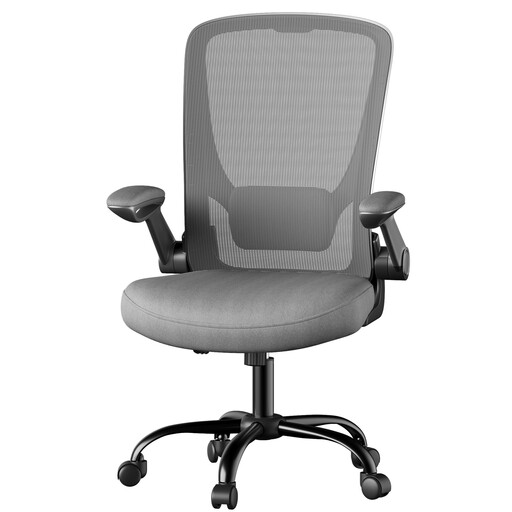
Why this model fits: Ideal for students or as a first home office chair. It provides the necessary basic ergonomic functions without breaking the budget, and its flip-up armrests make it especially suitable for smaller apartments or multi-purpose rooms.
This model goes beyond a mere marketing label by offering adjustable lumbar support, customisable seat height, and a rocking function—true, functional ergonomics.
The flip-up armrests are a clear plus for saving space. The combination of a breathable mesh back and a thick foam cushion ensures comfort.
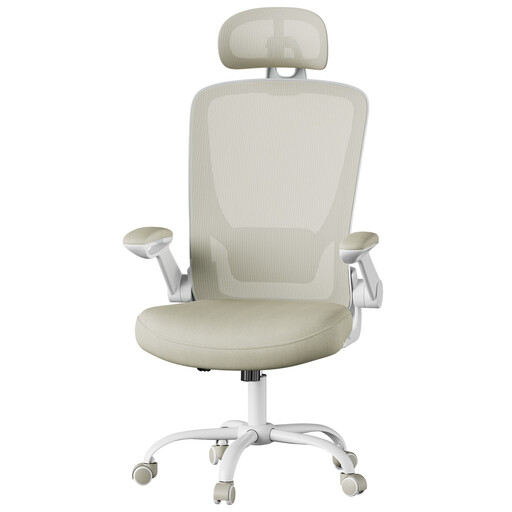
Why this model fits: For professionals who spend many hours at their desk every day. Advanced adjustment options like an adjustable headrest and a wider seat are designed for lasting comfort and preventing fatigue.
This model combats the problem of deteriorating materials with a robust construction, a metal base, and a gas lift rated for a static load capacity of up to 120 kg.
The combination of an adjustable lumbar support and headrest allows for full spinal support. The wide seat (53 cm) with an 8 cm thick foam cushion relieves pressure on the hips.
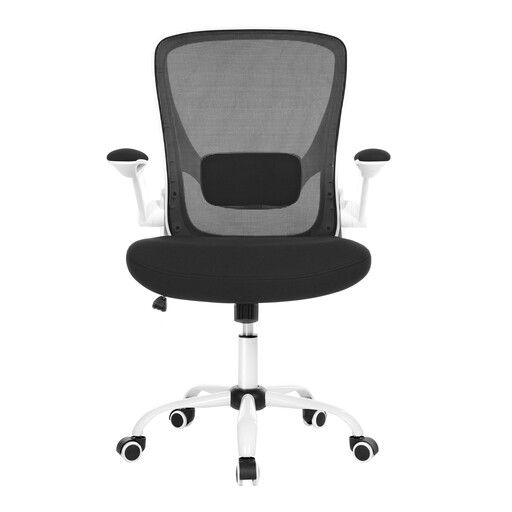
Why this model fits: For users who value modern aesthetics but don't want to compromise on ergonomics. The two-tone design blends well into living and working areas without looking like bulky office furniture.
This model proves that design and function can go hand in hand. It combines an appealing look with essential ergonomic features like adjustable lumbar support and flip-up armrests.
The flip-up armrests and slim profile make the chair extremely versatile. It can be used as a fully-featured ergonomic desk chair and then stored away to save space.
We have compiled a complete, up-to-date list of products that fully meet these strict selection criteria and safety requirements.
The lifespan heavily depends on material quality and frequency of use. A model with a sturdy steel base, high-quality foam, and durable mesh fabric can last five years or more with daily use. Cheaper models often show significant signs of wear after just one to two years.
Both options have their pros and cons. A mesh office chair back offers excellent ventilation, which is particularly pleasant on warm days or during long sitting periods. A high-quality cushion, on the other hand, can provide softer and more pressure-distributing support. The choice ultimately comes down to personal preference and individual comfort.
Sit in the chair and adjust the height so that your feet are flat on the floor and your thighs are parallel to the ground. The distance between the back of your knees and the front edge of the seat should be about two to three fingers wide. The armrests should be set so that your forearms rest on them at a 90-degree angle with your shoulders relaxed.