
Lieferung heute & morgen

Qualitätsgarantie

Willkommens-Angebote freischalten: KOSTENLOSE Lieferung | Bis zu 80 % RABATT | Kostenlose 30-Tage-JoyPlus-Testphase
App herunterladen
As a Joybuy Product Recommendation Officer, I see firsthand how many hours people spend at their desks—whether in a corporate office or a home office. Prolonged sitting in an unsuitable chair can lead to discomfort and tension. The goal of this article is to provide clear, objective guidance to help you find a chair that meets your needs for both comfort and functionality. To do this, we will examine objective criteria and present a curated selection of models.
Selecting the right chair depends on individual needs. However, you should always consider three key aspects to make an informed decision.
An ergonomic office chair should adapt to your body, not the other way around. Look for a wide range of adjustment options. A height-adjustable office chair is the basic requirement, allowing your feet to rest flat on the floor with your thighs parallel to it. Equally important are adjustable armrests. A swivel chair with armrests relieves strain on the shoulder and neck muscles, but only if the armrests can be positioned at the correct height. An adjustable backrest, ideally with integrated lumbar support, supports the natural curve of the lower spine and can help maintain correct posture.
The chair's material affects both comfort and durability. Mesh fabric is particularly breathable and ensures good air circulation, which is especially beneficial during long workdays or in warmer environments. Upholstery made of fabric or velvet often provides a softer feel and can lend a more inviting atmosphere to a room. Pay attention to the foam density and the quality of the cover.
The foundation of any good desk chair is a stable base. A sturdy base, usually made of metal or reinforced nylon, combined with smooth-rolling castors, ensures safety and mobility. Check the chair's maximum weight capacity to ensure it is designed for your body weight. This specification is a key indicator of the model's overall stability and build quality.
Based on the criteria above, we have compiled a selection of chairs that cater to different requirements and style preferences.
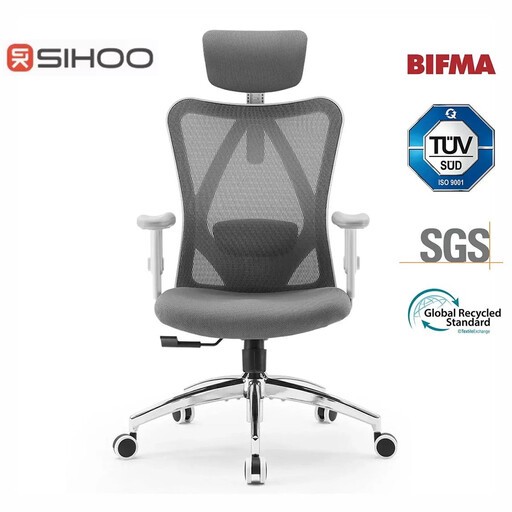
Why it stands out The Sihoo M18 is a functional home office chair distinguished by its comprehensive adjustment features. It offers five key adjustment points, enabling a personalised fit for the user.
Advantages
Who is it for? This model is suitable for individuals who spend many hours at a desk and are looking for a chair with detailed ergonomic adjustments to achieve a personalised sitting position.
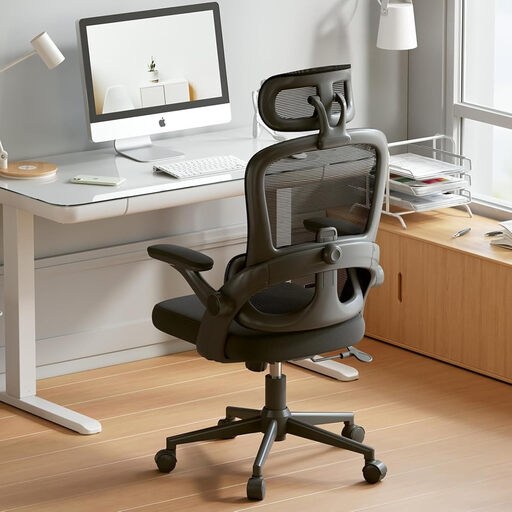
Why it stands out The Sihoo M102C combines ergonomic functions with practical details for flexible workspaces. The 3D armrests and the separately adjustable lumbar support are particularly noteworthy.
Advantages
Who is it for? This desk chair is an excellent choice for users who prioritise targeted lumbar support and flexible armrests, especially in environments where space is a consideration.
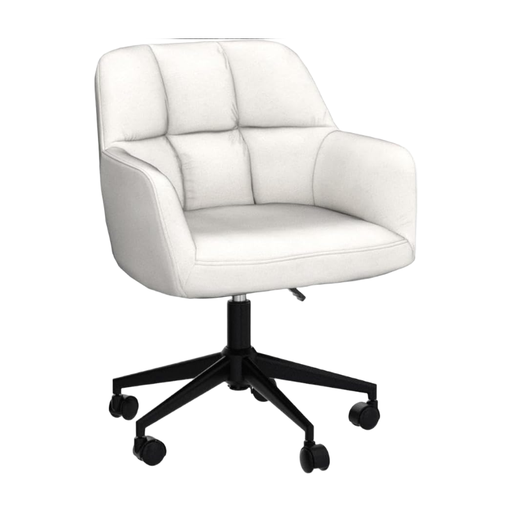
Why it stands out The chairus chair takes a different approach, blending essential ergonomic features with a classic design and a soft velvet cover. It integrates well into residential or executive settings.
Advantages
Who is it for? This model is aimed at users for whom aesthetics play as important a role as functionality. It is ideal for a home office that doubles as a living space or for shorter work sessions.
The range of seating furniture is vast, and the decision is a very personal one. If the models presented here do not fully meet your expectations, or if you are also looking for a matching desk, you can find more alternatives in our category.
Discover more models and a matching swivel computer desk here
Start with the seat height: your feet should be flat on the floor, and your knees should form an angle of about 90 degrees. Adjust the seat depth so there is a gap of two to three fingers' width between the back of your knees and the front edge of the seat. The lumbar support should support the natural curve of your lower spine. The armrests should be positioned so that your forearms rest comfortably on them with your shoulders relaxed.
Lumbar support is a contoured section in the lower part of an office chair's backrest. It is designed to support the natural S-shape of the spine (the lordosis in the lumbar region). Good support in this area can help promote an upright posture and reduce the strain on the spinal discs and back muscles.
Even in a very good ergonomic chair, it is advisable to take regular breaks. It is generally recommended to stand up, stretch, and walk a few steps at least once per hour. Dynamic sitting—frequently changing your sitting position—is also considered beneficial for keeping muscles active and avoiding one-sided strain.