
Lieferung heute & morgen

Qualitätsgarantie

Willkommens-Angebote freischalten: KOSTENLOSE Lieferung | Bis zu 80 % RABATT | Kostenlose 30-Tage-JoyPlus-Testphase
App herunterladen
By Joybuy Product Recommendation Officer, August 28, 2026
Sitting at a desk for long hours has become a daily reality for many of us. Whether in a home office, a corporate setting, or while studying—the hours add up. This often leads to neck tension, back pain, and decreased concentration. An ergonomic office chair is not a luxury purchase, but a fundamental investment in your health and productivity.
However, the market is flooded with models that overpromise and underdeliver. Before you make a decision you'll later regret, it's crucial to understand the common pitfalls that lead to a bad purchase.
To avoid a bad purchase, you should focus on objective and verifiable criteria. These three features are essential for a truly functional and ergonomic desk chair.
The type of mechanism determines how the chair supports your movements. Simple tilt mechanisms, where the seat and backrest recline rigidly at the same angle, are unsuitable for long periods of sitting.
Instead, look for a synchronous mechanism. With this, the backrest and seat tilt at a coordinated ratio (e.g., 2:1 or 3:1). This promotes "dynamic sitting," where you frequently change your posture, which relieves pressure on the spinal discs and improves circulation. A lockable backrest allows you to fix the position at various recline angles.
An office chair with lumbar support is crucial for maintaining the natural S-shape of the spine. A simple curve in the backrest is not enough. Good lumbar support should be at least height-adjustable to align perfectly with the curve of your lower back.
More advanced models offer depth-adjustable or even adaptive, dynamic support that adjusts to your movements. This is especially important for an office chair for long sitting sessions, as it actively counteracts fatigue in the back muscles.
The material has a direct impact on comfort and durability. A mesh back office chair is a popular choice, as the mesh fabric allows for excellent air circulation and flexibly conforms to the back. This prevents heat build-up and ensures a comfortable seating climate.
For the seat, the quality of the foam is critical. Look for specifications mentioning high-density moulded foam, which retains its shape even after prolonged use. Also, check the maximum load capacity. An office chair up to 150 kg is typically equipped with a reinforced base and a more robust gas lift, which is an indicator of higher overall quality.
Based on these objective criteria, we have identified several models suitable for different user profiles and requirements.
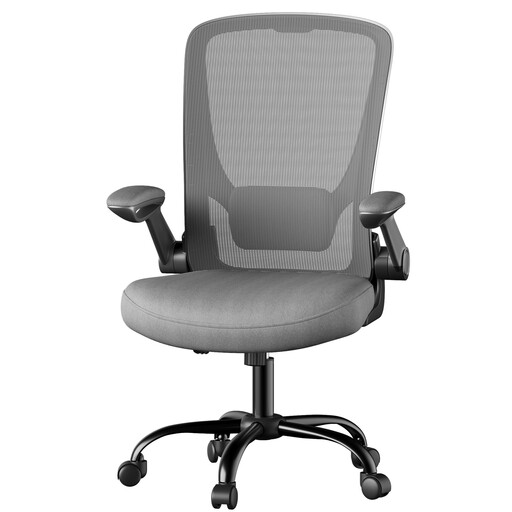
Why This Fits Their Persona: Ideal for students or the occasional home office user who needs basic ergonomics without breaking the bank. It provides the essential features for a healthier posture during moderate use.
This chair bypasses the "one-size-fits-all" trap with an adjustable lumbar support and seat height. The flip-up armrests are a practical, space-saving detail—a thoughtful feature in this price range.
Solid basic features including adjustable lumbar support and a tilt function. The flip-up armrests allow it to be neatly tucked away under a desk.
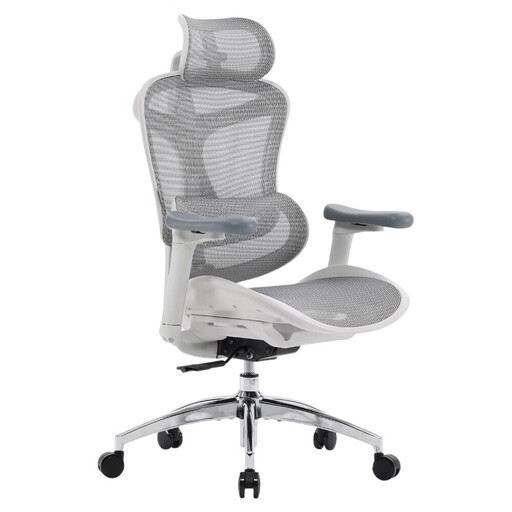
Why This Fits Their Persona: For professionals who spend many hours at their desk daily and view their chair as a long-term investment in their health. They seek advanced, adaptive features and certified quality.
This chair avoids the "material bluff" with a breathable polyester mesh and a robust steel frame. Numerous certifications (EN1335, T?V, SGS BIFMA) objectively prove its safety and durability, refuting empty marketing claims.
Dynamic, self-adjusting lumbar support and 3D armrests that synchronise with the backrest's recline. An intelligent weight sensor automatically adjusts the resistance.
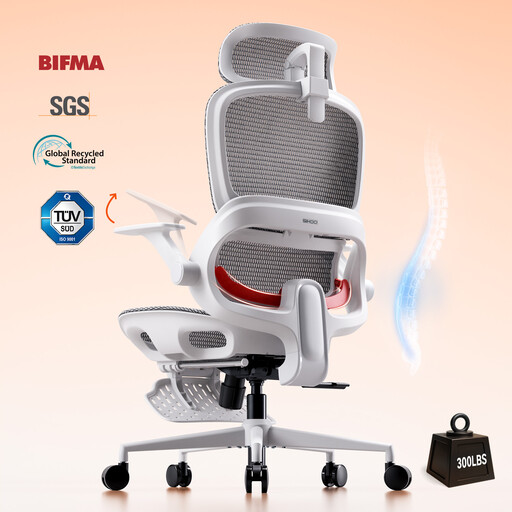
Why This Fits Their Persona: Perfect for users who sit for extremely long stretches—whether for work or intense gaming sessions. The focus here is not only on active sitting posture but also on periods of relaxation.
This chair goes beyond standard ergonomics. While many chairs only optimise for an upright working posture, this model addresses the real-world need for postural changes and relaxation breaks with an integrated office chair with a footrest.
The retractable footrest allows for a relaxed, reclined position for breaks. Combined with adaptive lumbar support and a wide swivel chair with a headrest, it offers comprehensive comfort.
The lifespan heavily depends on the quality of the components and the intensity of use. A model with a solid metal base and certifications like BIFMA/SGS can last 5 to 10 years with normal use. The manufacturer's warranty period (often 2 years or more) is a good indicator of their confidence in the product's quality. Regular maintenance, such as tightening screws, can further extend its lifespan.
Neither option is universally superior; it's a matter of personal preference and environmental conditions. A mesh back office chair offers unparalleled breathability and is ideal for warmer rooms or for people who tend to sweat easily. A high-quality padded chair can provide a softer, more enveloping feel. However, it's crucial to pay attention to the foam density to prevent it from "flattening out" quickly.
Proper adjustment is critical to reaping the ergonomic benefits. Follow these steps: