
Lieferung heute & morgen

Qualitätsgarantie

Willkommens-Angebote freischalten: KOSTENLOSE Lieferung | Bis zu 80 % RABATT | Kostenlose 30-Tage-JoyPlus-Testphase
App herunterladen
The right office chair is an investment in your well-being and productivity, especially when used for hours every day in a home office or corporate setting. However, the market is flooded with models whose marketing promises often suggest more than the design can deliver. This guide will help you recognise common purchasing traps and make an informed decision based on objective criteria.
Many buyers regret their decision within a few months because they have fallen for common marketing tactics or poorly thought-out designs. Pay special attention to these three points:
To avoid these traps, you should base your selection on verifiable technical features. Three aspects are of central importance here.
The mechanism determines how the seat and backrest move. The synchronous mechanism is often the most functional choice. It ensures that the backrest and seat tilt in a coordinated ratio to each other. This promotes "dynamic sitting," which keeps the body in motion, relieves pressure on the spinal discs, and improves circulation. Simpler tilt mechanisms, where the angle between the seat and backrest remains fixed, do not offer this advantage.
A truly ergonomic desk chair must adapt to your body, not the other way around. Look for the following adjustment options:
The longevity of a chair depends directly on the materials used. Breathable mesh fabric is ideal for good air circulation but should be high-quality and tightly woven. For upholstered chairs, the density of the foam is decisive. A solid base made of steel or aluminium and a gas lift rated for your body weight (pay attention to the maximum load capacity) form the foundation for a stable and safe chair for the home office.
Based on the criteria mentioned, we have identified several models that are suitable for different requirements and budgets.
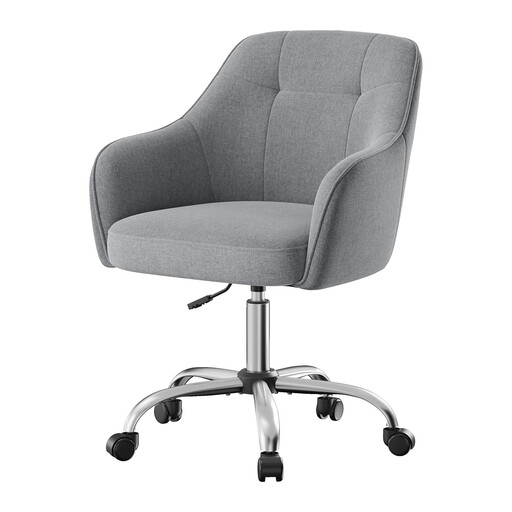
Why This Fits Their Persona: Ideal for users seeking a functional and stylish chair for occasional to moderate home office use, without needing to invest in professional high-end features.
This chair avoids the trap of over-promising. It focuses on fundamental yet solid features like height adjustment and an ergonomically shaped, padded backrest, rather than imitating complex but poorly implemented ergonomic features.
Offers a solid core feature set with padded armrests and a maximum load capacity of 110 kg. The linen-effect fabric upholstery is a pleasant alternative to faux leather or mesh.
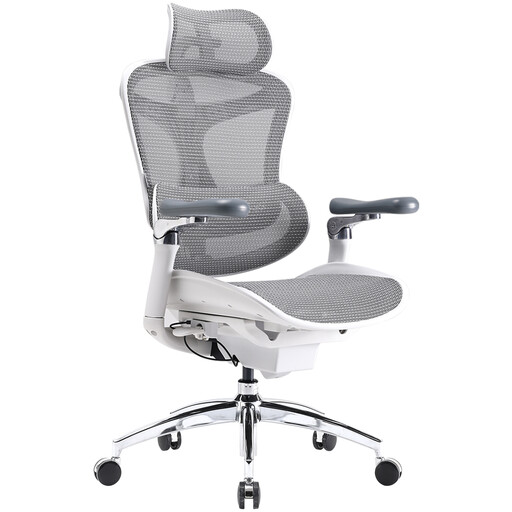
Why This Fits Their Persona: Designed for individuals who spend eight hours or more at their desk daily and require precise, dynamic support for the entire body to actively prevent fatigue and postural damage.
This model debunks the "one-size-fits-all" myth through extreme customisation. The dynamic lumbar support, seat depth adjustment, and 6D armrests allow for micro-adjustments to fit individual body shapes and sitting postures.
The combination of dynamic lumbar support that adapts to your movements and armrests adjustable in six dimensions provides a superior level of ergonomic support.
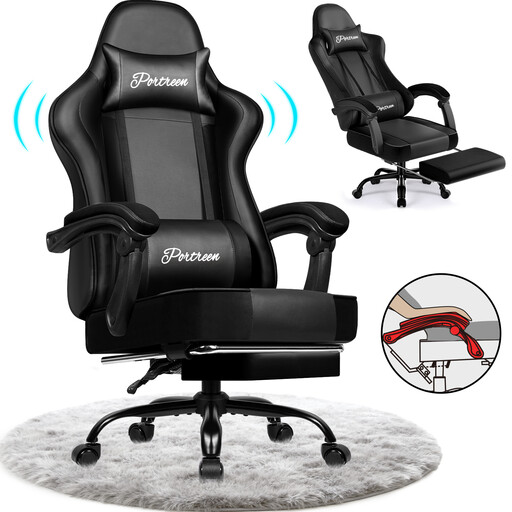
Why This Fits Their Persona: Perfect for users who need a chair for both focused work or gaming sessions and relaxing breaks. The combination of ergonomic support and relaxation features makes it highly versatile.
This chair bypasses the "style over substance" trap by offering verifiable ergonomic features alongside its gaming aesthetic. The wide recline angle (90° to 170°) and retractable footrest are functional features, not just gimmicks.
The combination of a backrest that reclines up to 170°, a sturdy retractable footrest, and adjustable head and lumbar pillows allows for a seamless transition between an upright working posture and a relaxed reclining position.
We have compiled a complete, up-to-date list of products that fully meet these strict selection criteria and German safety regulations.
The lifespan heavily depends on the material quality and usage. Models with a steel base, a high-quality gas lift (e.g., Class 3 or 4), and durable mesh or high-density foam can last five years or more with normal use. Regular maintenance, such as tightening screws, also contributes to longevity.
That depends on the model. Many gaming chairs focus on a racing-style look but lack the necessary adjustment options, especially for lumbar support. However, there are also models in the gaming segment that feature good ergonomics, such as adjustable armrests, a customisable backrest, and high-quality padding. Such a gaming chair can be a good alternative if it meets the core requirements for adjustability.
A basic setup can be done in a few steps: