
Lieferung heute & morgen

Qualitätsgarantie

Willkommens-Angebote freischalten: KOSTENLOSE Lieferung | Bis zu 80 % RABATT | Kostenlose 30-Tage-JoyPlus-Testphase
App herunterladen
Long hours spent sitting in the office or at home are a daily reality for many of us. An ill-fitting chair can quickly lead to tension and discomfort. The market for ergonomic office chairs is vast, but not every model advertised as "ergonomic" meets the necessary criteria. As your Joybuy Product Recommendation Officer, I'll help you identify the key features and steer clear of common purchasing pitfalls.
Before we dive into the essential features, let's look at the typical issues that can lead to a bad purchase. Knowing these will help you make a more informed decision.
To make a sound choice, focus on three objective criteria: adjustability, material quality, and certified load capacity.
An ergonomic desk chair is defined by its adaptability. The following adjustment options are crucial:
The materials and construction determine the comfort and lifespan of your chair.
To make your decision easier, we've matched some models from our collection to different user profiles.
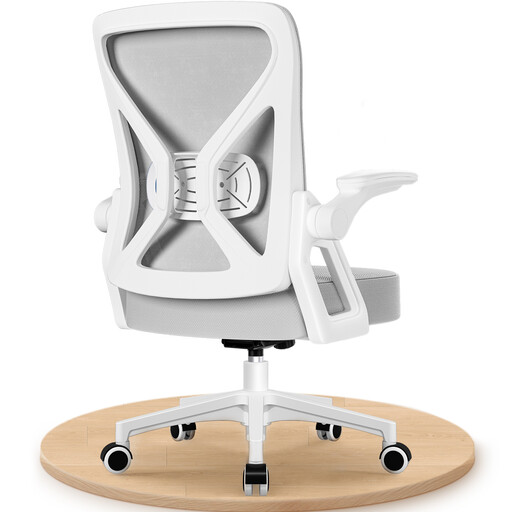
Why This Fits Their Persona: Ideal for those seeking a functional, space-saving chair for occasional or daily work from home without a large budget.
Offers adjustable lumbar support and a rocking function up to 125°, going beyond a mere marketing label. The flip-up armrests are a practical solution for small workspaces.
Good basic features with lumbar support and a rocking function. The 150 kg weight capacity and certified gas lift provide a solid foundation in this price range.
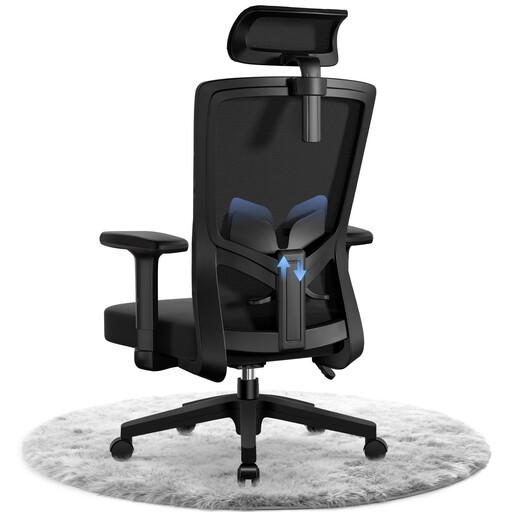
Why This Fits Their Persona: Designed for professionals, gamers, or students who spend many hours at their desk daily and require maximum adjustability to prevent postural issues.
This chair avoids the "one-size-fits-all" trap with comprehensive adjustment options: headrest (11 cm height, 120° rotation), lumbar support (6 cm), armrests (10 cm), and seat height (10 cm).
The combination of an S-shaped backrest, breathable nylon mesh, and a BIFMA/SGS-certified gas lift (up to 150 kg) ensures long-lasting, back-friendly comfort.
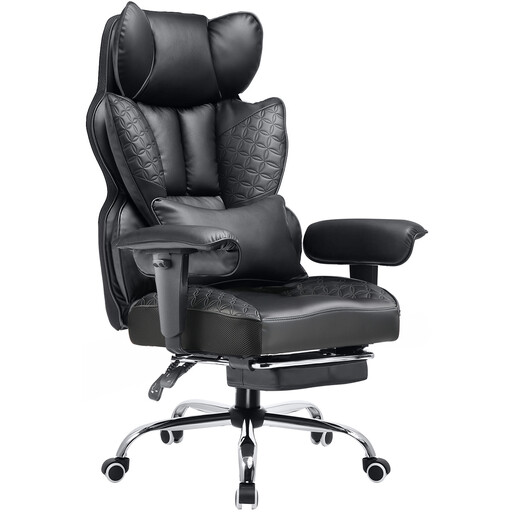
Why This Fits Their Persona: Specifically designed for taller and heavier individuals who need an exceptionally robust, stable, and spacious chair with a high weight capacity.
This chair directly addresses the pitfall of inferior components. It is explicitly designated as "Big and Tall" and "Heavy Duty," designed for a higher load, which sets it apart from standard models.
The robust construction and high backrest provide stability and support. A special feature is the integrated footrest, which allows for additional reclining positions.
We have compiled a complete, up-to-date list of products that fully meet these strict selection criteria and safety regulations.
Start with the seat height: your feet should be flat on the floor with your knees at an approximate 90-degree angle. Next, adjust the lumbar support to follow the natural curve of your lower back. The armrests should be positioned so your shoulders are relaxed and your forearms can rest horizontally on the desk.
The lifespan heavily depends on the quality of the components and the frequency of use. A model with a sturdy metal base and a BIFMA-certified gas lift can last 5 to 10 years with daily use. Pay attention to the manufacturer's warranty period, which is often a good indicator of expected durability.
Both materials have their pros and cons. A mesh back offers excellent breathability, which is particularly pleasant in the summer or during long sitting sessions. A padded back (e.g., with fabric or PU leather) can provide a softer feel but is less air-permeable. The choice depends on your personal preference and the ambient temperature.