
Lieferung heute & morgen

Qualitätsgarantie

Willkommens-Angebote freischalten: KOSTENLOSE Lieferung | Bis zu 80 % RABATT | Kostenlose 30-Tage-JoyPlus-Testphase
App herunterladen
By the Joybuy Product Recommendation Officer
Long periods of sitting in the office or at home can lead to discomfort and tension. A suitable desk chair is therefore not an afterthought, but a fundamental component of a functional workspace. This article serves as a guide. It explains the objective criteria relevant to selecting an ergonomic office chair and presents a selection of models with various features.
Choosing the right chair depends on individual needs. The following three criteria provide a basis for an informed decision.
An ergonomic office chair should adapt to your body, not the other way around. Basic adjustment options include seat height, armrests, and backrest tilt. A crucial feature is the lumbar support, which stabilises the lower back (lumbar spine). Dynamic or adaptive lumbar supports adjust to the user's movements, offering continuous support. Check whether the support is adjustable in height and depth to allow for precise alignment with your spinal curve.
The chair's material affects both sitting comfort and durability. A breathable office chair, often featuring a mesh backrest, promotes air circulation and reduces heat build-up during long periods of sitting. Seats made of high-density moulded foam provide firm yet comfortable support and retain their shape even with intensive use. Fabric covers can offer a softer feel, while PU materials are easy to clean.
The chair's construction is important for safety and longevity. A sturdy base made of steel or reinforced nylon forms the foundation. Pay attention to the specified maximum weight capacity, especially if you need an office chair for up to 150 kg. Certifications like BIFMA or SGS can serve as an indicator of durability and safety testing. The castors should be suitable for your flooring—softer castors for hard floors like parquet and harder castors for carpets.
The following models have been selected for their specific ergonomic features and functionalities.

What sets it apart: The SIHOO office chair M59S is distinguished by its two-part back design with an adaptive, dynamic lumbar support. This construction automatically adjusts to the user's spinal curve and movements. The 3D adjustable armrests are not only customisable but also flip up 80 degrees, making it easy to store the chair under a desk and save space.
Pros:
Who it's for: This model is an excellent choice for users in a home office or corporate setting who are looking for a flexible chair with advanced back support and space-saving features.
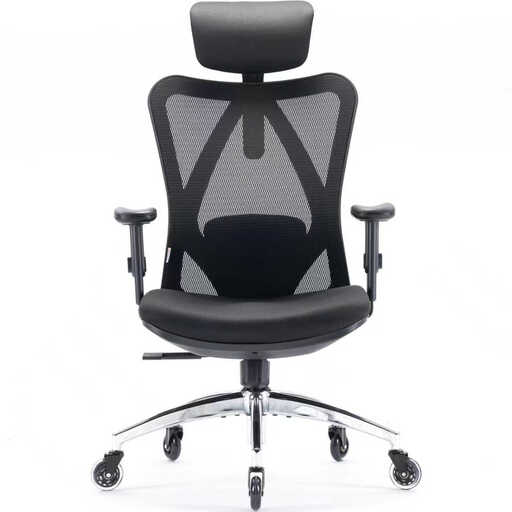
What sets it apart: The SIHOO M18 offers comprehensive adjustment options for personalised customisation. With an adjustable headrest, lumbar support, seat height, tilt, and height-adjustable armrests, it can be tailored to various body sizes and seating preferences. The high backrest, made of breathable polyester mesh, supports the entire back up to the shoulder area.
Pros:
Who it's for: Ideal for individuals who spend many hours at their desk and need a chair with maximum adjustment options to personalise their seating comfort.
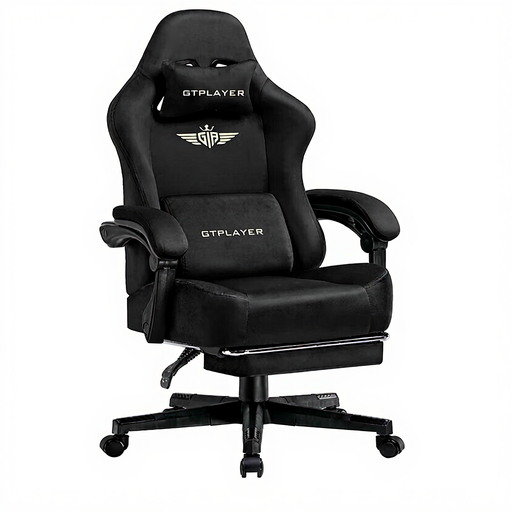
What sets it apart: This chair combines the ergonomics of a gaming chair with a cosy aesthetic thanks to its soft fabric upholstery. Instead of PU leather, it uses a breathable fabric that ensures a comfortable sitting environment. A special feature is the retractable footrest, which provides extra relaxation during breaks.
Pros:
Who it's for: This chair is aimed at users who both work and game for long hours and value the comfort of fabric upholstery and the relaxation feature of a footrest.
The models presented cover common requirements, but the selection of seating solutions is vast. If you are looking for other designs, materials, or specialised features, you can find a wider selection in our Designer Office Furniture category.
An office chair is considered ergonomic if it offers a range of adjustment options to adapt it to the user's individual body measurements and needs. These typically include adjustable seat height, seat depth, customisable armrests, and a backrest with integrated lumbar support. The goal is to promote a healthy and neutral posture and to optimally support the body while sitting.
Even the best ergonomic chair cannot replace the need for movement. It is generally recommended to regularly interrupt periods of sitting with short breaks to stand up, stretch, or walk a few steps. An ergonomic chair is designed to provide the best possible support for the body during unavoidable sitting times and to minimise strain.
Yes, a gaming chair can also be a suitable option for office work, as many models are also designed for ergonomics during long periods of sitting. They often feature a high backrest, adjustable armrests, and lumbar and neck pillows. The main difference often lies in the design, which is more athletic in gaming chairs. The decision depends on personal preferences regarding aesthetics and required features, such as a footrest.