
Lieferung heute & morgen

Qualitätsgarantie

Willkommens-Angebote freischalten: KOSTENLOSE Lieferung | Bis zu 80 % RABATT | Kostenlose 30-Tage-JoyPlus-Testphase
App herunterladen
By Joybuy Product Recommendation Officer, July 11, 2026
Long hours at a desk, whether in a home office or a corporate setting, take their toll. An unsuitable chair often leads to neck tension, lower back pain, and diminished concentration. However, the search for a suitable ergonomic office chair can quickly become overwhelming. The market is filled with tempting offers, but not every model advertised as "ergonomic" actually delivers on this promise.
Many buyers invest in a chair that loses its comfort after just a few months or whose supposed ergonomic benefits prove ineffective. To help you with your selection, we will highlight the most common pitfalls and show you which features truly matter.
Common Pitfalls When Buying an Office Chair:
To avoid a bad purchase, you should focus on objective and verifiable criteria. These three parameters are crucial for comfort, durability, and healthy sitting posture.
A truly ergonomic office chair is a computer chair that is adjustable—and in multiple dimensions. Look for the following adjustment options:
The quality of the components determines the safety and lifespan of your chair.
The height of the backrest affects the area of support. A swivel chair with a high backrest supports the entire back up to the shoulder area and is often the preferred choice for an executive chair in the home office or for people who sit for many hours at a time. Models with a mid-height backrest are more compact but offer less support for the upper back and shoulders.
We have compiled a few models based on the aforementioned criteria for different needs.
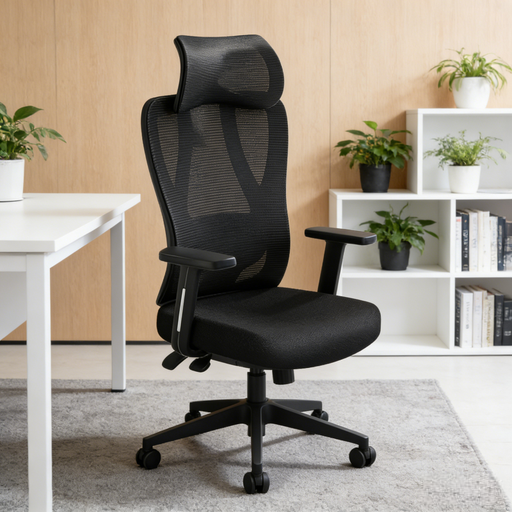
Why This Fits Their Persona: Ideal for users who spend more than eight hours a day at their desk. Its comprehensive adjustment options are designed for long-lasting comfort and promoting a healthy posture.
This model goes beyond an empty "ergonomics" promise by offering a 4D pivoting lumbar support that actively adapts to the user's movements.
The combination of breathable double-layer mesh fabric and a highly adaptable support mechanism ensures comfort even during long periods of sitting.
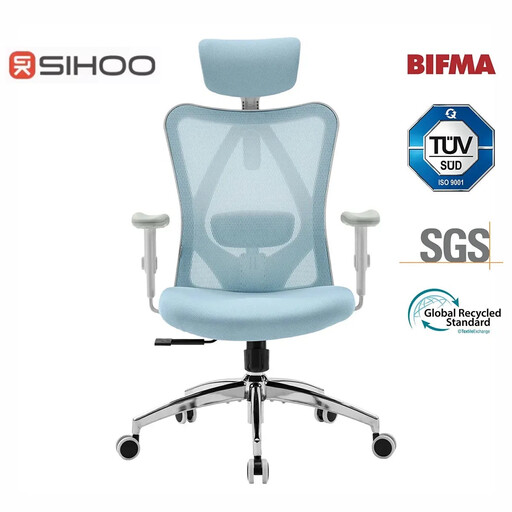
Why This Fits Their Persona: An excellent choice for the typical home office or corporate workspace. It offers a solid balance of adjustment options, certified quality, and a fair price-to-performance ratio.
This chair sidesteps the pitfall of missing certifications. According to the manufacturer, it is BIFMA and SGS certified and has passed a static pressure test of 1136 kg.
The verifiable load capacity of up to 150 kg and the adjustable headrest and lumbar support provide a high degree of safety and adaptability.
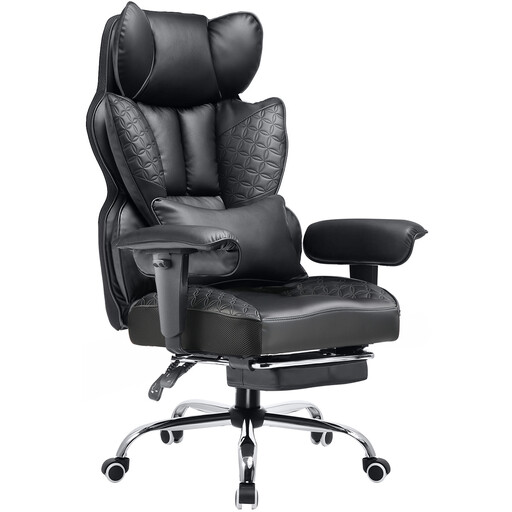
Why This Fits Their Persona: Specifically designed for taller and heavier individuals who need a robust chair with a high load capacity and extra comfort features like a footrest.
This model solves the "one-size-fits-all" problem by being specifically designed for a higher load, thus providing a stable and durable solution for a specific user group.
The robust "Heavy Duty" construction, combined with a retractable footrest and a high backrest, offers a high degree of stability and relaxation.
We have compiled a complete, up-to-date list of products that fully meet these strict selection criteria and all applicable safety regulations.
The lifespan of an office chair depends heavily on the quality of materials, construction, and frequency of use. A high-quality model with a sturdy metal frame and certified components can easily last five to ten years with daily use. Cheaper models often show significant signs of wear on the padding, mechanics, or casters after just one to two years.
Both materials have their advantages. A mesh back is very breathable, which reduces sweating on the back and is particularly pleasant in warmer environments. It also flexibly conforms to the shape of the back. An upholstered back (e.g., with fabric or PU leather) is often perceived as softer and more comfortable, offering more even pressure distribution. The choice is ultimately a matter of personal preference and the work environment.
Proper adjustment is crucial. Start with the seat height, so your feet are flat on the floor. Adjust the seat depth so there is a hand's width of space between the edge of the seat and the back of your knees. Position the lumbar support in the curve of your lower back. Set the armrests so that your forearms rest at a 90-degree angle and your shoulders are relaxed. The backrest should support your upper body in an upright or slightly reclined position.