
Lieferung heute & morgen

Qualitätsgarantie

Willkommens-Angebote freischalten: KOSTENLOSE Lieferung | Bis zu 80 % RABATT | Kostenlose 30-Tage-JoyPlus-Testphase
App herunterladen
Long workdays at a desk, whether in a home office or a corporate setting, place significant demands on our bodies. Improper seating can lead to muscle tension and difficulty concentrating. An ergonomic office chair is therefore not just a matter of comfort, but a fundamental component of a healthy and productive workspace. This article serves as a guide. It explains key selection criteria and presents various models to help you choose the right chair.
The range of models is vast, and the technical specifications can seem overwhelming at first glance. The following three points will help you identify the features that are most relevant to your individual needs.
A chair is only truly ergonomic if it can be precisely adapted to your body. Look for the following adjustment options:
The cover material affects seating comfort as well as the chair's durability and maintenance.
Also, check the maximum weight capacity. An office chair up to 150 kg is designed with a sturdier construction and offers greater stability and safety for taller or heavier individuals, thanks to a reinforced base and a stronger gas lift.
The intended purpose determines which features are most important.
Based on the criteria mentioned, we have compiled a selection of chairs that cater to different needs.
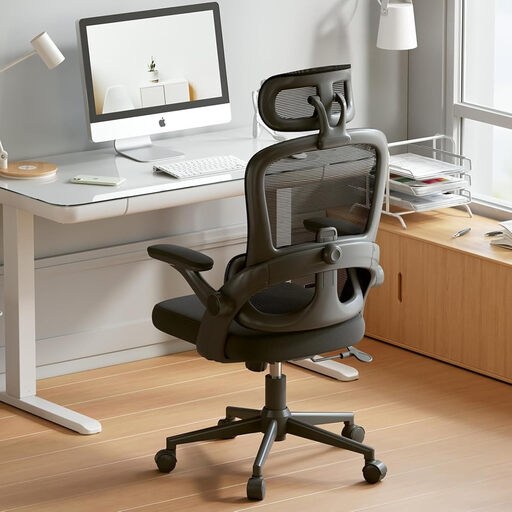
What makes it stand out: The Sihoo M102C is an ergonomic desk chair designed for long workdays. Its key feature is the combination of a breathable mesh backrest and a wide range of adjustment options. The separately adjustable lumbar support can be moved 6 cm in height to provide targeted relief for the lower back.
Pros:
Who it's for: This model is suitable for individuals who spend many hours sitting in a home or corporate office and value good ventilation as well as precisely adjustable support for the lumbar region.
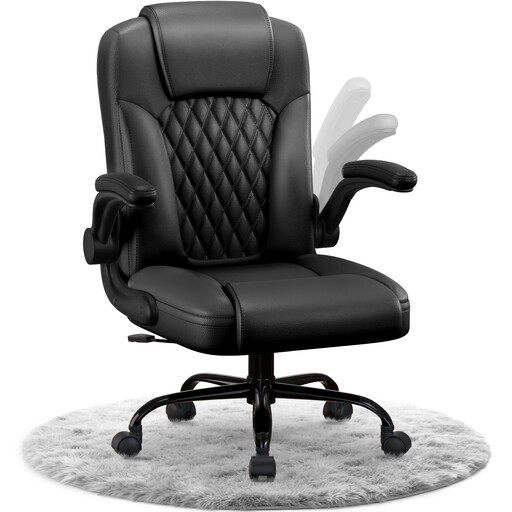
What makes it stand out: This chair from GTIMEX combines a classic look with functional ergonomic features. The PU faux leather cover is, according to the manufacturer, 25% thicker than conventional covers, ensuring durability. The 90° flip-up armrests make it a space-saving solution. With a weight capacity of up to 150 kg, it is also extremely robust.
Pros:
Who it's for: Ideal for users looking for a stable and low-maintenance swivel chair for a home office or corporate setting, who require a high weight capacity and appreciate the flexibility of flip-up armrests.
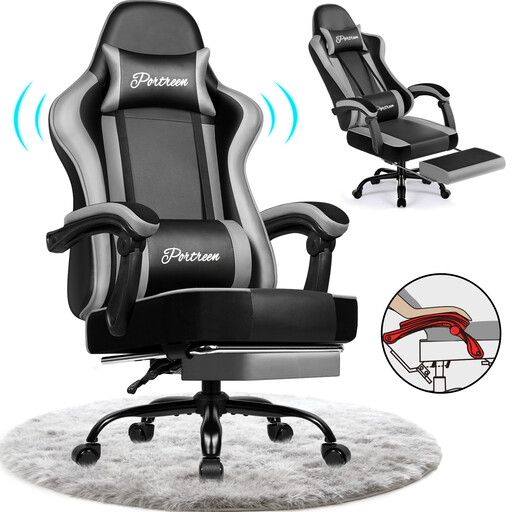
What makes it stand out: The GTIMEX gaming chair is designed for maximum adaptability during long gaming sessions or relaxing breaks. The backrest can recline up to 170 degrees, and the retractable footrest allows for a near-lying position. Separate cushions for the head and lumbar area offer additional, flexible support.
Pros:
Who it's for: This model is aimed at gamers as well as office and home office users who are looking for a chair with maximum flexibility and appreciate the ability to fully recline and put their feet up during breaks.
The models presented already cover a broad spectrum of needs. However, if you are looking for other designs, materials, or specific features, you will find an even larger selection in our category.
Discover more ergonomic office chairs here
An office chair is considered ergonomic if it promotes a healthy sitting posture and can be adjusted to the user's individual body measurements. Key features include adjustable seat height, a backrest that supports the spine (ideally with lumbar support), adjustable armrests, and a mechanism that allows for dynamic sitting. The goal is to prevent poor posture and minimize strain on the body.
The decision depends on personal preferences and work style. A high-quality ergonomic office chair is often optimized for an upright, focused working posture and offers subtle but effective support functions. A gaming chair often focuses on pronounced support and versatile resting positions, including a deep recline and footrests. For purely professional activities, a classic office chair is often the more professional choice, while a gaming chair is appealing to users who combine work and leisure at the same desk and value a relaxing recline function.
Start with the seat height: place your feet flat on the floor so that your upper and lower legs form an angle of about 90°. Then, adjust the backrest and lumbar support so that your lower back is well supported. The armrests should be set so that your forearms rest comfortably and your shoulders are relaxed, also at an approximately 90-degree angle to your upper arm.