
Lieferung heute & morgen

Qualitätsgarantie

Willkommens-Angebote freischalten: KOSTENLOSE Lieferung | Bis zu 80 % RABATT | Kostenlose 30-Tage-JoyPlus-Testphase
App herunterladen
By a Joybuy Product Recommendation Officer, July 18, 2026
Long days at the desk, whether in the office or at home, have become the norm for many of us. This often leads to neck tension or lower back discomfort. The right chair isn't an afterthought—it's a fundamental component of a functional workspace.
This guide is here to help. We'll explain the objective features you should look for when choosing a chair and present a selection of models with different functions. Our goal is to provide you with a factual basis for your decision.
The selection is vast, and technical specs can be overwhelming. Focus on the following three core areas to find a model that suits your physical needs and daily work routine.
A chair can only provide ergonomic support if it can be adapted to your body. Rigid models force your body into an unnatural posture. Therefore, look for the following adjustment options:
The chair's material affects both comfort and durability.
The foundation of any office chair is its base. A sturdy base, usually made of steel, aluminium, or robust plastic, is crucial. The gas lift for height adjustment should be rated for your body weight. Pay attention to the maximum weight capacity specified by the manufacturer. Certifications like BIFMA or SGS, as indicated by some manufacturers, can be an additional indicator of tested durability and safety.
Based on the criteria above, we have compiled a selection of models that cover different needs and functional priorities.
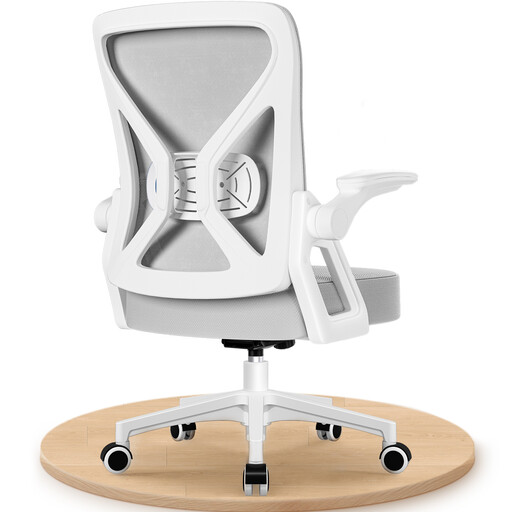
Why It Stands Out: The GTIMEX office chair combines essential ergonomic functions with practical details for the home office. The flip-up armrests are a space-saving feature, allowing the chair to be pushed completely under the desk. The rocking function up to 125° allows for relaxing breaks.
Pros:
Who is this model for? This model is a great choice for users looking for a functional and comfortable chair for daily use in a home office or for students who value excellent value for money and space-saving features.
Shop the GTIMEX Office Chair on Joybuy.de
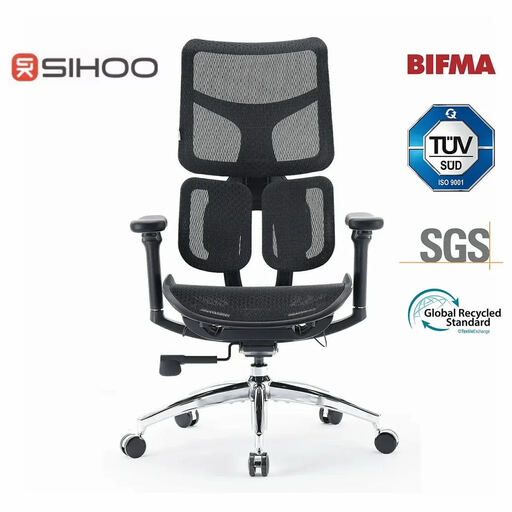
Why It Stands Out: The Sihoo Doro S100 is distinguished by its dual dynamic lumbar support system. According to the manufacturer, it automatically adapts to different body shapes and sitting postures to provide continuous support. The 4D armrests and aluminium frame underscore its focus on maximum adjustability and durability.
Pros:
Who is this model for? This chair is aimed at users who sit for many hours a day and need advanced, dynamic support for their lower back. It is ideal for individuals willing to invest in maximum adjustability to proactively prevent postural issues.
Shop the Sihoo Doro S100 on Joybuy.de
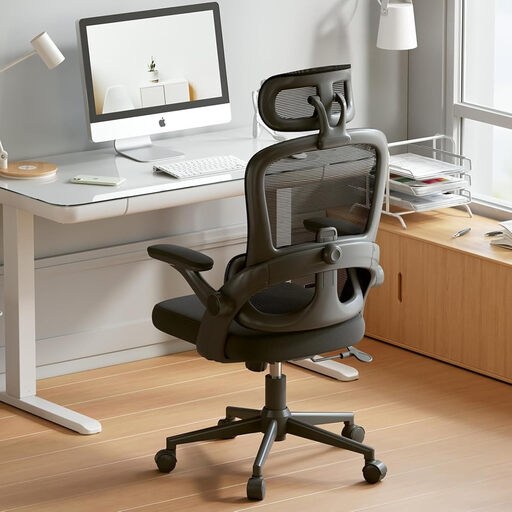
Why It Stands Out: The Sihoo M102C offers a comprehensive suite of ergonomic features. A particular highlight is the separately adjustable mesh lumbar support, which allows for precise customisation and excellent ventilation. The combination of 3D armrests, an adjustable headrest, and a high weight capacity of up to 136 kg (300 lbs) makes it a versatile model.
Pros:
Who is this model for? This model is suitable for users looking for an all-rounder with a wide range of adjustment options. Its high weight capacity and versatile customisation make it a great fit for different body types and long workdays.
Shop the Sihoo M102C on Joybuy.de
The models presented here are a curated selection to give you an initial overview. Every workspace and every body is different. If you want to compare more models with specific features, you can find a larger selection in our main category.
Discover our entire range of office chairs with adjustable armrests and find the chair that perfectly matches your needs.
Start with the seat height, ensuring your feet are flat on the floor. Adjust the seat depth so there is a gap of about two to three fingers' width between the back of your knees and the front edge of the seat. Adjust the lumbar support to fill the natural curve of your lower back. Finally, set the armrests so that your forearms rest at a 90-degree angle with your shoulders relaxed.
With a rocking mechanism, the seat and backrest tilt back together at a fixed angle. This is suitable for occasional reclining. With a synchronous mechanism, the backrest and seat move in a synchronised ratio (e.g., 3:1). When you lean back, the seat tilts up only slightly. This promotes "dynamic sitting," as the body stays in motion and the angle between the torso and thighs opens up.