
Lieferung heute & morgen

Qualitätsgarantie

Willkommens-Angebote freischalten: KOSTENLOSE Lieferung | Bis zu 80 % RABATT | Kostenlose 30-Tage-JoyPlus-Testphase
App herunterladen
By: Joybuy Product Recommendation Officer
Long days at the desk, whether in a corporate office or a home office, have become the norm for many. However, sitting for hours can lead to tension and discomfort if your workspace isn't properly equipped. A key element for maintaining a healthy posture is the right chair. This article serves as a guide to help you choose a suitable model. We will present objective criteria and a selection of products tailored to specific needs.
The search for the right chair can be overwhelming given the many options available. The following criteria will help you make an informed decision based on functionality and your individual needs.
An ergonomic office chair is primarily defined by its adaptability. Look for the following adjustment features to precisely tailor the chair to your body:
The material affects both the comfort and the longevity of the chair.
Not every chair is designed for eight hours of daily use. A good chair for long periods of sitting should have comprehensive adjustment options to support changes in posture and prevent fatigue. For occasional use, a simpler home office chair may suffice, but for daily, multi-hour work, investing in a fully-featured ergonomic model is advisable.
Here is a selection of chairs that meet different requirements for comfort and functionality.
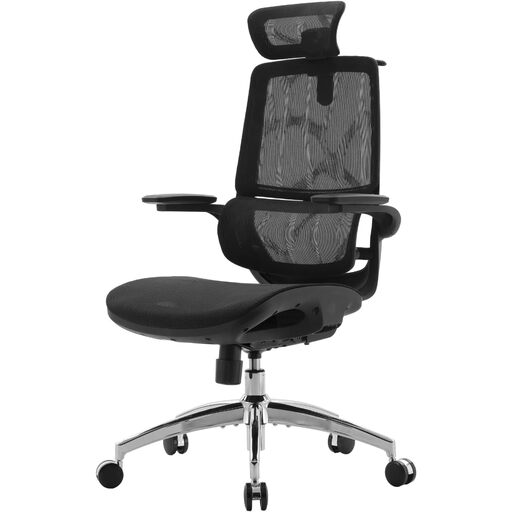
Why it stands out: The standout feature of the SIHOO M59S is its two-part backrest design with adaptive lumbar support. This construction adapts to the movements of your back, providing continuous support for the lumbar spine.
Advantages:
Who is it for? This chair is an excellent choice for users seeking flexible and continuous lower back support who also value space-saving features for their home office.
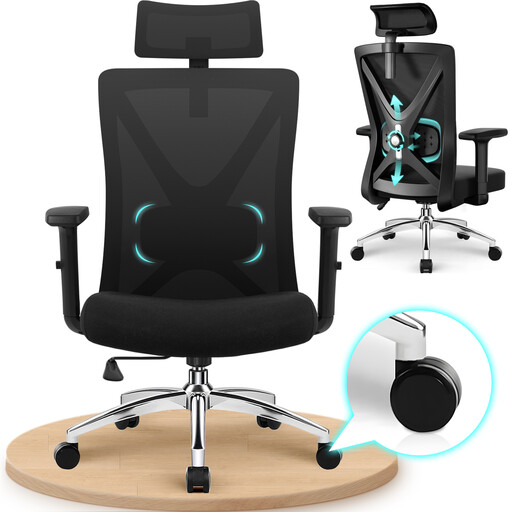
Why it stands out: The GTIMEX chair combines thick natural sponge padding with a precisely adjustable lumbar support. The lumbar support can be adjusted in both height (up to 6 cm) and depth (up to 3 cm), allowing for highly personalised customisation.
Advantages:
Who is it for? Ideal for individuals who require highly precise lumbar support adjustment and prefer a softer seating experience. Its features make it a suitable ergonomic executive chair for long workdays.
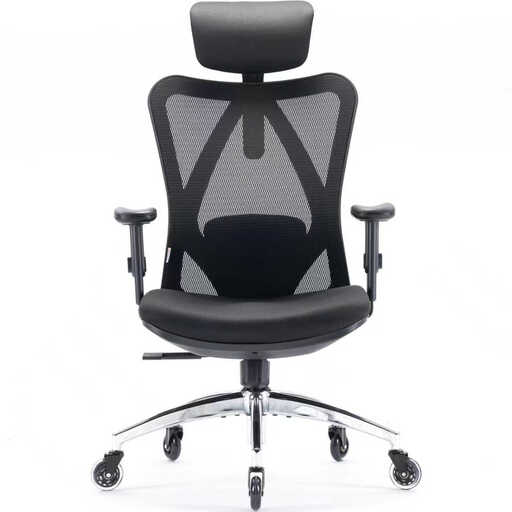
Why it stands out: The SIHOO M18 is a classic ergonomic desk chair with a high back and five key adjustment points. Its W-shaped seat design with a waterfall edge is engineered to minimise pressure on the legs.
Advantages:
Who is it for? This chair is a solid all-around solution for users looking for a reliable and versatile adjustable chair for daily, multi-hour use in the office or at home.
An ergonomic chair is the foundation of a healthy workspace. To complete your setup, you might also need the right desk. Discover our selection of functional and stylish models in the Grey and White Desk category.
An office chair is considered ergonomic if it can be adapted to the user's individual body dimensions and needs through a variety of adjustment options. These include adjustable seat height, seat depth, armrests, and a supportive backrest, ideally with customisable lumbar support. The goal is to promote a healthy sitting posture and reduce physical strain.
Lumbar support is very important because it supports the natural S-curve of the spine in the lower back area (lordosis). Without this support, many people tend to slouch, which can put strain on the spinal discs and lead to pain. Good support helps maintain an upright and neutral posture.
Start with the seat height, ensuring your feet are flat on the floor. Adjust the seat depth so there are about three fingers of space between the edge of the seat and the back of your knees. Customise the lumbar support to fit the curve of your lower back. The armrests should be positioned so that your shoulders are relaxed and your forearms rest at a 90-degree angle on the armrests or desk.