
Lieferung heute & morgen

Qualitätsgarantie

Willkommens-Angebote freischalten: KOSTENLOSE Lieferung | Bis zu 80 % RABATT | Kostenlose 30-Tage-JoyPlus-Testphase
App herunterladen
Long days at a desk, whether in the office or at home, place significant demands on your body. The wrong chair can lead to tension and discomfort. Choosing a suitable chair is therefore a crucial decision for your daily work life. This guide provides objective criteria and a selection of models to help you choose a new ergonomic office chair.
Finding the right desk chair can be complex, given the vast number of options available. The following points summarise the features that are essential for comfort and a supportive posture.
A chair is ergonomic if it can be adapted to the user's body. Basic functions like a height-adjustable seat are standard. You should also look for the following adjustment options:
The materials affect not only the chair's durability but also its comfort and aesthetic.
Based on the criteria mentioned, we have compiled a selection of chairs that meet various functional and design requirements.
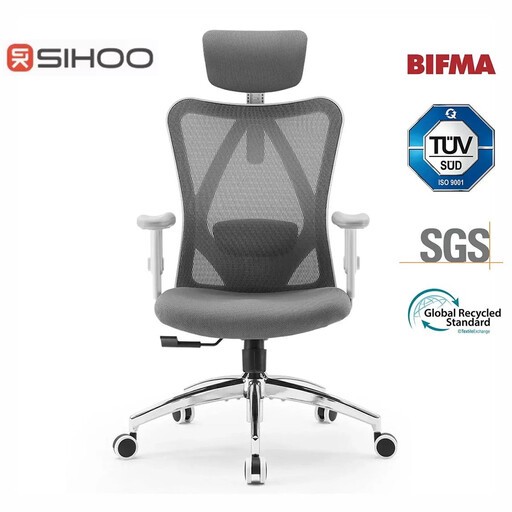
What sets it apart The Sihoo M18 is designed for comprehensive customisation. With five key adjustment points—backrest, headrest, seat height, tilt, and armrests—it can be precisely tailored to individual body measurements. The backrest, made of breathable mesh, ensures good ventilation.
Advantages
Who it's for This chair is an excellent option for individuals who spend many hours at their desk daily and place a high value on maximum adjustability and robust construction. It is well-suited for a dedicated home office.
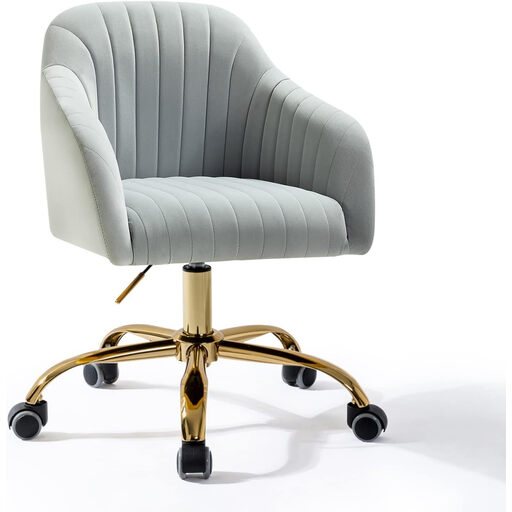
What sets it apart The HULALA HOME chair combines the function of an office chair with the aesthetic of a piece of residential furniture. The velvet upholstery and the frame with gold-coloured accents make it a designer office chair that blends seamlessly into a living room or bedroom.
Advantages
Who it's for This model is aimed at style-conscious users who are looking for a functional chair for moderate work hours that doesn't look like a traditional office chair. It's a great choice for workspaces in a living room or bedroom.
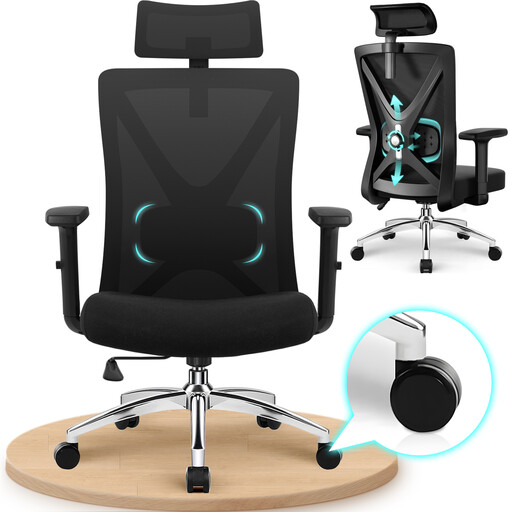
What sets it apart The GTIMEX office chair places a special focus on lower back support. The lumbar support is adjustable not only in height (up to 6 cm) but also in depth (up to 3 cm), allowing for highly targeted customisation. The S-shaped backrest is modelled on the natural shape of the spine.
Advantages
Who it's for This chair is worth considering for users who need targeted and customisable support in the lumbar region. Its wide range of adjustments makes it a solid choice for long workdays.
An ergonomic chair is the foundation, but a matching desk completes the workspace. For users who want to create a high-performance and visually coordinated environment, a gaming desk can be an interesting alternative. These are often designed for stability and a generous work surface.
Discover our selection of Black and Red Gaming Desks to complete your workspace.
An office chair is considered ergonomic if it has multiple adjustment mechanisms that allow it to be adapted to the user's individual body measurements and sitting habits. These typically include an adjustable seat height, seat depth, backrest, armrests, and lumbar support. The goal is to promote a healthy and comfortable posture.
Start with the seat height: your feet should be flat on the floor with your knees at an approximately 90-degree angle. Adjust the armrests so that your forearms rest comfortably and your shoulders are relaxed. The lumbar support should fill the natural curve of your lower spine without applying pressure.
Even in a very well-adjusted chair, it is advisable to take regular breaks. Stand up at least once an hour, stretch, and walk a few steps. Dynamic sitting, which means regularly changing your sitting position, can also help to activate muscles and prevent one-sided strain.