
Lieferung heute & morgen

Qualitätsgarantie

Willkommens-Angebote freischalten: KOSTENLOSE Lieferung | Bis zu 80 % RABATT | Kostenlose 30-Tage-JoyPlus-Testphase
App herunterladen
By Joybuy Product Recommendation Officer, August 29, 2026
Sitting for long periods, whether in a home office or a corporate one, has become the norm for many of us. This often leads to tension and back pain. An ergonomic office chair is frequently touted as the solution, but the market is overwhelming and full of marketing promises. Many chairs advertised as "ergonomic" turn out to be expensive mistakes that do more harm than good.
Before you invest, it's crucial to understand the most common pitfalls that lead to dissatisfaction and persistent discomfort.
A good, ergonomically designed desk chair should adapt to you—not the other way around.
To avoid a bad purchase, you should focus on three verifiable criteria. These define whether a chair is suitable for long, healthy sitting.
A chair is only ergonomic if it can be precisely adjusted to your body measurements. Look for the following features:
The mechanism determines how the backrest and seat move. It is crucial for an office chair for long sitting periods.
The durability and safety of a chair depend on the materials used and its tested components.
Based on these objective criteria, we have identified several models that are suitable for different user profiles and budgets.
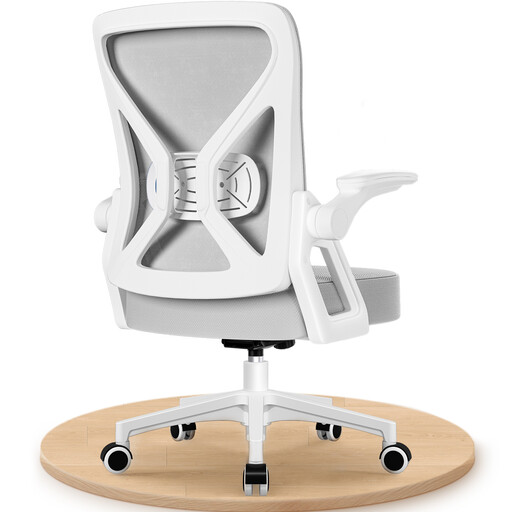
Why This Fits Their Persona: Ideal for home office users looking for solid ergonomic fundamentals without a large budget. The flip-up armrests are especially practical in smaller apartments, as the chair can be pushed completely under the desk.
This chair offers concrete, adjustable features like an adaptable lumbar support and a tilt function up to 125°, rather than just advertising the "ergonomic" label.
Good value for money with a space-saving design. The gas lift and sturdy base are designed for a load capacity of up to 150 kg.
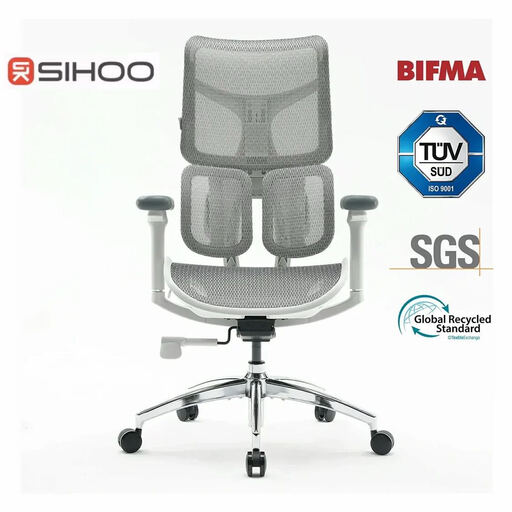
Why This Fits Their Persona: For people who spend eight hours or more at their desk every day. The advanced adjustment options provide dynamic support that goes beyond standard chairs, actively counteracting fatigue.
This model justifies its ergonomic claim with sophisticated technology: the dual dynamic lumbar support automatically adapts to movements, providing continuous, adaptive support.
Dual dynamic lumbar support, 4D coordinated armrests, and adjustable seat depth allow for a highly personalized seating experience. According to the manufacturer, the components are BIFMA and SGS certified.
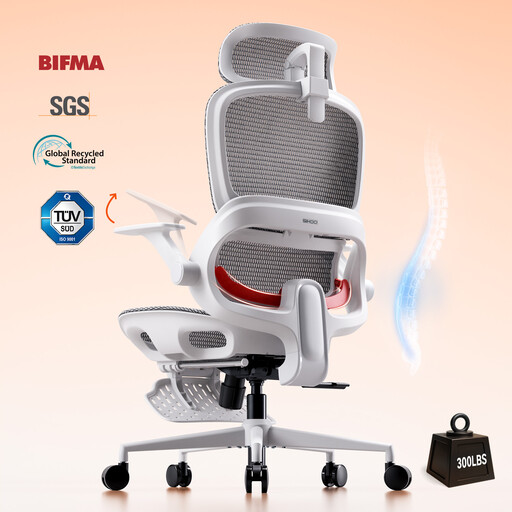
Why This Fits Their Persona: Perfect for gamers or office workers who want to relax between periods of concentration. The retractable footrest and high backrest allow for a comfortable reclining position for breaks without having to leave the workspace.
This chair combines clearly defined ergonomic work features (adaptive lumbar support, wide headrest) with an equally well-defined comfort feature (footrest), instead of making vague promises.
The integrated, retractable footrest offers significant added value for relaxation breaks. Flip-up armrests also provide flexibility and save space.
We have compiled a complete, up-to-date list of products that fully meet these strict selection criteria and German safety regulations.
The lifespan of an ergonomic office chair depends heavily on the quality of its components and how it's used. Models with certified parts (e.g., BIFMA/SGS) and a robust metal base are designed for a service life of five to ten years. Cheaper models may lose supportive force in their padding or stability in their mechanism after just two to three years. Regularly checking the screws and performing proper maintenance can extend the lifespan.
Both materials have their pros and cons. A mesh back is very breathable, prevents sweating, and flexibly conforms to the shape of your back. It is ideal for warmer environments. An upholstered back (fabric or leather) is often perceived as softer and cozier and can offer a more premium look in an ergonomic executive chair design. The decision depends on personal preference and room temperature. More important than the material itself is that the backrest has an adjustable lumbar support.
Proper adjustment is crucial. Start with the seat height: your feet should be flat on the floor and your knees should form an angle of about 90 degrees. Adjust the seat depth so there is a gap of 3-4 fingers' width between the back of your knee and the edge of the seat. Position the lumbar support at the height of your lumbar curve so that it provides comfortable support without pressing. The armrests should be set so that your forearms rest lightly on them and your shoulders are relaxed.