
Lieferung heute & morgen

Qualitätsgarantie

Willkommens-Angebote freischalten: KOSTENLOSE Lieferung | Bis zu 80 % RABATT | Kostenlose 30-Tage-JoyPlus-Testphase
App herunterladen
An ergonomic office chair is a fundamental investment for anyone who regularly works at a desk. However, the market is filled with models advertised as "ergonomic" that, in practice, quickly lead to disappointment. Many users invest in a new chair only to find that back pain and discomfort return after just a few months. This guide will show you which critical features to look for and how to avoid common purchasing traps.
Two of the most common problems when buying a chair are:
A truly back-friendly office chair adapts to your body, not the other way around. Pay attention to these three key adjustment features to ensure your chair offers the necessary flexibility.
The material affects not only the look but also the comfort and durability. The stability of the entire chair depends on the quality of its less obvious components.
Instead of making a one-size-fits-all recommendation, we have identified models tailored to specific user profiles and their requirements.
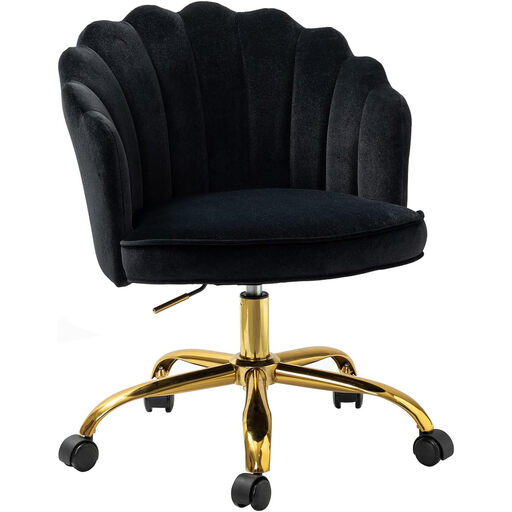
Why This Fits Their Persona: This chair is ideal for users who want to make an aesthetic statement in their workspace, living room, or bedroom without sacrificing basic functionality. It is suitable for shorter work sessions where design plays as significant a role as comfort.
Unlike purely decorative chairs, this model offers a stable metal base and functional height adjustment. This helps it avoid the trap of sacrificing fundamental stability and adjustability for looks alone.
Compact design with a low backrest that slides neatly under most desks to save space. According to the manufacturer, assembly is possible in under 10 minutes.
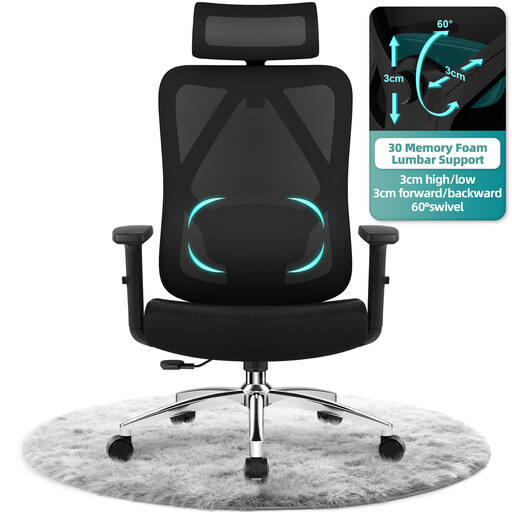
Why This Fits Their Persona: Designed for individuals who spend many hours at their desk every day. With its comprehensive adjustment options, including a 3D lumbar support and a high load capacity, it targets users with the highest demands for ergonomics and stability.
This chair delivers on the empty "ergonomics" promise by providing concrete, adjustable support features. The 3D lumbar support (adjustable in height, depth, and angle) and the customisable headrest allow for precise personalisation.
Very high maximum load capacity of 200 kg thanks to an aluminium alloy base. The mesh backrest ensures good air circulation during long sitting sessions.
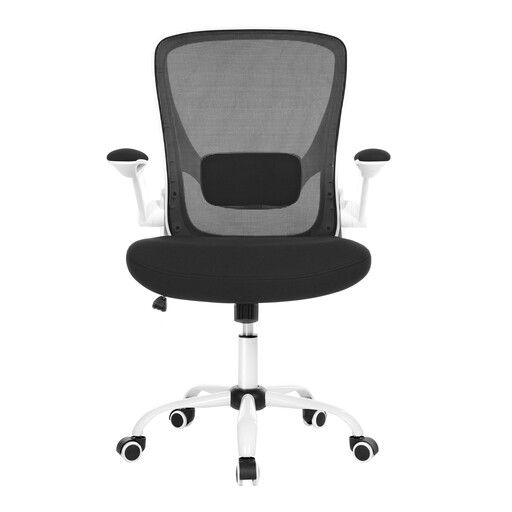
Why This Fits Their Persona: A practical choice for students or for a first home office setup. It provides essential ergonomic basics like lumbar support and a tilt function without breaking the budget. The flip-up armrests are a major advantage in smaller apartments.
This model proves that an accessible price point doesn't mean a complete sacrifice of ergonomics. It integrates adjustable lumbar support and a stable base, setting it apart from many cheap alternatives that often consist of just a padded shell.
The flip-up armrests allow the chair to be pushed completely under the desk, saving valuable space. The combination of price and functional features is the key factor here.
We have compiled a complete, real-time list of products that fully satisfy these strict selection criteria and UK safety regulations.
The lifespan of an office chair depends heavily on the intensity of use, material quality, and adherence to weight limits. Models with a robust metal base and a certified gas lift can last 5 to 10 years with normal use in an office or home office. Cheaper models with plastic components often show signs of wear and tear after 2 to 3 years.
For most users who primarily work upright at a desk, a well-adjustable lumbar support is more important. It supports the lower back, actively preventing poor posture and pain. A headrest is mainly beneficial for people who like to recline periodically or who need additional neck support due to their height.
A basic ergonomic setup follows simple rules: