
Lieferung heute & morgen

Qualitätsgarantie

Willkommens-Angebote freischalten: KOSTENLOSE Lieferung | Bis zu 80 % RABATT | Kostenlose 30-Tage-JoyPlus-Testphase
App herunterladen
Long days at the desk, whether in a corporate office or a home office, place significant demands on our bodies. Improper seating can lead to tension and discomfort. An ergonomic office chair is therefore not a luxury, but a fundamental component of a functional workspace. This article serves as a guide, presenting objective criteria to help you select the right model.
The market is saturated with office chairs. To make an informed decision, you should focus on a few core features that make a chair both functional and comfortable.
A chair can only be truly ergonomic if it can be adjusted to fit your body. The most important adjustment options include:
The durability and safety of an office chair depend heavily on its construction and the materials used. Pay attention to the maximum weight capacity specified by the manufacturer. A swivel chair with a 150 kg capacity is often an indicator of a sturdy base and a high-quality gas lift. Materials like steel for the frame and durable fabrics or mesh for the upholstery also contribute to stability.
Beyond ergonomics, design also plays a role. A chair should blend seamlessly into your work environment. A grey home office chair, for example, is a popular choice because its neutral colour complements many interior styles and creates a calm, professional atmosphere. Breathable materials like mesh or linen fabrics promote air circulation, ensuring a comfortable climate even during long periods of sitting.
Based on the criteria mentioned, we have compiled a selection of office chairs that cater to different needs.
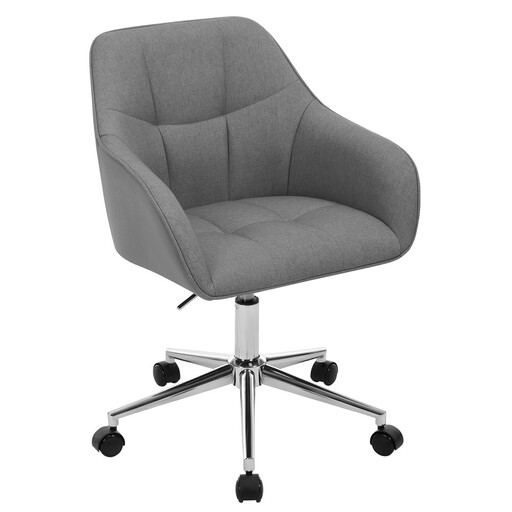
Why it stands out: The Woltu BS176gr combines a modern, Scandinavian-inspired aesthetic with solid functionality. The grey linen-effect upholstery with elegant stitching makes it a visual highlight that fits well not only in the office but also in a living room or bedroom. Its construction, featuring a chrome-plated steel base, is designed for a maximum static load of 150 kg.
Advantages:
Who it's for: This model is an excellent choice for users who value an appealing design and need a stable chair for their home office or as a flexible seating option that offers basic ergonomic features like height adjustment.
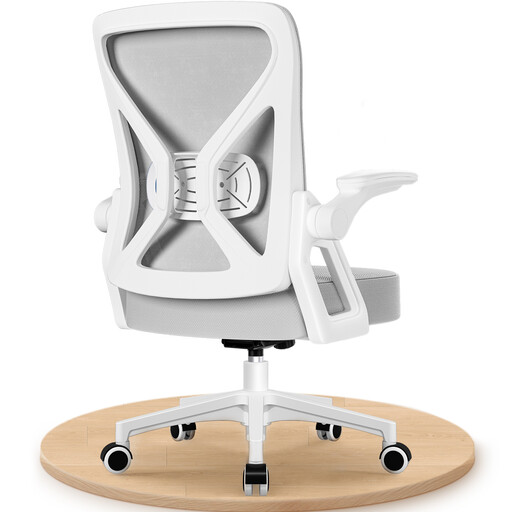
Why it stands out: The GTIMEX office chair clearly focuses on adjustable ergonomics. It features an adjustable lumbar support that provides targeted relief for the lower back. A key feature is the flip-up armrests, which make the chair very space-efficient. The rocking function, with a tilt of up to 125°, also allows for relaxing breaks during the workday.
Advantages:
Who it's for: Ideal for individuals who need a functional office chair with specific back adjustments and appreciate the flexibility of flip-up armrests in a compact workspace.

Why it stands out: The SIHOO M59S offers advanced ergonomic features. Its split-backrest design and adaptive lumbar support dynamically adjust to the user's movements. The 3D armrests are not only flippable but also adjustable forwards, backwards, and sideways. BIFMA and SGS certifications confirm its stability and capacity of up to 150 kg.
Advantages:
Who it's for: This chair is aimed at users who spend many hours at their desk and demand a high level of dynamic support and comprehensive adjustment options to fine-tune their sitting position.
An ergonomic chair is the foundation, but a matching desk is what completes the workspace. If you're looking for a functional and stylish table that pairs well with your new chair, a grey office desk could be an excellent choice. It provides a neutral foundation that combines well with various chair models and office decor.
Discover our selection of desks to complete your workspace.
An office chair is considered ergonomic when it offers a wide range of adjustment options to adapt to the user's individual body dimensions and needs. This includes adjustable seat height, seat depth, backrest, and armrests, as well as targeted support for the spine, especially in the lumbar region.
A basic setup involves four steps:
An office chair with lumbar support is very important as it helps maintain the natural S-curve of the spine. During long periods of sitting, the lower back tends to flatten, which puts strain on the intervertebral discs and back muscles. The support counteracts this effect, promotes an upright posture, and can help reduce fatigue and discomfort in the lower back.