
Lieferung heute & morgen

Qualitätsgarantie

Willkommens-Angebote freischalten: KOSTENLOSE Lieferung | Bis zu 80 % RABATT | Kostenlose 30-Tage-JoyPlus-Testphase
App herunterladen
Long hours sitting in the office or at home are a daily reality for many of us. However, an unsuitable chair can quickly lead to tension and back pain. The market for office chairs is vast, and many products are advertised with the "ergonomic" label without meeting the crucial criteria. This guide will help you separate the wheat from the chaff and find a chair that truly supports your health and productivity.
We'll highlight the most common pitfalls in purchasing and explain which objective features you should look for to make an informed decision.
Before we dive into the important features, it's helpful to know the typical mistakes that often lead to a bad purchase.
To avoid these pitfalls, you should base your selection on objective, verifiable criteria. A good ergonomic desk chair is defined by the following three core areas.
Adaptability is the heart of any ergonomic chair. Look for the following adjustment options:
A chair is an investment in your health and should be built to last.
The construction of the main support surfaces is crucial for comfort.
Based on the criteria mentioned, we have put together some models for different user profiles and requirements.
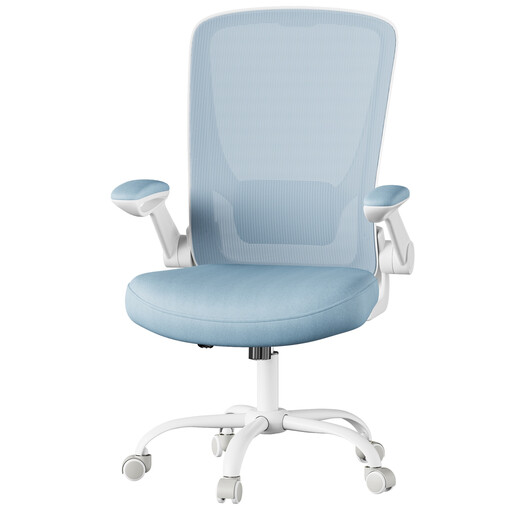
Why This Fits Their Persona: Ideal for users who need a flexible, space-saving workspace. The flip-up armrests allow the chair to be pushed completely under the desk.
This chair avoids the "design over function" trap by offering a practical, space-saving feature (flip-up armrests) without sacrificing fundamental ergonomic adjustments like an adjustable lumbar support and seat height.
Space-saving thanks to flip-up armrests; adjustable lumbar support for targeted lower back relief.
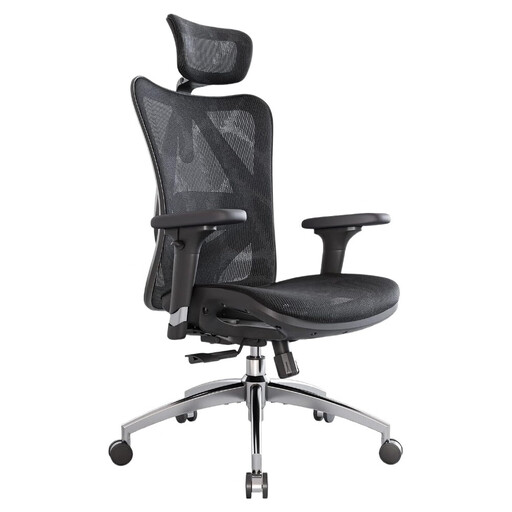
Why This Fits Their Persona: Designed for individuals who spend many hours at their desk each day. Its comprehensive adjustment options and robust construction are built for intensive, long-term use.
This chair refutes the empty "ergonomic" promise with specific, tangible features: an S-shaped backrest, adjustable lumbar support, 3D armrests, and a headrest. The BIFMA/SGS certification for the gas lift also addresses concerns about low-quality components.
Comprehensive customisation with 3D armrests and adjustable support elements; high load capacity of up to 150 kg for maximum stability.
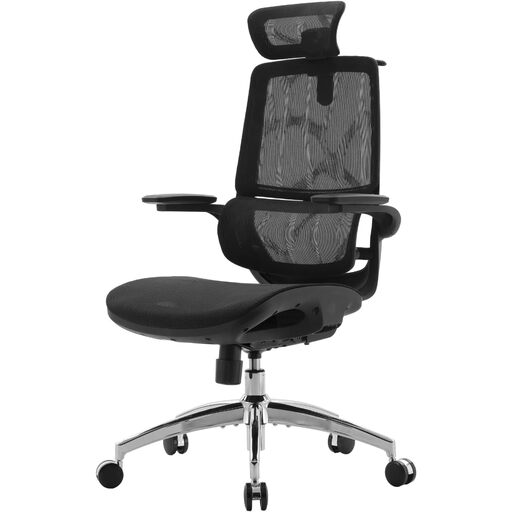
Why This Fits Their Persona: Suitable for users seeking dynamic support that adapts to their movements. The dual-backrest design and adaptive lumbar support provide continuous stability through changing sitting positions.
This model avoids the inferior materials trap with its BIFMA and SGS certifications, which confirm a load capacity of up to 150 kg and a passed hydrostatic pressure test of 1136 kg. The adaptive support is a concrete technical solution, not an empty marketing claim.
Adaptive lumbar support via a split-back design; 80° flip-up armrests combine ergonomics with space-saving convenience.
We have compiled a complete, up-to-date list of products that fully meet these strict selection criteria and German safety regulations.
Start with the seat height: your feet should be flat on the floor with your knees at roughly a 90-degree angle. Next, adjust the lumbar support to comfortably cushion the curve of your lower back. Set the armrests so your forearms rest horizontally with relaxed shoulders. Finally, adjust the seat depth, leaving a gap of 2-3 fingers between the back of your knees and the edge of the seat.
The lifespan heavily depends on material quality and frequency of use. A high-quality chair with a sturdy metal base, durable mesh or fabric upholstery, and certified components can last 5 to 10 years with daily use in an office or home office. Regular maintenance, like tightening screws, can extend its lifespan.
BIFMA (Business and Institutional Furniture Manufacturers Association) is an organisation that sets safety and performance standards for office furniture. A BIFMA-certified computer chair has been tested for aspects like stability, strength, and durability of the chair frame, casters, and adjustment mechanisms. It is a reliable, objective mark of quality.