
Lieferung heute & morgen

Qualitätsgarantie

Willkommens-Angebote freischalten: KOSTENLOSE Lieferung | Bis zu 80 % RABATT | Kostenlose 30-Tage-JoyPlus-Testphase
App herunterladen
By the Joybuy Product Recommendation Officer, July 17, 2026
Long hours at a desk are a daily reality for many. A poorly suited chair can not only hinder concentration but also lead to back and neck strain. However, navigating the vast selection of chairs can often be overwhelming.
This guide aims to provide clarity. We will introduce the essential features of an ergonomic office chair and present a selection of models with various functions. Our goal is to offer you a factual foundation for your purchasing decision.
To find the right ergonomic desk chair, it's helpful to understand a few core features. These characteristics determine how well a chair can adapt to your body and work style.
A chair is only truly ergonomic if it can be adapted to the user. Pay attention to the following adjustment options:
The stability of an office chair is a crucial feature for safety and durability.
Dynamic sitting—regularly changing your sitting position—is recommended to relieve pressure on the spine. A backrest with a tilt or rocking function supports this. Some models allow the backrest to be locked at different angles—for example, upright for focused work and reclined for short breaks.
Based on the criteria mentioned, we have compiled a selection of models that cater to different needs.
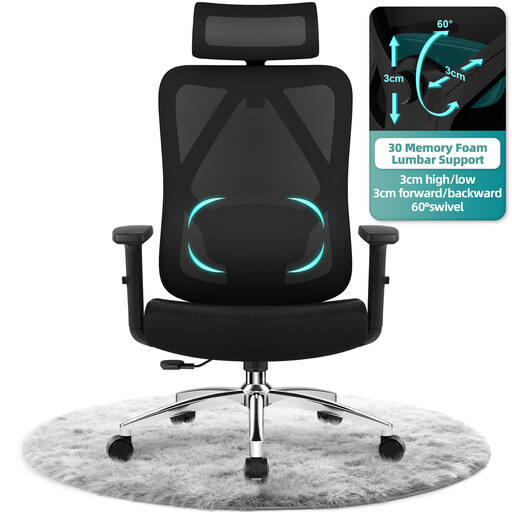
Why it stands out: This model is distinguished by its exceptionally high weight capacity and advanced lumbar support. This makes it an excellent option for users with a higher body weight or those seeking maximum stability. It can be considered an ergonomic executive chair.
Advantages:
Who is it for? Individuals who need an extremely stable chair with a high load capacity. Also ideal for users who sit for many consecutive hours and desire precisely adjustable lumbar support.
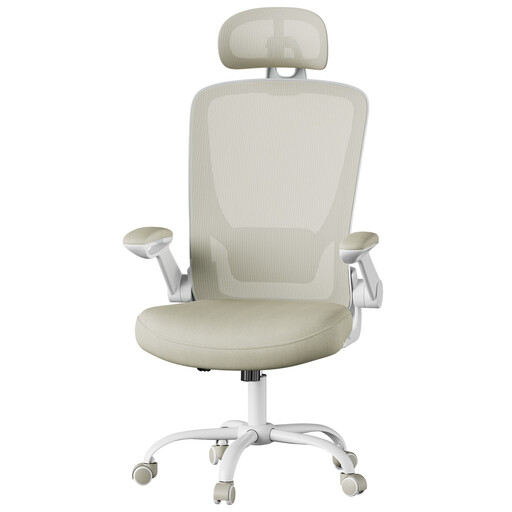
Why it stands out: This model combines essential ergonomic functions with a bright, appealing design and a practical feature for smaller spaces: flip-up armrests.
Advantages:
Who is it for? Users in a home office chair setup or in workspaces with limited room. The light colour scheme also appeals to users who value a home-like aesthetic.
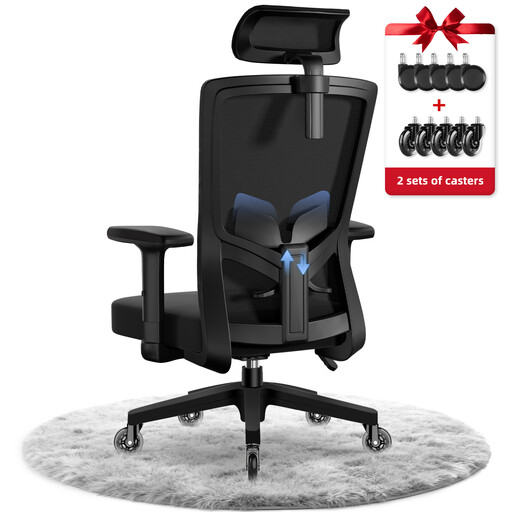
Why it stands out: A versatile model that offers a solid balance between adjustability, weight capacity, and a relaxing rocking function.
Advantages:
Who is it for? A great all-round solution for the office or home office. Suitable for users who appreciate reliable ergonomic support and the added option for dynamic movement through a rocking function.
If you are seeking a specific aesthetic for your office, such as a beige swivel chair, you may find the right model in our broader collection.
Discover more options in our category here.
An office chair is considered ergonomic when it has multiple adjustment options to adapt to the user's individual body measurements and needs. These typically include an adjustable seat height, seat depth, backrest, armrests, and lumbar support. The goal is to promote a healthy, neutral posture and minimise strain.
A basic setup can be done in a few steps:
Lumbar support is a very important feature, especially for long periods of sitting. It fills the gap between the backrest and the natural inward curve of the lumbar spine (lordosis). This helps to maintain the spine's S-shape, relieves pressure on the intervertebral discs, and can prevent the development of lower back pain.