
Lieferung heute & morgen

Qualitätsgarantie

Willkommens-Angebote freischalten: KOSTENLOSE Lieferung | Bis zu 80 % RABATT | Kostenlose 30-Tage-JoyPlus-Testphase
App herunterladen
Long workdays at a desk, whether in the office or at home, can take a heavy toll on the body. Poor posture often leads to tension and discomfort. An ergonomic office chair is designed to support your body and promote a healthy posture. As your Joybuy Product Recommendation Officer, my mission is to provide you with objective information and clear guidance. This article will help you understand the key features and make an informed choice that meets your individual needs.
Choosing the right chair depends on your personal needs and work habits. The following criteria provide a foundation for your decision.
An ergonomically designed desk chair should adapt to your body, not the other way around. Look for the following adjustment options:
The materials influence both the comfort and the longevity of the chair.
Based on the criteria mentioned, we have compiled a selection of models that stand out for their functionality and specific features.
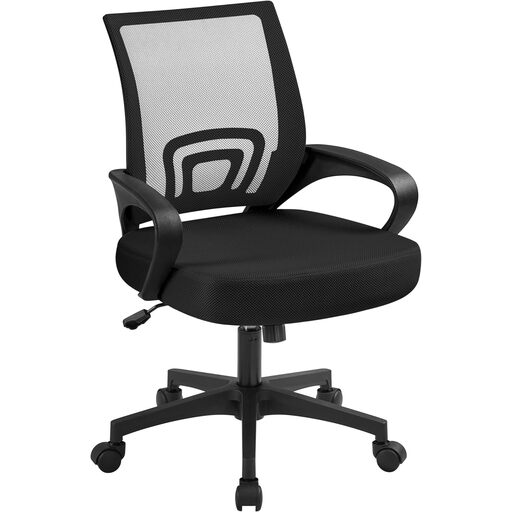
What Makes It Stand Out This model offers solid ergonomic fundamentals for daily work. The curved backrest with integrated lumbar support promotes correct posture. The breathable mesh backrest and padded seat ensure comfort during extended periods of sitting. Its stability is confirmed by SGS and BIFMA certifications.
Benefits
Who It's For This swivel chair for the home office is a great choice for users looking for a reliable and comfortable chair for daily use who also value good air circulation for their back.
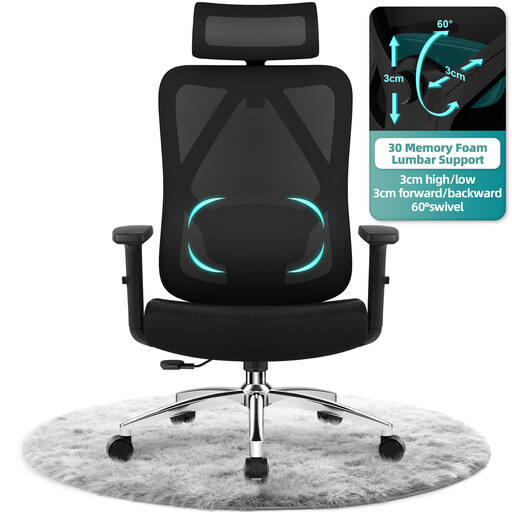
What Makes It Stand Out The GTIMEX office chair is distinguished by its exceptionally high weight capacity and advanced adjustment options. The 3D adjustable lumbar support made of memory foam can be customized in height, depth, and angle. The aluminum alloy base and gas lift are designed for a load of up to 200 kg.
Benefits
Who It's For This model is ideal for individuals with a higher body weight or for anyone seeking an exceptionally robust and versatile chair with targeted lumbar support for intensive work sessions.
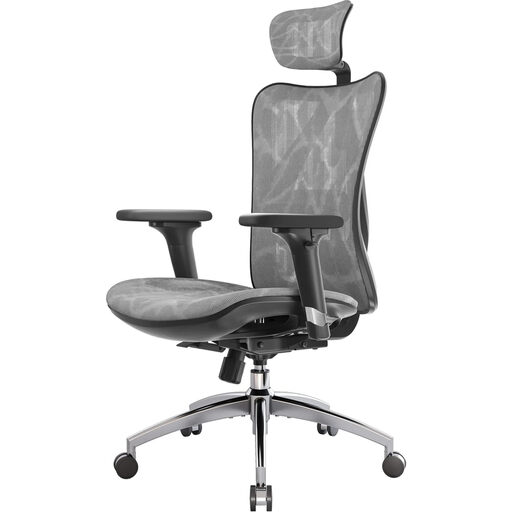
What Makes It Stand Out The Sihoo M57S offers a comprehensive suite of adjustment features. With five adjustment modes—from the lumbar support and headrest to the 3D armrests—this chair can be precisely tailored to the user. The W-shaped seat with a waterfall edge is designed to reduce pressure on the legs.
Benefits
Who It's For This chair is an excellent choice for users who want maximum flexibility and individual adjustability to optimize their workspace down to the last detail. It is suitable for both professional offices and demanding home office setups.
Haven't found the right model for you yet, or want to compare more options? Discover a wider selection of chairs designed for comfort and ergonomics.
? Explore more ergonomic mesh office chairs here
An office chair is considered ergonomic if it has multiple adjustment features that allow it to be adapted to the user's individual body measurements and needs. These typically include adjustable seat height, seat depth, customizable armrests, and a backrest with lumbar support that promotes dynamic sitting.
The ideal seat height is achieved when your feet are flat on the floor and your knees form an angle of about 90 degrees. Your thighs should be parallel to the floor. The armrests should be adjusted so that your forearms can rest on the desk surface at a 90-degree angle with your shoulders relaxed.
Lumbar support is a key feature of an ergonomic chair. It fills the gap between the lumbar spine and the backrest, supporting the natural curve of the lower back. This helps to relieve pressure on the spinal discs, prevent poor posture, and reduce the risk of back pain during long periods of sitting.