
Lieferung heute & morgen

Qualitätsgarantie

Willkommens-Angebote freischalten: KOSTENLOSE Lieferung | Bis zu 80 % RABATT | Kostenlose 30-Tage-JoyPlus-Testphase
App herunterladen
By: Joybuy Product Recommendation Officer
Long hours at a desk have become the norm for many people, whether working from home, in the office, or studying. Discomfort, tension, and a decline in concentration can result if your chair doesn't meet your body's needs. The right chair is therefore not an afterthought, but a foundation for productive work and personal well-being.
This guide is designed to help you navigate your options. We'll explain the key features to look for when making your selection and present a curated list of models that cater to different needs. Our goal is to provide you with an objective basis for your decision.
The term "ergonomic" is not a protected designation. It's therefore crucial to understand the specific features that make a chair truly adjustable and supportive.
An adjustable office chair can be tailored to your body's unique dimensions. Fundamental adjustment options include:
A well-designed ergonomic desk chair offers these essential adjustments to promote a neutral and supportive posture.
The human spine has a natural inward curve in the lower back (lordosis). An office chair with lumbar support is designed to fill this gap, stabilising the lower back. This helps prevent unhealthy slouching and reduces pressure on the intervertebral discs. Ideally, this support is adjustable in height and depth to perfectly match the unique curve of your spine.
A chair's material affects both its comfort and its longevity. An office chair with a mesh back offers excellent air circulation. This is particularly beneficial on warmer days or during long periods of sitting, as it reduces heat and moisture buildup. Padded foam seats should have a high density to retain their shape and prevent bottoming out even after extended use.
Based on the criteria mentioned, we have compiled a selection of chairs that stand out for their specific features and applications.
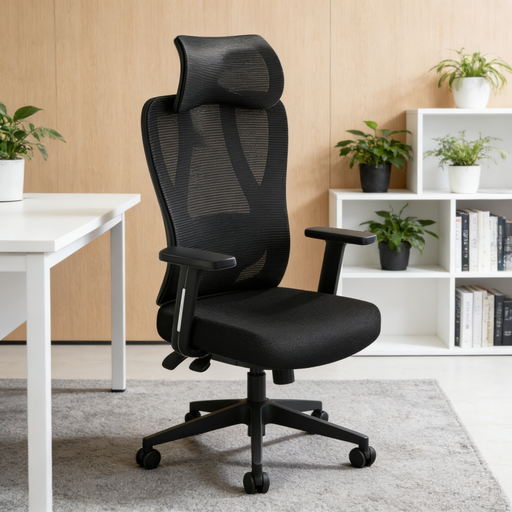
Why it stands out: This model blends the demands of a professional workspace with those of a gaming station. A key highlight is its 4D pivoting lumbar support, which allows for precise, four-way adjustment to the lower back. The backrest's generous recline angle of up to 140 degrees also provides opportunities for extended periods of relaxation.
Advantages:
Who is it for? For users who sit for extremely long periods—whether for work or gaming—and require maximum adjustability for a personalised fit. The combination of ergonomic support and a deep recline angle makes it highly versatile.
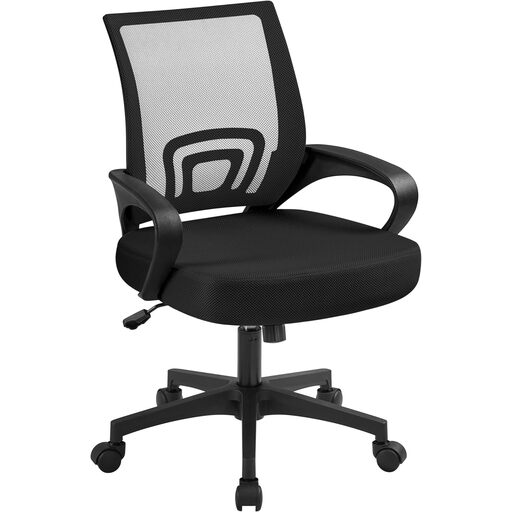
Why it stands out: The Yaheetech office chair focuses on essential ergonomic features within a minimalist design. Its construction has passed SGS and BIFMA certifications, indicating tested stability and durability. Furthermore, the use of FSC-certified boards in the seat highlights a commitment to responsible resource management.
Advantages:
Who is it for? Ideal for the home office or workplace where a reliable, certified chair is needed for daily use. It provides solid core features for improved posture without overly complex adjustment mechanisms.
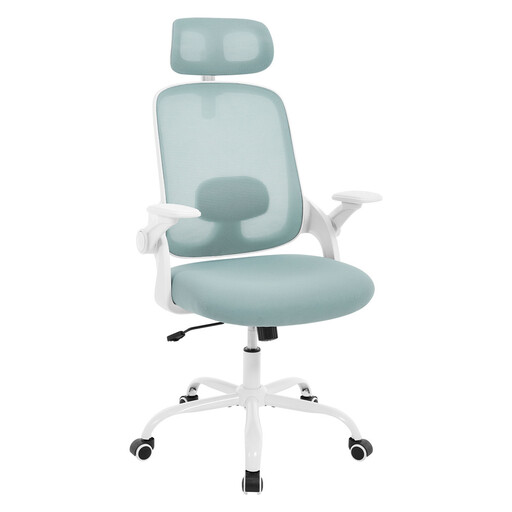
Why it stands out: This model from Woltu places a special emphasis on air circulation and flexibility. Its "dual ventilation system," consisting of a mesh backrest and a hollow seat design, ensures a consistently cool sitting experience. Another practical feature is the flip-up 3D armrests, which allow you to tuck the chair neatly under the desk to save space.
Advantages:
Who is it for? For individuals who tend to get warm or work in warmer environments and prioritise climate comfort. The flip-up armrests also make it an excellent choice for workspaces with limited room.
Choosing the right office chair is a highly personal decision that depends on your preferences, body type, and the specific demands of your daily work routine. While the models presented here cover a broad spectrum, they represent just a fraction of the available options.
If you'd like to compare more models with different features, materials, and designs, you can find a wider selection in our comprehensive Office Chairs category.
Focus on three key areas:
A general guideline for the basic setup is as follows:
Many modern gaming chairs offer advanced ergonomic features that also make them suitable for long workdays. Features like adjustable lumbar support, 4D armrests, and high backrests with headrests are common in both categories. The differences often lie in the aesthetics, which are typically more pronounced in gaming chairs, and in features like an extreme recline angle. Models like the ochama×J.ZAO Z5 demonstrate that the lines between a high-quality gaming chair and an ergonomic office chair are increasingly blurring.