
Lieferung heute & morgen

Qualitätsgarantie

Willkommens-Angebote freischalten: KOSTENLOSE Lieferung | Bis zu 80 % RABATT | Kostenlose 30-Tage-JoyPlus-Testphase
App herunterladen
If you work at a desk for several hours every day, you need more than a padded seat and an attractive design. An ergonomic office chair should be adjustable to suit your height, desk height and way of working. Choosing the wrong size, limited adjustment options or materials that don’t suit your everyday needs are among the most common reasons for buying the wrong chair.
This guide explains which features matter when buying an ergonomic desk chair and which models may suit different needs.
A headrest, tilt mechanism or prominent armrests may look impressive at first glance. What matters, though, is whether you can adjust these features to suit you. For example, a fixed lumbar support may sit too high or too low for people of different heights. If you’re considering an office chair with lumbar support, check whether its position can be adjusted and how much adjustment is available.
A 3D armrest is only useful if you can adjust it to suit the desk height and your preferred sitting position. The key factors are height, depth and angle of rotation.
A breathable mesh office chair can help air circulate around your back. However, the material alone can’t make up for a poorly designed seat. The quality of the mesh, the tension of the backrest and the stability of the frame all matter. You should also check the seat padding. A W-shaped seat with a rounded front edge may reduce pressure on your thighs, but it needs to suit the way you sit.
When choosing a sturdy office chair rated for up to 150 kg, don’t just look at the advertised maximum weight capacity. You should also check the design of the base, gas lift, castors and frame. Don’t exceed the stated weight limit. The chair must also be assembled fully according to the instructions, and you should check regularly for loose fittings.
You should be able to adjust a height-adjustable office chair so that both feet rest firmly on the floor. Your knees shouldn’t sit noticeably higher or lower than the seat for extended periods. That’s why it’s important to check not just the overall dimensions, but also the seat height, seat depth and seat width.
If the seat is too deep, you may not be able to sit back against the backrest. A seat that’s too short, on the other hand, may not provide enough support for your thighs. Compare the manufacturer’s measurements with the desk you’ll be using.
A high-back office chair has a tall backrest which, depending on the model, may reach up to your shoulders or head. Adjustable lumbar support can make it easier to tailor the chair to different heights. However, it isn’t a medical treatment and doesn’t replace individual advice if you’re experiencing discomfort.
According to the product details, the backrest on the light grey Sihoo M57S can be adjusted between 90 and 126 degrees. This allows you to sit upright or lean back slightly. The grey version is described as offering five adjustment areas: lumbar support, headrest, seat height, recline and 3D armrests.
If you’re choosing an office chair with 3D armrests, check that the directions of adjustment are clearly stated. According to the product information, the Sihoo M57S armrests can be adjusted in height and depth, and rotated by 36 degrees. This can be useful when switching between tasks such as typing, reading or video calls.
The polyester mesh back helps air circulate. The seat on the grey version has a W-shaped design with high-density polyurethane foam. The listed materials include polyester mesh, nylon, polyurethane foam, polyurethane castors and steel for the gas lift mechanism.
You can take any available certification details into account when assessing stability. The grey model lists BIFMA and SGS certifications. These details shouldn’t be taken as a general guarantee of seating comfort or health benefits.
The product cards below compare the available models based on specific features. The descriptions are based on the product information provided and don’t replace trying the chair for yourself.
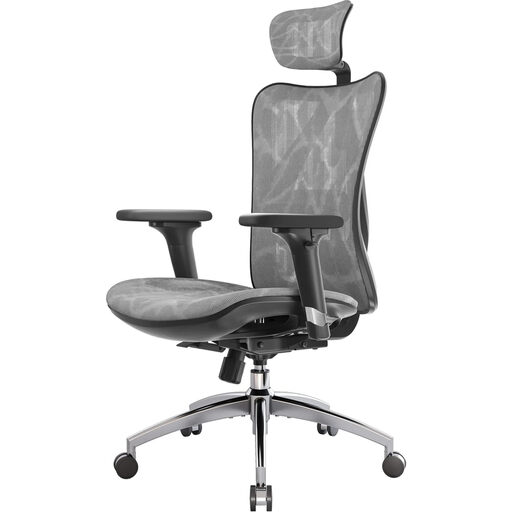
Why this product suits these needs: The grey version combines a high backrest, mesh material and several essential adjustment options for office and home office workspaces.
The product details list adjustable lumbar support, seat height, recline and 3D armrests, rather than an entirely fixed design. The weight limit of 150 kg must not be exceeded.
Polyester mesh back, W-shaped seat, quiet PU castors, plus stated BIFMA and SGS certifications.
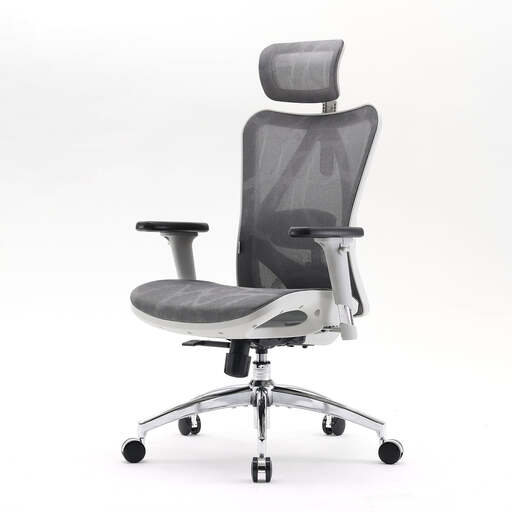
Why this product suits these needs: This version is for anyone looking for an adjustable high-back office chair with a headrest, aluminium frame and documented product details.
The manufacturer lists specific adjustment ranges: 8 cm of seat-height adjustment, a backrest recline of 90 to 126 degrees, and 3D armrests with height, depth and rotation adjustment.
Aluminium frame, polyester mesh, adjustable headrest and a 3-year warranty, according to the product details.
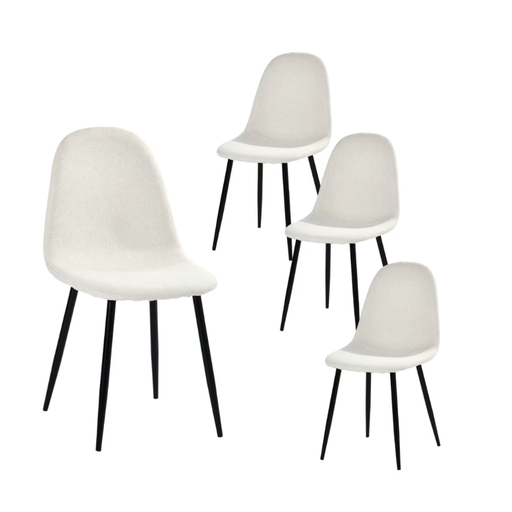
Why this product suits these needs: These padded chairs are suitable for a dining table, reading nook or occasional tasks. They’re not a replacement for an ergonomically adjustable office chair for daily desk work.
Making the distinction clear helps prevent a dining chair being mistaken for an ergonomic computer chair for home working simply because it has a high backrest.
Four padded chairs, metal legs, non-slip floor protectors and a stated weight capacity of 100 kg per chair.
We’ve put together a complete, regularly updated list of products that fully meet these strict selection criteria and the safety regulations in force in the EU.
An ergonomic office chair is usually delivered flat-packed. Before using it for the first time, tighten all the screws according to the instructions. Pay particular attention to:
Mesh, plastic and metal can generally be cleaned with a soft, slightly damp cloth. Avoid abrasive cleaning products and excessive moisture. Check screw connections regularly. Use the chair only on a flat, stable surface, and don’t use it as a step or climbing aid.
First, adjust the seat height until both feet are flat on the floor. Then adjust the seat depth, backrest, lumbar support and armrests. Position the armrests so that your shoulders aren’t held up for long periods. The best settings may vary depending on what you’re doing.
Its lifespan depends on the weight it supports, how long it’s used, how it’s assembled, the quality of its materials and how well it’s cared for. It’s therefore difficult to give a reliable general estimate in years. Information about the warranty, spare parts, maximum weight capacity and retightenable screw connections can help you assess a chair.
No. Price alone tells you little about whether a chair will fit you. What matters more is clear information about the seat dimensions, adjustment ranges, materials, weight capacity, warranty and assembly. A model with fewer features may suit your height and way of working better than a considerably more expensive chair with dimensions that don’t fit you.