
Lieferung heute & morgen

Qualitätsgarantie

Willkommens-Angebote freischalten: KOSTENLOSE Lieferung | Bis zu 80 % RABATT | Kostenlose 30-Tage-JoyPlus-Testphase
App herunterladen
Long workdays at a desk, whether in the office or at home, have become the norm for many of us. This often leads to neck and back strain. A suitable ergonomic office chair is not a luxury, but a fundamental component for a healthy and productive workspace.
This article serves as your guide. We'll introduce the key features to look for when making your selection and present a curated list of models with various functions to help simplify your decision.
Choosing the right chair depends on your individual needs. However, there are three key aspects you should always consider to find a model that provides optimal support for your body.
A chair can only be truly ergonomic if it can be adapted to your body. Look for the following adjustment options:
The backrest is the core of an ergonomic chair. An S-shaped backrest that follows the natural curve of your spine is ideal.
The chair's base ensures safety and durability. A stable base made of metal or robust plastic with at least five casters is standard. Look for certifications like EN 1335, the European standard for office chairs, which provides information on dimensions, safety, and durability.
Here is a selection of models that stand out for their specific ergonomic features and functions.
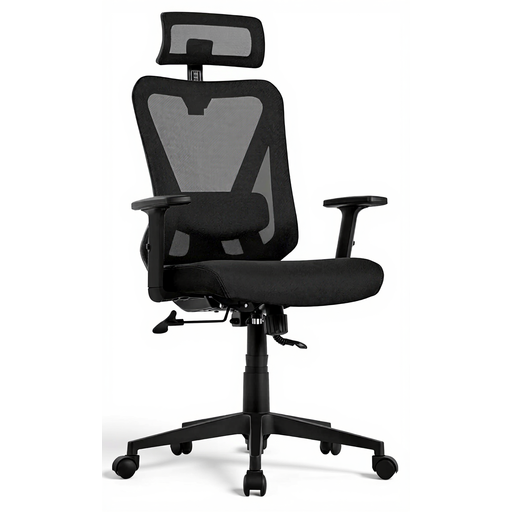
Why this model stands out: The Yaheetech office chair offers a comprehensive suite of adjustment options. Nearly every element, from the headrest and armrests to the lumbar support, can be customized to the user. The mesh backrest ensures good ventilation. According to the manufacturer, the chair is certified to EN1335 and SGS standards and has passed BIFMA standard load tests.
Advantages:
Who is this model for? This desk chair is an excellent choice for individuals who sit for many hours a day and are looking for a chair with maximum adjustability to promote a healthy posture.
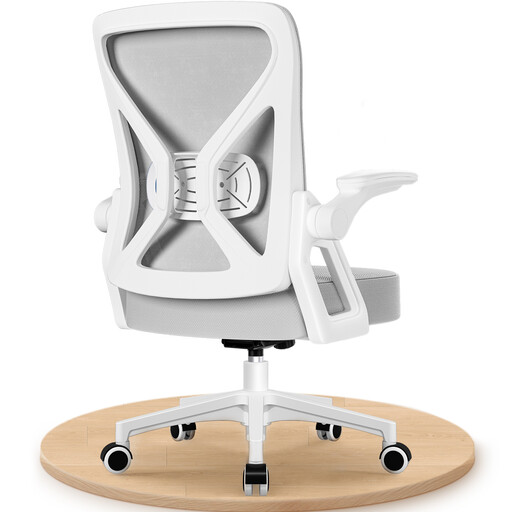
Why this model stands out: The GTIMEX office chair combines essential ergonomic functions with a practical design feature: flip-up armrests. This allows the chair to be pushed neatly under the desk to save space. The adjustable lumbar support and tilt function help maintain a healthy sitting posture.
Advantages:
Who is this model for? This model is particularly suitable for users in home offices or other offices where flexibility and space-saving storage are important, without sacrificing key ergonomic features.
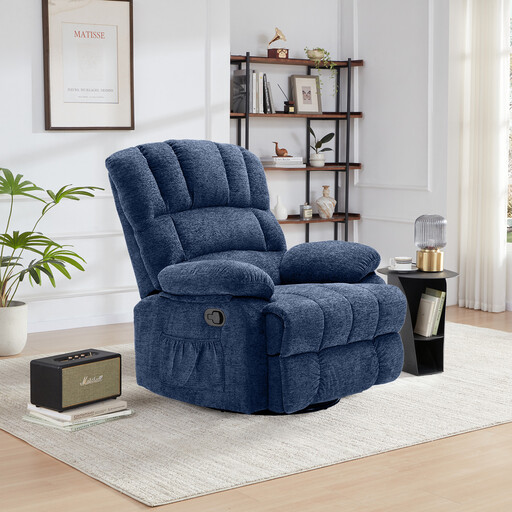
Why this model stands out: The HONEYOU chair takes a different approach, positioning itself as a comfort-focused executive chair or recliner. With its oversized seat, thick padding, and a deep recline function of up to 160 degrees, the clear focus here is on relaxation. The 360° swivel and rocking functions make it a piece of furniture for breaks or less intensive work periods.
Advantages:
Who is this model for? This chair is ideal for people who have a workspace in their living area and are looking for a piece of furniture that serves as seating for both relaxed activities and breaks. It is designed less for eight hours of focused computer work and more for comfort and relaxation.
If your focus is on maximum comfort and relaxation, like that offered by the HONEYOU chair, other models might also interest you. Discover our wide selection of Swivel Recliner Chairs and find the perfect model for your personal relaxation zone.
An office chair is considered ergonomic if it can be adjusted to the user's body dimensions to support a healthy and natural posture. Key features include adjustable seat height, seat depth, and armrests; a backrest that supports the S-shape of the spine (especially with lumbar support); and mechanisms that encourage movement while sitting (e.g., a tilt function or synchronous mechanism).
Start with the seat height: your feet should be flat on the floor. Then, set the seat depth so there are about three fingers of space between the front edge of the seat and the back of your knees. Adjust the lumbar support so it comfortably supports your lower back. Finally, adjust the armrests so that your forearms rest at a right angle with your shoulders relaxed.
Even in the best ergonomic office chair, it's not advisable to remain in the same position for hours on end. Regular movement is more important than the total time spent sitting. Stand up at least once an hour, stretch, and walk a few steps. Use your chair's dynamic features to change your sitting position frequently.