
Lieferung heute & morgen

Qualitätsgarantie

Willkommens-Angebote freischalten: KOSTENLOSE Lieferung | Bis zu 80 % RABATT | Kostenlose 30-Tage-JoyPlus-Testphase
App herunterladen
By Joybuy Product Recommendation Officer, August 30, 2026
The search for the right home office chair can quickly become overwhelming. Many hours at a desk take their toll, and an unsuitable chair is often the cause of muscle tension and waning concentration. However, the market is flooded with models whose marketing promises often suggest more than the construction actually delivers.
This guide will help you identify the crucial features and avoid common purchasing traps. We focus on the objective criteria that make a chair truly ergonomic, so you can make an informed decision for your health and productivity.
Before we delve into the important features, let's shed light on the three most common pitfalls that can lead to a bad investment.
To avoid these traps, you should focus your attention on three technical specifications that are crucial for long-lasting sitting comfort.
The mechanism determines how the seat and backrest move. Simple models often only have a rocker mechanism, where the angle between the seat and backrest remains fixed. For dynamic sitting, a synchronous mechanism is essential. Here, the backrest and seat tilt in an ergonomically ideal ratio (e.g., 3:1), which relieves pressure on the spinal discs and promotes circulation. Look for the ability to adjust the backrest's recline tension to your body weight.
A good desk chair with lumbar support offers more than just a curve in the backrest. The key is adjustability. Ideally, the support can be adjusted in both height and depth to match the natural S-curve of your spine. Dynamic lumbar support, which automatically adapts to your movements, is an advanced solution that ensures continuous support.
An office chair with adjustable armrests is a must-have to relieve strain on the shoulder and neck area. The adjustment options are often indicated in dimensions (D):
For people who type a lot, at least 3D armrests are recommended to provide optimal support for the forearms.
Based on these objective criteria, we have compiled a selection of chairs suitable for various user profiles and requirements for the home office chair.
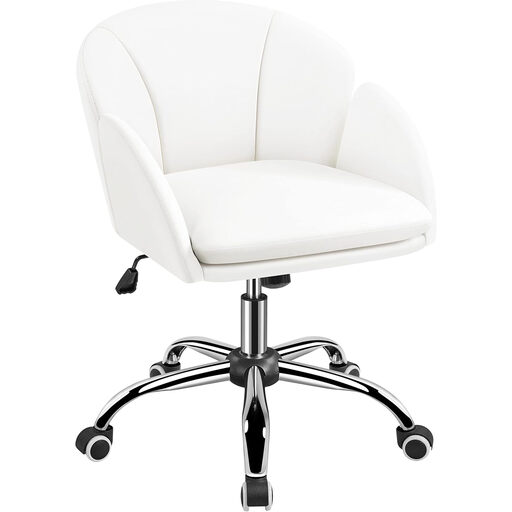
Why This Fits Their Persona: Ideal for users who prioritise aesthetics in their home office and use the chair for moderate periods. It blends seamlessly into living rooms and bedrooms without looking like a purely functional piece of furniture.
This chair avoids the trap of false ergonomic promises. It is clearly positioned as a design-oriented chair with basic comfort features (height adjustment, tilt function), not as a high-performance ergonomic chair for all-day users.
Elegant design with velvet upholstery; stability tested according to EN12520 and a high load capacity of up to 136 kg.
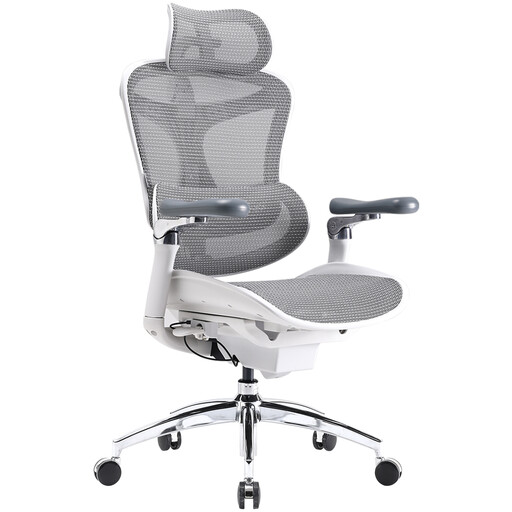
Why This Fits Their Persona: Designed for individuals who spend many hours at their desk daily and value maximum adjustability and preventive health benefits. A true ergonomic desk chair for professional demands.
This model delivers on the 'ergonomic' promise with verifiable, advanced features. Instead of a rigid support, it offers dynamic lumbar support and 6D armrests that go far beyond the standard, avoiding the 'one-size-fits-all' trap.
Dynamic, self-adjusting lumbar support; fully configurable 6D armrests to relieve strain on arms, shoulders, and neck.
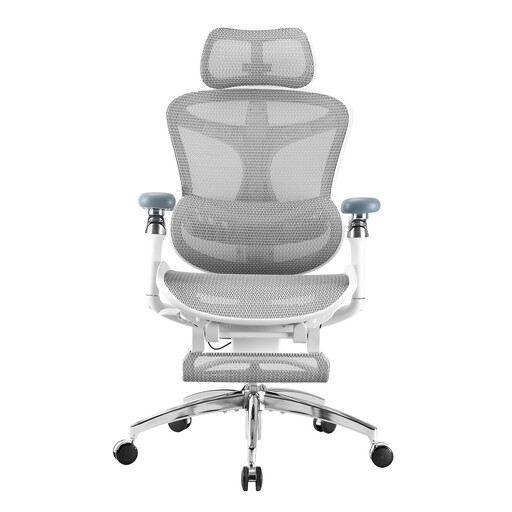
Why This Fits Their Persona: Perfect for users who not only want optimal support while working but also value relaxation during breaks. The office chair with a footrest allows for a comfortable, reclined position right at the workspace.
This model enhances an already highly functional ergonomic design with an additional comfort feature. It avoids the trap of prioritising a gimmick over core functionality by integrating the footrest as a sensible addition to an already top-tier chair.
Integrated, retractable footrest for relaxing breaks; retains all the advanced ergonomic features of the standard Doro C300 Pro model.
We have compiled a complete, up-to-date list of products that fully meet these strict selection criteria and relevant safety standards.
The lifespan of a high-quality office chair is typically between 7 and 10 years. Crucial factors include the quality of the materials (e.g., a metal base instead of plastic), the robustness of the mechanism, and the abrasion resistance of the upholstery. On many quality models, wear-and-tear parts like gas lifts or castors can be replaced if needed, which extends the chair's lifespan.
Both materials have their pros and cons. Mesh is very breathable, which is particularly advantageous in warmer environments or for people who tend to sweat easily. It provides firm, contoured support. Upholstered chairs with high-quality cold foam often offer a softer feel. Here, the density of the foam is crucial to prevent the seat from flattening out after a short time. The choice is ultimately a matter of personal preference and the work environment.
While simple swivel chairs are available at low prices, the category of chairs with true ergonomic adjustment capabilities starts in the mid-range price segment. Models with a synchronous mechanism, adjustable lumbar support, and multi-dimensional armrests represent an investment. However, this investment often pays for itself through increased comfort, better posture, and the prevention of health issues that can arise from prolonged sitting.