
Lieferung heute & morgen

Qualitätsgarantie

Willkommens-Angebote freischalten: KOSTENLOSE Lieferung | Bis zu 80 % RABATT | Kostenlose 30-Tage-JoyPlus-Testphase
App herunterladen
An ergonomic office chair should help you find a suitable sitting position when working from home, studying or gaming. In practice, however, eye-catching designs and extensive product claims don’t automatically mean a desk chair is right for you. What matters is adjustable sizing, a sturdy construction and features suited to your height and how you plan to use it.
By Joybuy Product Recommendation Officer
A chair may have a headrest, armrests and lumbar support without being suitable for every height. The number of features matters less than their adjustment range. Before you buy, check in particular:
An adjustable-height office chair should allow you to sit with both feet flat on the floor. Your knees should be at roughly a right angle. If the seat is too deep, the backrest may be uncomfortable even if it is well padded.
The stated maximum weight capacity primarily describes the chair’s structural limit. It doesn’t automatically mean the seat will be comfortable for everyone. So also consider the seat width, padding thickness, frame material and the stability of the castors and base.
For longer periods of sitting, a breathable mesh back may feel more comfortable than a fully upholstered surface. Faux leather is easy to wipe clean, but can feel warmer depending on the room temperature.
An office chair with a footrest is best suited to breaks, reading or sitting back and relaxing. A pull-out footrest isn’t a substitute for setting the chair to the correct working height. When typing, your feet should be stable and your forearms should rest comfortably.
A backrest with a wide recline range isn’t necessarily suitable for focused office work either. Check whether the mechanism offers several useful intermediate positions and whether the seat remains stable when you lean back.
The seat height needs to suit your height and desk height. Product details that give a specific range are more useful than the general term ‘ergonomic’. For example, the GTIMEX office chair is listed as having a seat height adjustment range of 43 to 53 cm. According to the product description, it is designed for people around 145 to 185 cm tall.
An office chair with lumbar support may have an adjustable support or one that responds dynamically to movement. Neither necessarily means it has a medical benefit. Adjust the function so it doesn’t push your lower back forwards uncomfortably.
According to the supplier, the SIHOO Doro C300 has self-adjusting lumbar support, a four-stage backrest with 6 cm of vertical adjustment and recline angles of 110°, 120° and 130°. These features allow for more precise adjustment, but don’t replace individual seating advice.
An office chair with armrests should support your elbows in a relaxed position without raising your shoulders. Depending on the model, 3D armrests can move in several directions. An office chair headrest is particularly useful when you lean back, but shouldn’t push your head forwards all the time.
Also check:
Standards such as EN 1335, BIFMA or information about REACH should be clearly specified in the product listing. A certification relates to specific requirements; it isn’t a blanket promise of personalised seating comfort.
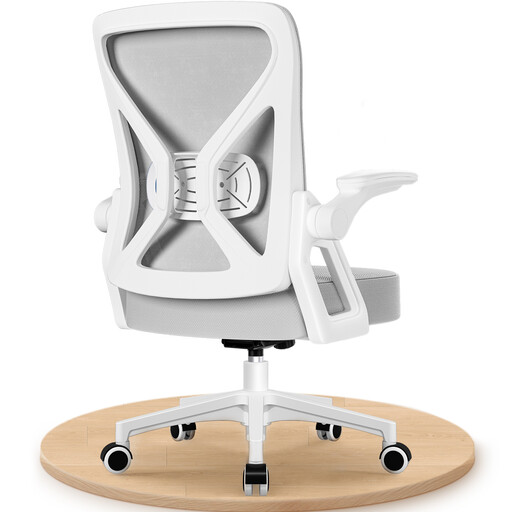
Why this product suits this profile: This computer chair combines essential adjustment options with a breathable backrest, making it suitable for working from home, studying and everyday office work.
The product description gives specific figures for seat height, recline and weight capacity rather than relying on general comfort claims.
Seat height 43–53 cm, backrest reclines up to 125°, fold-up armrests and a stated weight capacity of up to 150 kg.
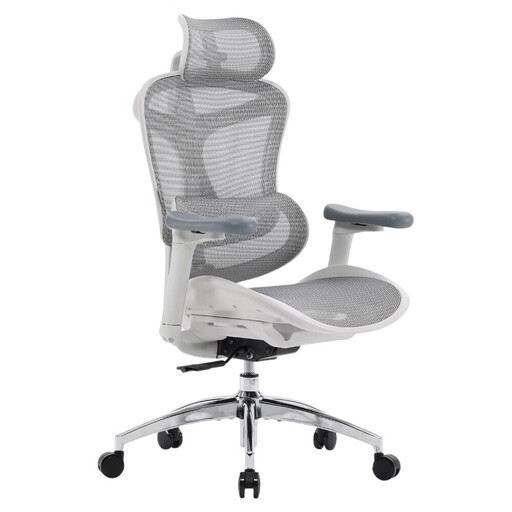
Why this product suits this profile: This model offers several adjustment points for users who want to tailor their work chair precisely to their height and sitting posture.
The supplier’s information lists specific adjustment settings, materials and a maximum weight capacity of 150 kg.
Breathable mesh back, self-adjusting lumbar support, 3D armrests and three specified recline angles.
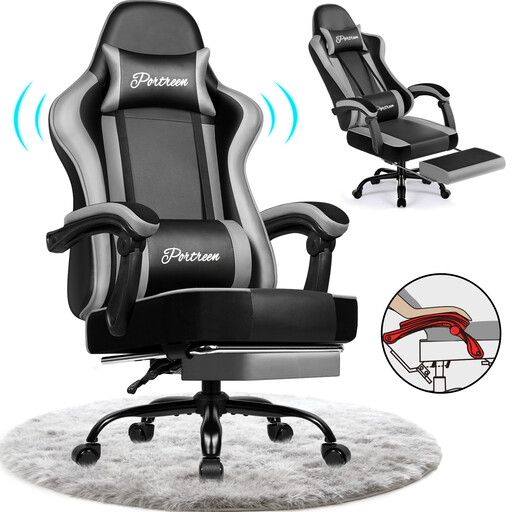
Why this product suits this profile: This ergonomic gaming chair is designed for people who switch between working, gaming, reading and relaxing with the chair reclined.
The features are described using specific angles and measurements: a backrest recline of 90–170°, 10 cm of seat height adjustment and a pull-out footrest.
Headrest and lumbar support, height-adjustable armrests, metal frame and a stated weight capacity of up to 150 kg.
We’ve put together a complete, regularly updated list of products that fully meet these strict selection criteria and the safety regulations in force in the EU.
First, adjust the seat height so that your feet rest firmly on the floor. Then adjust the backrest, lumbar support and armrests. Your screen should be directly in front of you, where possible, so you don’t have to keep turning your head. Change your sitting position regularly and get up from time to time.
If you have a swivel chair, check the screws, castors, gas lift and base regularly. Clean the upholstery, mesh fabric and faux leather according to the care instructions. Don’t use a chair with visible cracks, loose joints or damaged castors until you’ve found out what’s wrong.
The seat is at the right height when both feet rest flat on the floor and your knees remain at roughly a right angle. Your forearms should also rest comfortably on the desk or armrests.
Its lifespan depends on the construction, daily use, body weight, floor surface and maintenance. Giving a general number of years wouldn’t be reliable. Check all moving and load-bearing parts regularly, and follow the maximum weight capacity.
The price depends on factors such as the mechanism, materials, range of adjustments and weight capacity. Don’t compare the purchase price alone: also consider spare parts availability, warranty information, assembly requirements and whether the chair suits your height. A basic desk chair may be enough for occasional use; for long periods of sitting, precise adjustment options matter more.