
Lieferung heute & morgen

Qualitätsgarantie

Willkommens-Angebote freischalten: KOSTENLOSE Lieferung | Bis zu 80 % RABATT | Kostenlose 30-Tage-JoyPlus-Testphase
App herunterladen
An ergonomic office chair should provide practical support throughout your working day at a desk. Many models look similar at first glance, but can differ considerably in their adjustment options, seat dimensions and materials. If you focus only on the design or a product’s claim to be “ergonomic”, you could end up with a chair that doesn’t suit your body, desk or how you plan to use it.
An office chair with lumbar support can be a good choice if you can adjust the support’s height or depth. However, a fixed curve won’t suit every height. If it sits too high, it can put pressure on your lower back; if it sits too low, it won’t provide the support you want. Look for clear information about adjustability rather than relying on the word “ergonomic” alone.
An adjustable-height office chair with a tilt mechanism, headrest and armrests isn’t automatically the right choice. Seat height, seat depth and seat width are among the key things to consider. When seated, your feet should be able to rest flat on the floor. There should be a little space between the back of your knees and the front edge of the seat, so the seat doesn’t press uncomfortably against your legs.
A mesh office chair can help air circulate around your back, making it a good option for warm rooms. However, mesh feels different from a padded backrest. If you’re considering a padded computer chair, check the material details and padding thickness. The stated maximum weight capacity is also important. Don’t confuse it with a general claim about the chair’s sturdiness.
The seat height needs to suit both your desk and your height. For example, the models listed in the product details have seat height adjustment ranges of 35 to 45 cm for the Yaheetech model and 43 to 53 cm for the GTIMEX chair. These figures offer a useful starting point, but you’ll still need to check your own seating position.
Seat depth affects how well the backrest and seat work together. If the seat is too deep, you may not be able to sit with your back against the backrest. If it’s too short, it may provide less support for your thighs. Compare the measurements with a chair you already own and find comfortable.
An adjustable backrest lets you adapt your seating position for activities such as typing, reading or taking part in meetings. For longer periods of work, adjustable lumbar support can be more practical than a fixed contour. A reclining function, such as the GTIMEX model’s recline of up to 125 degrees, can be useful for breaks. However, it shouldn’t be seen as a substitute for a suitable working posture.
An office chair with armrests should leave enough clearance under your desk. Armrests that fold up or out of the way are handy in smaller rooms. Check whether they simply fold up or can also be adjusted for height and width.
An office chair with a footrest can be useful when you want to relax during breaks. For your usual working position, though, your feet should still rest firmly on the floor. Castors and 360-degree swivel make it easier to move around your workspace, but you’ll need a level floor. On delicate flooring, a suitable protective mat may be a good idea.
Compare the stated maximum weight capacity with your body weight, allowing for clothing and any dynamic movement. According to the product details, the Yaheetech model is designed to support up to 136 kg, while the JOYFURNOS chair supports up to 120 kg. Avoid exceeding these limits. After assembly, check that all the screws are tight and that the gas lift has been fitted correctly.
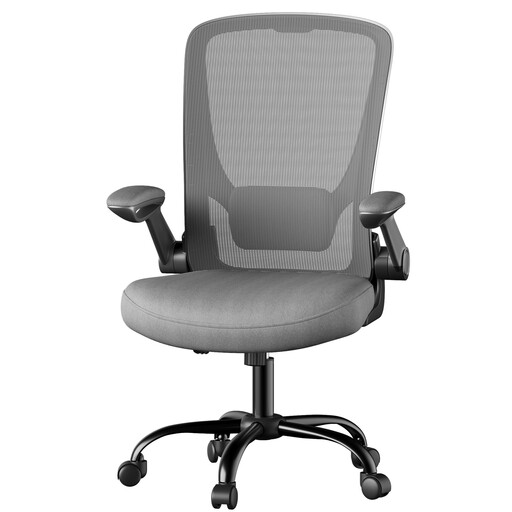
Why this product suits this profile: The chair combines an adjustable-height seat, mesh back and fold-up armrests, making it a practical choice for a home office or study area with limited space.
The product details list specific features, such as a mesh back, gas lift and folding armrests, rather than relying on general comfort claims.
Breathable mesh back, 360-degree swivel and space-saving armrests.
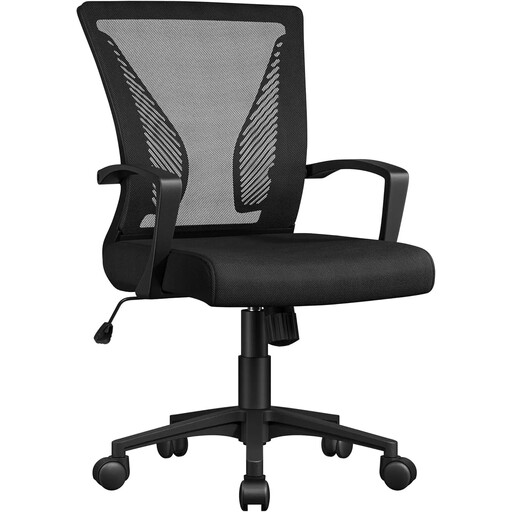
Why this product suits this profile: The product details specify the seat dimensions, seat height range, material, number of castors and a weight capacity of 136 kg. This makes it easier to compare options on their merits before buying.
The stated dimensions and weight limit help you choose a chair based on more than just its appearance.
Mesh material, adjustable-height seat, armrests and five castors.
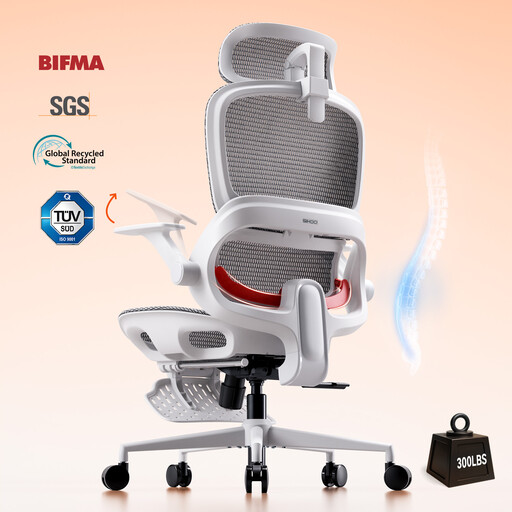
Why this product suits this profile: According to its product description, this model combines a high backrest, adaptive lumbar support, folding armrests and a footrest for working and taking breaks.
Using the footrest separately from your working position makes it clear that a reclining feature shouldn’t be confused with having the right desk height.
Footrest, adaptive lumbar support and flip-up armrests, according to the product description.
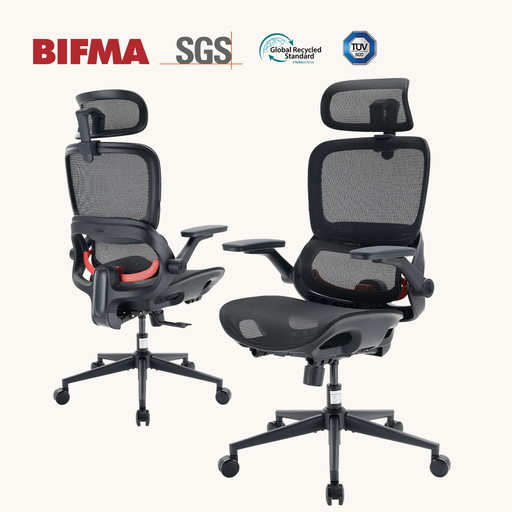
Why this product suits this profile: This mesh chair is designed for extended periods at the computer and features adaptive lumbar support, a wide headrest and swivel armrests.
Adaptive support and adjustable armrests address two common drawbacks of fixed office chairs.
Mesh design, adaptive lumbar support and 360-degree swivel, according to the product description.
We’ve put together a complete, regularly updated list of products that meet these strict selection criteria and the safety regulations in force in the EU.
First, adjust the seat height so both feet rest firmly on the floor. Your knees should be at roughly a right angle. Then adjust the backrest so your back is supported. The lumbar support should gently support your lower back without creating pressure. Position the armrests so your shoulders stay relaxed and your forearms rest roughly horizontally.
Its lifespan depends on how often it’s used, the user’s weight, the materials, assembly and care. Regularly check the screws, castors, armrests and gas lift. Remove dust from mesh chairs; upholstery can usually be cleaned with a soft cloth. It isn’t possible to give a reliable estimate of how long a chair will last without knowing how it will be used.
The price mainly depends on the seat mechanism, adjustment options, materials, weight capacity and features. A basic adjustable-height computer chair may be enough for occasional use. If you work from home for many hours every day, compare the seat dimensions, back support, armrests, and information on spare parts or the warranty. What matters isn’t how many features a chair has, but whether they suit the way you sit.