
Lieferung heute & morgen

Qualitätsgarantie

Willkommens-Angebote freischalten: KOSTENLOSE Lieferung | Bis zu 80 % RABATT | Kostenlose 30-Tage-JoyPlus-Testphase
App herunterladen
Long days at the desk, whether in a corporate office or a home office, place significant demands on our bodies. Sitting for hours in an unsuitable position can lead to neck tension, lower back pain, and generally poor posture. A suitable ergonomic office chair is therefore not a luxury, but a fundamental component of a healthy and productive workspace.
This article serves as a comprehensive guide. It explains the key criteria that define a good ergonomic desk chair and presents a selection of models that cater to different needs and use cases. The goal is to provide you with an objective basis for your purchasing decision.
The right chair depends on individual needs. However, three main aspects are crucial for almost every user: adjustability, material, and stability.
An adjustable computer chair is the foundation of ergonomic sitting. Look for the following customisation options to tailor the chair precisely to your body's dimensions:
Integrated lumbar support is a critical feature for supporting the lower back. It fills the natural curve of the lumbar spine, promoting an upright sitting posture. A swivel chair with lumbar support can help reduce the strain on the spinal discs.
For taller individuals or those who desire comprehensive support for the entire back, an office chair with a high backrest is recommended. This supports not only the lumbar region but also the thoracic spine and shoulder girdle. An additional, adjustable headrest can relieve neck strain when in a reclined position.
The material affects both the comfort and the durability of the chair. Mesh fabric is particularly breathable and ensures excellent air circulation, which is beneficial on warm days or during long periods of sitting. Upholstery in fabric or velvet offers a softer seating surface and a different aesthetic appeal.
Stability is determined by the base and the gas lift. Pay attention to the specified maximum weight capacity of the chair to ensure it is designed for your body weight. High-quality casters protect the floor and allow for smooth movement around your workspace.
Based on the criteria mentioned, we have compiled a selection of models that stand out for their functionality and design, suitable for various applications as a home office chair and in a professional workspace.
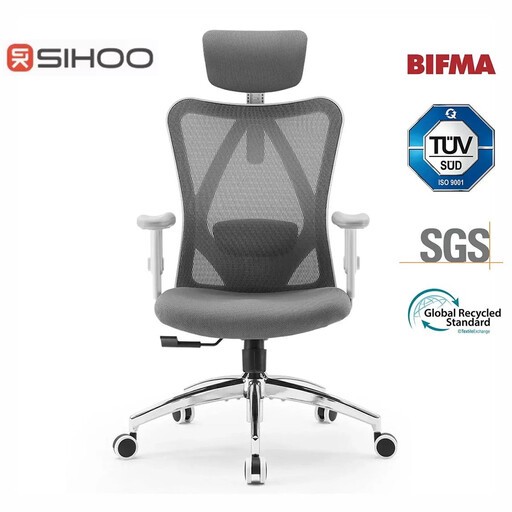
Why This Model Stands Out The Sihoo M18 offers a comprehensive suite of ergonomic adjustments. With an adjustable headrest, lumbar support, armrests, and seat height, it can be precisely tailored to the user. The backrest, made of high-elasticity mesh, promotes air circulation and prevents heat build-up.
Advantages
Who Is This Model For? This chair is a solid choice for individuals who spend many hours at their desk daily and are looking for a functional all-rounder with comprehensive adjustment options for their home or corporate office.
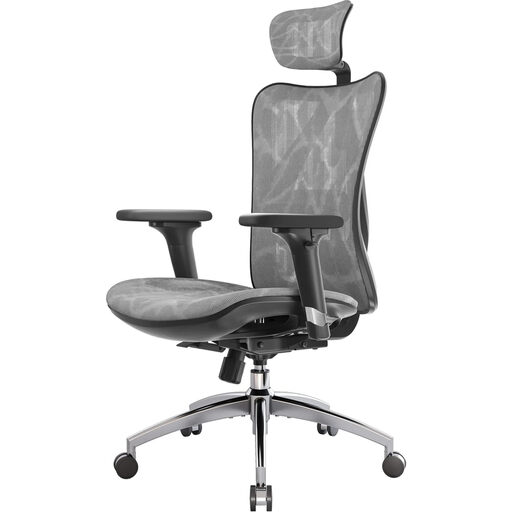
Why This Model Stands Out The Sihoo M57S enhances the functionality of the M18 with 3D-adjustable armrests, which can be adjusted not only in height but also sideways and forwards/backwards. This allows for even more precise alignment to relieve arm and shoulder strain. The dynamic lumbar support adapts to the user's movements.
Advantages
Who Is This Model For? Ideal for users who value maximum customisation. The 3D armrests and dynamic lumbar support provide added value for anyone needing to fine-tune their seating position.
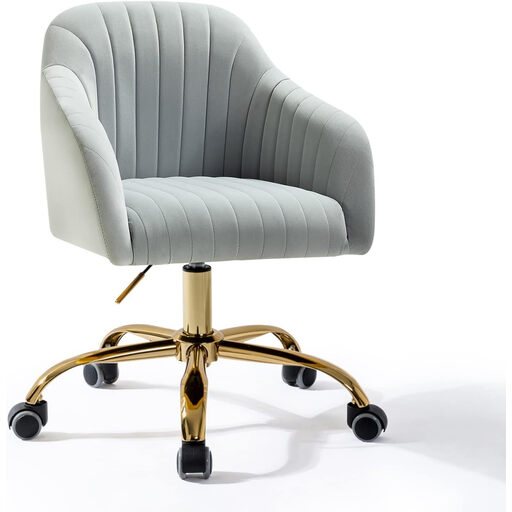
Why This Model Stands Out The HULALA HOME chair combines basic ergonomic functions with a residential aesthetic. The velvet upholstery and gold accents on the metal base make it a piece of furniture that seamlessly integrates into a living room or bedroom.
Advantages
Who Is This Model For? This model is aimed at users for whom aesthetics are as important as functionality. It is a great solution for workspaces in living areas, at a vanity table, or for shorter periods of sitting where basic adjustments are sufficient.
If our featured models don't quite match your aesthetic preferences, especially if you are planning an interior with specific colour accents, you can find more options in our collection. Discover a wider range of furniture, including chairs in various designs and materials.
Browse our category for grey and gold furniture.
An office chair is considered ergonomic if it has a wide range of adjustment options to adapt to the user's individual body dimensions and needs. Key features include adjustable seat height, seat depth, backrest, and armrests, as well as adequate support for the lumbar spine (lumbar support).
A basic adjustment involves four steps:
Lumbar support is very important because it supports the natural S-curve of the spine in the lumbar region. Without this support, the lower back tends to flatten outwards, which can lead to increased strain on the spinal discs and back pain. Good lumbar support promotes an upright posture and reduces fatigue during long periods of sitting.