
Lieferung heute & morgen

Qualitätsgarantie

Willkommens-Angebote freischalten: KOSTENLOSE Lieferung | Bis zu 80 % RABATT | Kostenlose 30-Tage-JoyPlus-Testphase
App herunterladen
By the Joybuy Product Recommendation Officer, July 28, 2026
Long days at a desk, whether in a corporate office or a home office, often take their toll in the form of tension and back pain. An ergonomic office chair is frequently touted as the solution, but the market is overwhelming. Many products promise more than they can deliver, leading to costly purchasing mistakes. Before you invest, you should understand the common pitfalls often hidden behind appealing marketing.
Pitfall 1: The Empty Promise of "Ergonomic" The term "ergonomic" is not a protected term. Many chairs bear this label without offering the necessary individual adjustment options. A chair that cannot be adapted to your body size and sitting habits is not an ergonomic solution, but merely a standard swivel chair.
Pitfall 2: Lack of Stability and Short-Lived Materials A glossy finish and a modern design can mask poor-quality construction. Weak gas lifts that lose their lifting power after a few months or plastic bases that break under load are common defects. A chair not designed for sustained use quickly becomes a drain on your wallet and your health.
Pitfall 3: "One-Size-Fits-All" Designs An office chair isn't a t-shirt. A model designed for a person who is 1.65 m (5'5") tall cannot possibly provide the same support for someone who is 1.90 m (6'3"). A lack of adjustability in seat depth, backrest height, or armrests inevitably leads to an unhealthy sitting posture.
To avoid these pitfalls, focus on verifiable, objective criteria. These features determine whether a chair will provide long-term support for your workday.
A true ergonomic office chair adapts to you, not the other way around. Look for the following adjustment options:
The longevity of a chair depends directly on the materials used and its tested stability.
We have selected products from our range that meet specific requirements and exhibit the quality features mentioned.
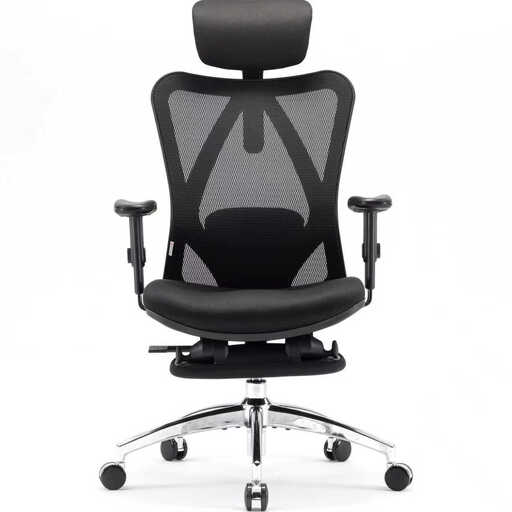
Why this model is a great fit: Ideal for individuals who spend many hours a day in a home or corporate office. Its comprehensive adjustment options and additional footrest provide maximum relief during long work sessions and breaks.
This chair goes beyond the mere "ergonomic" marketing label by offering five separate adjustment points (backrest, headrest, seat height, tilt, armrests). The SGS and BIFMA certifications confirm its stability and longevity.
Full Customisability: Five adjustment axes plus a retractable footrest for relaxation. High Weight Capacity: Supports up to 150 kg (330 lbs), confirmed by certifications.
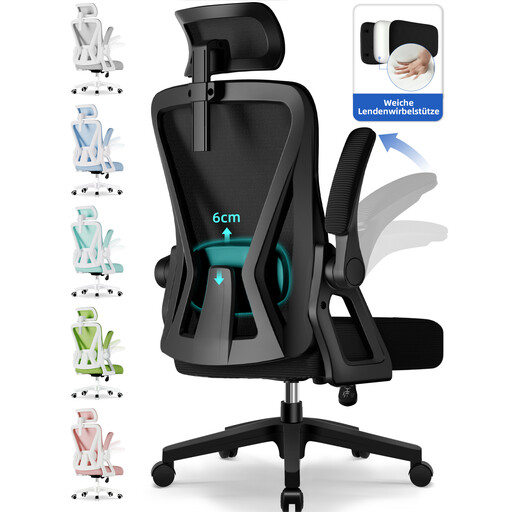
Why this model is a great fit: A solid choice for users seeking a noticeable upgrade from a standard desk chair without needing a premium budget. It offers the essential ergonomic features for daily use.
This model avoids the "one-size-fits-all" pitfall with an adjustable headrest, a 6 cm adjustable lumbar support, and a 10 cm seat height adjustment range. According to the manufacturer, the gas lift has passed a static pressure test of 1136 kg, indicating a robust build.
Solid Core Features: Provides all key adjustments (lumbar, head, height) for a healthy posture. High Weight Capacity: With a load capacity of 150 kg (330 lbs), it's a stable option even for heavier users.
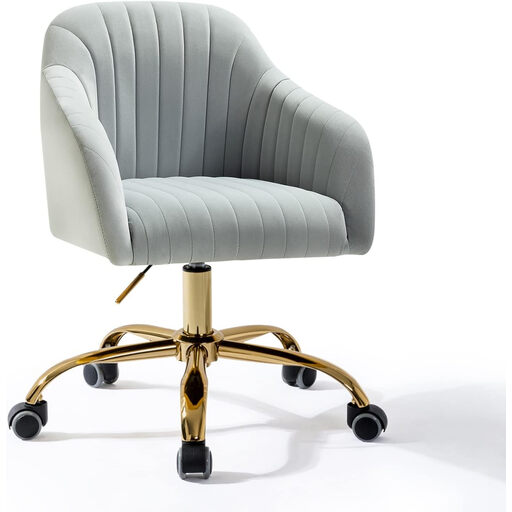
Why this model is a great fit: Perfect for users where aesthetics in the home office are just as important as comfort for moderate use. It blends seamlessly into a living room or bedroom setting.
This model doesn't promise full-scale ergonomics for 8-hour days. It delivers the fundamental features of a good desk chair—a height adjustment from 78 to 90 cm and 360-degree mobility—in a high-end design, without setting false expectations.
Stylish Design: High-quality velvet fabric and gold-coloured metal elements visually enhance any workspace. Essential Comfort: The high-resilience foam padding offers comfortable support for shorter work periods.
We have compiled a complete, up-to-date list of products that fully meet these strict selection criteria and safety standards.
1. What do BIFMA and SGS certifications mean for an office chair? BIFMA and SGS are independent organisations that test products for safety, durability, and structural integrity. A BIFMA certification, for example, means the chair has passed tests for seat and backrest load capacity, base stability, and the lifespan of its casters and gas lift. These seals are an objective proof of a chair's quality and longevity.
2. How long does a good ergonomic office chair last? The lifespan heavily depends on material quality, construction, and usage. A chair with a steel or aluminium base, a high-quality gas lift (Class 3 or 4), and BIFMA certification can easily last 5 to 10 years with normal use. Cheaper models with plastic components often show the first signs of wear after just 1 to 2 years.
3. Is a mesh backrest better than a padded one? Both materials have their pros and cons. Mesh is very breathable, which is especially pleasant on warm days or during long periods of sitting. It conforms well to the shape of the back. A padded backrest (often found on an executive chair) is perceived by some as softer and more comfortable but offers less air circulation. The choice is ultimately a matter of personal preference and temperature sensitivity.