
Lieferung heute & morgen

Qualitätsgarantie

Willkommens-Angebote freischalten: KOSTENLOSE Lieferung | Bis zu 80 % RABATT | Kostenlose 30-Tage-JoyPlus-Testphase
App herunterladen
An ergonomic office chair should reliably support you throughout the working day at home, in the office, while studying or gaming. In practice, however, it is not just the appearance and padding that matter. A lack of adjustment options, unclear load specifications or an unsuitable seat height can mean that a chair no longer suits your workstation after a short time.
This buying guide explains which details are important before you buy and which models suit different usage profiles.
The label alone tells you very little. More useful are clear, verifiable details such as the seat-height range, recline angle, adjustable lumbar support or height-adjustable armrests. An office chair with a headrest can be a sensible choice if the backrest and headrest can actually be adjusted to suit your height.
An office chair rated for up to 150 kg is not automatically suitable for every person or seating position. What matters is whether this figure refers to the maximum static load and whether it applies to the entire chair. The chair should be placed on a level surface and used for sitting only.
A breathable mesh office chair can provide good air circulation during longer periods of sitting. However, mesh does not replace a properly sized seat. Very soft padding will not suit everyone either. Measurements such as seat width, seat depth and seat height should be compared with your desk and height.
A height-adjustable desk chair should be adjustable so that your feet rest firmly on the floor and your knees remain at roughly a right angle. Desk height must also be taken into account. For the models presented here, the recommended heights vary by product, ranging from approximately 145 to 190 cm.
Look out for:
An adjustable lumbar support can be adapted to your individual sitting position more effectively than a permanently integrated, heavily pronounced curve. The GTIMEX model with headrest is specified as having lumbar support that can be adjusted by 6 cm in height. According to the product details, the backrest can recline from 90° to 135° and lock in several positions.
These details describe the product’s construction but are not a medical guarantee. If you already have discomfort or pain, individual advice from a medical professional may be advisable.
An office chair with armrests should be adjusted so that your shoulders remain relaxed. Folding armrests can also create more space beneath your desk. A headrest is particularly practical if its height and angle can be adjusted.
With a rocking function, you should check whether:
Mesh backrests promote air circulation. Faux-leather or PU covers, on the other hand, are generally easier to clean with a damp cloth. Details such as BIFMA or SGS should always be checked in the relevant product listing. According to the product description, the GTIMEX office chair has BIFMA and SGS certification for its gas lift and base. The product listing also states that the mechanism has been tested for more than 120,000 cycles.
Such details refer to the specified product components and do not replace checking the assembly, operating instructions and load limit.
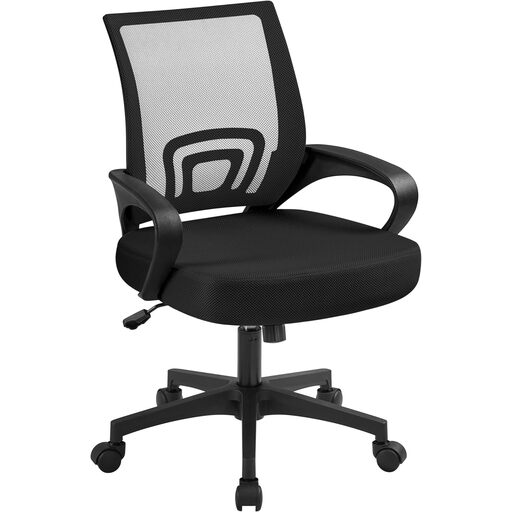
Why this product suits the profile: This model combines a breathable mesh backrest, padded seat, height-adjustable seat and rocking function for home working, studying or office use.
The product details provide specific measurements, a seat-height range of 35 to 45 cm and a load capacity of up to 136 kg, rather than making only general comfort claims.
Mesh backrest, integrated lumbar support, armrests and stated SGS and BIFMA details according to the product description.
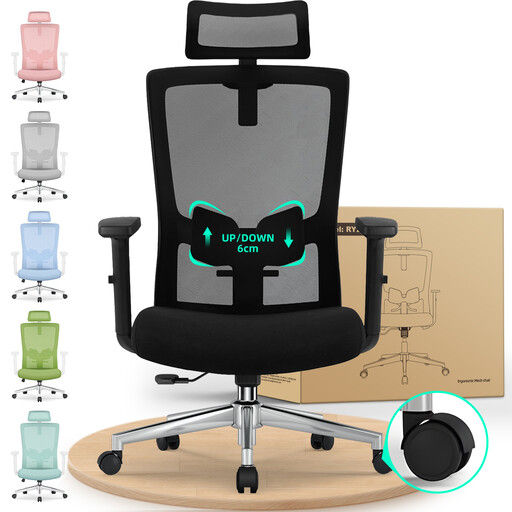
Why this product suits the profile: Suitable for users looking for an office chair with headrest, multiple adjustment options and a clearly stated load capacity of 150 kg.
The product description specifies seat measurements of 50 × 53 cm, a recommended height of 155 to 185 cm and precise values for the headrest and recline angle.
11 cm height-adjustable headrest, 6 cm adjustable lumbar support, mesh backrest and rocking range of up to 135°, according to the product details.
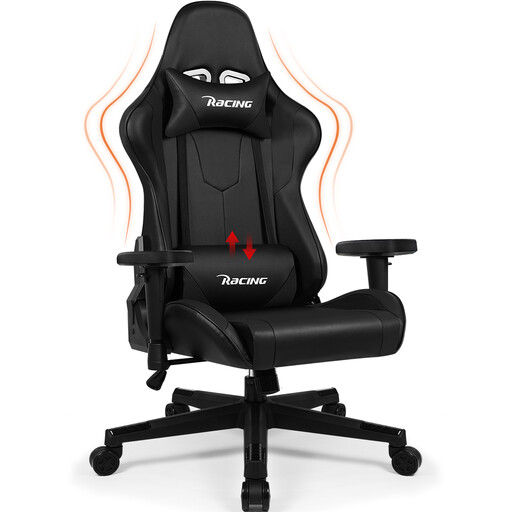
Why this product suits the profile: This model is aimed at gamers and users who want to combine working, gaming and relaxing positions in one chair.
Rather than making a general gaming claim, the specifications state a backrest range of 90° to 170°, a 30° recline function and armrest adjustment of 8 cm.
Metal frame, PVC/PU cover, headrest and lumbar support, plus a recommended height of 158 to 190 cm according to the product description.
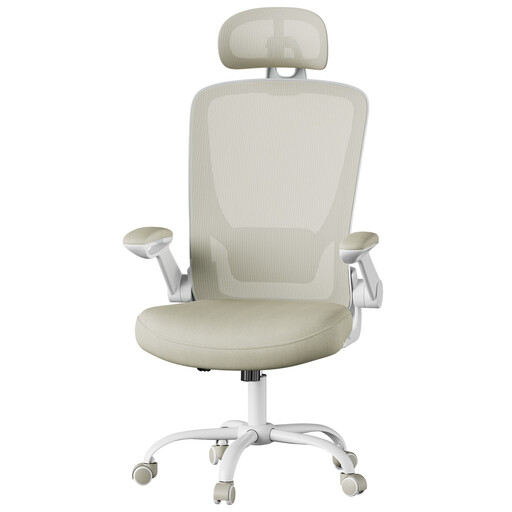
Why this product suits the profile: The folding armrests make it easier to tuck the chair under the desk. This makes it an appealing option for compact home-office or bedroom workspaces.
The description specifies a seat-height range of 46 to 54 cm, a seat depth of 53 cm and a maximum static load capacity of 120 kg.
Breathable mesh seat, 8 cm foam padding, folding armrests, headrest and lumbar support, plus a recline range of 90° to 105°.
We have put together a complete, regularly updated list of products that fully meet these strict selection criteria and the safety regulations applicable in the EU.
A suitable chair can only deliver its full benefits when your workstation is set up correctly:
The seat height should be adjusted so that your feet rest securely on the floor and your knees are not bent sharply upwards or downwards. The right setting depends on your height, desk height and seat dimensions.
Its lifespan depends on daily usage, body weight, the condition of the floor, material care and assembly. Screws and connections should be checked regularly and tightened if necessary. A stated warranty or manufacturer’s specification may also be taken into account when making your purchase decision.
That depends on its adjustment options and dimensions. A gaming chair can be suitable for working from home if the seat height, backrest, armrests and lumbar support are appropriate for your height. A wide recline angle alone is not proof that the chair provides a suitable working position.