
Lieferung heute & morgen

Qualitätsgarantie

Willkommens-Angebote freischalten: KOSTENLOSE Lieferung | Bis zu 80 % RABATT | Kostenlose 30-Tage-JoyPlus-Testphase
App herunterladen
Long days at the desk, whether in the office or at home, place significant demands on our bodies. Poor posture can lead to tension and discomfort. An ergonomic office chair is designed to support the body and promote a healthy posture. This article serves as a guide, introducing various models and their specific features to help you make an informed choice.
The right chair depends on your individual needs. You should consider three key features in your decision.
A fundamental feature of an ergonomic chair is its adaptability. A height-adjustable swivel chair with customisable armrests allows you to precisely tailor your seating position to your body and desk height. Look for features like adjustable seat height, customisable armrests, and a reclining backrest. These elements help ensure your feet rest flat on the floor, your knees form a 90-degree angle, and your arms can rest comfortably on the desk.
Prolonged sitting puts a strain on the lumbar spine. An office chair with lumbar support helps maintain the natural S-curve of the spine. This support fills the gap in your lower back, preventing you from slouching. Some models offer height or depth-adjustable lumbar support, allowing for even more precise customisation to your anatomy.
The chair's material affects both comfort and durability. A breathable office chair, often with a mesh backrest, promotes air circulation and prevents heat buildup during long periods of sitting. This is especially beneficial on warmer days or in less air-conditioned rooms. Alternatives like PU leather offer a different look and feel but may be less breathable. The seat should be made of a firm, high-density foam to distribute pressure evenly.
Based on the criteria above, we've compiled a selection of chairs that are well-suited for use as a chair for the home office or a professional workspace, thanks to their specific features and materials.

Why it stands out: This model combines an S-shaped contoured backrest with flip-up armrests. This feature makes the chair particularly practical for workspaces with limited room, as it can be easily pushed under the desk.
Benefits:
Who it's for: This ergonomic desk chair is a great choice for home office users who need a flexible, space-saving solution and value a breathable backrest.
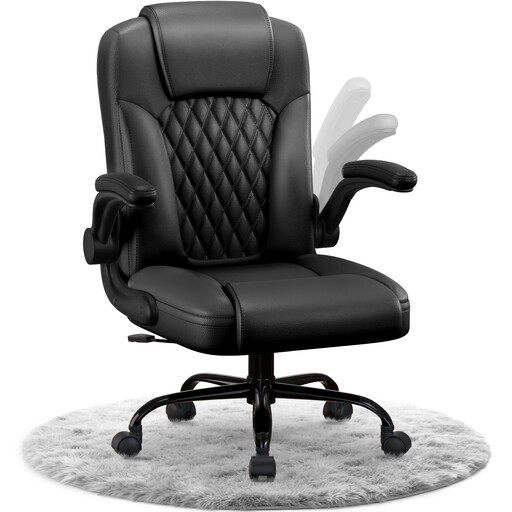
Why it stands out: This model is distinguished by its high load capacity and PU faux leather cover. According to the manufacturer, the seat features a three-layer composite structure of memory foam, natural latex, and high-density foam, designed for even pressure distribution.
Benefits:
Who it's for: Suitable for individuals who need a chair with a higher weight capacity and prefer the look and feel of faux leather. The rocking function offers additional relaxation during work breaks.
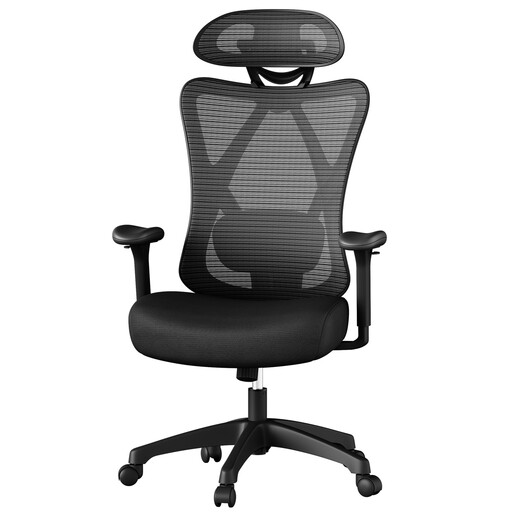
Why it stands out: This model also offers a high load capacity of up to 150 kg and combines it with a breathable mesh backrest. The comprehensive adjustment options for the headrest, lumbar support, and armrests allow for highly precise customisation.
Benefits:
Who it's for: Ideal for users who spend many hours at their desk and are looking for a chair with a high load capacity and maximum adjustment options to find a personalised seating position.
An ergonomic office chair is the foundation of a healthy desk setup. However, some living or work areas require different solutions. For kitchen counters, high-top tables, or bar areas, a stool might be a more suitable choice. If you're looking to complement your decor, discover our selection of grey adjustable bar stools.
A conventional office chair often provides only basic features like height adjustment. An ergonomic office chair, on the other hand, is designed to adapt to the user's individual body through numerous adjustment options (e.g., lumbar support, armrests, seat depth, recline angle). The goal is to support a healthy posture and reduce strain during long periods of sitting.
The ideal seat height is achieved when your feet are flat on the floor and your knees form approximately a 90-degree angle. Your forearms should also be able to rest horizontally on the desk surface or armrests at a 90-degree angle, without you having to raise your shoulders.
The most important criteria are: