
Lieferung heute & morgen

Qualitätsgarantie
App herunterladen
Kategorien
Long hours sitting at a desk are a daily reality for many professionals, students, and gamers. Poor posture can lead to tension and long-term health issues. An ergonomic office chair is designed to support the body and promote a neutral posture. Choosing the right model depends on individual physical needs and specific use cases. This guide breaks down the technical criteria that should inform your decision.
A chair's functionality is determined by its mechanical features and materials. An informed choice is based on an analysis of the following technical parameters.
An ergonomically designed desk chair must be adaptable to the user's body dimensions. Essential adjustment features include:
The lumbar spine has a natural inward curve (lordosis). An office chair with lumbar support fills this gap and stabilises the lower back. Ideally, this support is adjustable in height and sometimes in depth to precisely match the user's spinal curve.
The choice of material affects comfort, durability, and maintenance. Mesh fabric is breathable and promotes air circulation, which is especially beneficial during long periods of sitting. PU leather (polyurethane) or genuine leather offers a classic aesthetic and is typically easy to clean.
The maximum weight capacity is a critical safety feature. Standard models are often rated for up to 120 kg. For greater requirements, there are specialised models like an office chair for up to 150 kg, which features a reinforced frame and gas lift.
A wide base, typically made of metal or durable plastic, ensures high stability and prevents tipping. The casters should be suitable for your flooring: soft casters for hard floors (parquet, laminate) and hard casters for soft floors (carpet).
Based on an analysis of technical specifications and functional features, we present a selection of models designed for different user profiles.
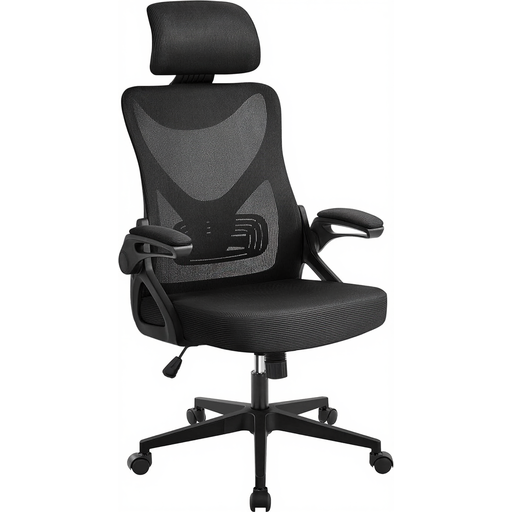
Why We Recommend This Product This model combines the look of a classic executive chair with functional ergonomic features. Its BIFMA and EN1335 certifications confirm compliance with international standards for safety and stability in office furniture. A standout feature is the 90° flip-up armrests, which allow the chair to be pushed completely under the desk to save space.
Pros
Who It's For Users in a corporate office or a chair for a home office who are looking for a professional-looking chair with certified safety and flexible, space-saving features.
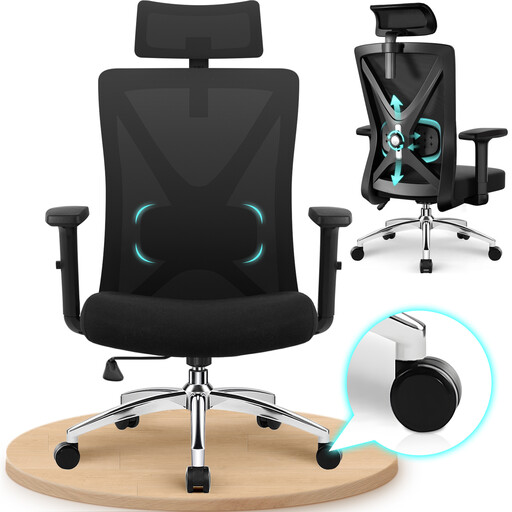
Why We Recommend This Product The GTIMEX office chair stands out for its exceptional level of customisation. In particular, the lumbar support, which is adjustable in both height (6 cm) and depth (3 cm), allows for highly precise alignment with the lower back. Its high weight capacity of 150 kg and breathable mesh fabric make it a solid choice for long and intensive workdays.
Pros
Who It's For Individuals who need an office chair for up to 150 kg and prioritise highly adjustable lumbar support and excellent air circulation.
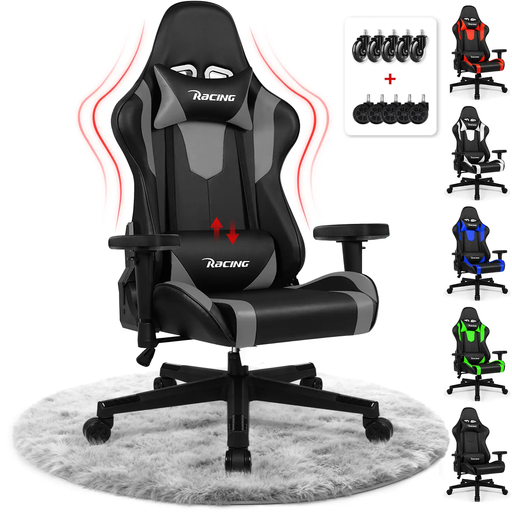
Why We Recommend This Product This gaming chair is designed for long and intensive usage sessions. Its strength lies in its robust steel frame and a deep-reclining backrest that adjusts from 90° to 170°. This allows for not only an upright sitting position but also a near-flat resting position. The separate, adjustable lumbar and neck pillows offer targeted support.
Pros
Who It's For This gamer chair is ideal for gamers and users who need a highly flexible backrest to switch between focused work and relaxation phases.
The models featured here cover specific user profiles. If these don't fully meet your needs, or if you are looking for alternative designs, materials, or price points, you can find a broader selection in our main category. There, you will find additional chair types for various applications.
Discover more models in the category: Office Chairs
1. What makes an office chair ergonomic? An office chair is considered ergonomic if it offers a wide range of adjustment options to adapt to the user's individual body dimensions and movements. This includes, at a minimum, an adjustable seat height, a customisable backrest, and a shape that supports the natural S-curve of the spine, often through an integrated lumbar support.
2. How do I correctly adjust an ergonomic office chair? Start with the seat height, ensuring your feet are flat on the floor. Adjust the seat depth so there is a hand's width of space between the back of your knees and the front edge of the seat. Position the lumbar support at the level of your lower back. The armrests should be set so that your forearms rest at a 90-degree angle and your shoulders are relaxed.
3. How important is the rocking function on an office chair? A rocking or synchronous mechanism promotes "dynamic sitting." It ensures that the seat and backrest move in sync with your body as you lean back. This stimulates blood circulation and can relieve pressure on the spinal discs by preventing static postures. Most ergonomic chairs include this feature, and its resistance can often be adjusted to your body weight.