
Lieferung heute & morgen

Qualitätsgarantie

Willkommens-Angebote freischalten: KOSTENLOSE Lieferung | Bis zu 80 % RABATT | Kostenlose 30-Tage-JoyPlus-Testphase
App herunterladen
By Joybuy Product Recommendation OfficerDate: July 18, 2026
Long days at a desk, whether in a corporate office or a home office, have become the norm for many of us. This can often lead to tension and discomfort, frequently caused by poor posture. A proper ergonomic office chair is not a luxury item but a fundamental component of a functional workspace. It can help promote correct posture and significantly increase comfort throughout the workday.
As your Joybuy Product Recommendation Officer, my goal is to provide you with clear, objective information. This guide is designed to help you understand the essential features of an ergonomic chair and make an informed decision that meets your individual needs.
The market is vast, and technical specifications can be overwhelming. To find a chair that is truly right for you, focus on the following three core aspects.
The lumbar spine (lordosis) is the lower, inward-curving part of your back. An office chair with lumbar support is engineered to support this natural curve, reducing pressure on the intervertebral discs. There are two main types:
Good support in this area is critical for preventing lower back fatigue during long periods of sitting.
An ergonomic desk chair is defined by its wide range of adjustment options.
The material of the seat and backrest directly impacts your comfort. A mesh office chair offers excellent breathability. The mesh fabric allows for continuous air circulation, which reduces heat and moisture build-up, especially on warmer days or during extended periods of sitting. Additionally, the flexible mesh conforms well to the body's contours and distributes pressure evenly.
Based on the criteria above, we have curated a selection of models that stand out for their specific ergonomic features.
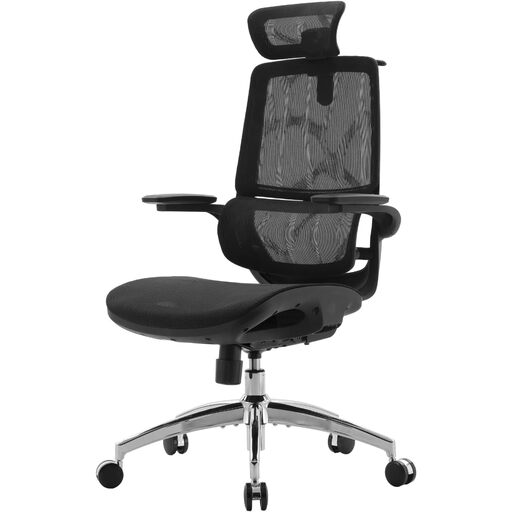
Why It Stands Out: This model is distinguished by its dual-backrest design with adaptive lumbar support. The two backrest sections adjust to the user's movements, aiming to provide continuous support for the lumbar spine. Another key feature is the 80-degree flip-up armrests, which allow the chair to be pushed under the desk to save space.
Pros:
Who It's For: This chair is an excellent option for users in a home office chair setup with limited space. The flip-up armrests and adaptive back support make it a flexible solution for versatile work environments.

Why It Stands Out: This model combines an ergonomically shaped S-curve backrest with an adjustable lumbar support and headrest. The seat cushion is made of 8 cm thick foam covered with breathable mesh fabric, striking a balance between padding and ventilation. The armrests are also designed to flip up.
Pros:
Who It's For: Ideal for individuals who appreciate the support of a mesh backrest but prefer the comfort of a more softly padded seat. Its comprehensive headrest and lumbar adjustments make it suitable for users seeking targeted support.
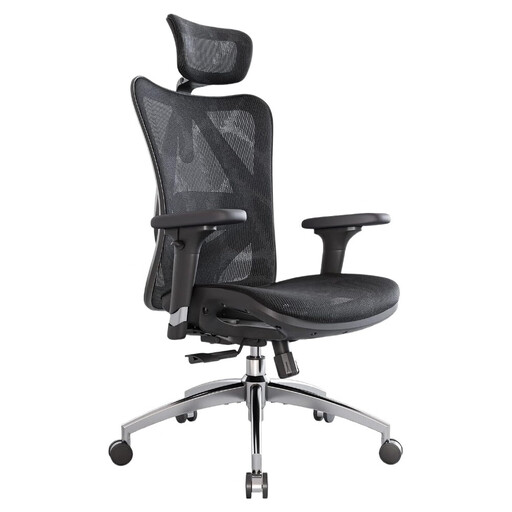
Why It Stands Out: The SIHOO office chair M57S focuses on maximum adjustability, particularly with its armrests. The 3D armrests are adjustable in height, depth, and rotation, allowing for precise positioning of the arms and elbows. The S-shaped backrest features a height-adjustable lumbar support and a high weight capacity of up to 150 kg.
Pros:
Who It's For: This chair is especially suited for users who prioritise precise armrest adjustments or require a higher weight capacity. Its comprehensive adjustment features make it a versatile work tool for demanding users.
Your design and functional requirements are unique. If the models presented here don't perfectly match your vision or if you're looking for a specific aesthetic, there are other alternatives to explore.
For instance, are you searching for a chair with a specific design, like an elegant black and gold chair? Discover more options in our extensive collection to find the perfect seating solution for your workspace.
1. What makes a desk chair ergonomic? A desk chair is ergonomic when it offers multiple adjustment options to fit the user's body. Key features include adjustable seat height, an adaptable backrest with lumbar support, adjustable armrests, a tilt mechanism, and a stable swivel base with casters. The goal is to promote a healthy and comfortable posture.
2. How important is lumbar support in an office chair? Lumbar support is a crucial feature. It supports the natural curve of the lower spine and helps reduce pressure on the intervertebral discs. Without this support, many people tend to slump into a hunched posture, which can lead to long-term back pain. Good support encourages an upright posture and reduces strain on the back.
3. How do I adjust my office chair correctly? A basic adjustment follows these steps: