
Lieferung heute & morgen

Qualitätsgarantie

Willkommens-Angebote freischalten: KOSTENLOSE Lieferung | Bis zu 80 % RABATT | Kostenlose 30-Tage-JoyPlus-Testphase
App herunterladen
An ergonomic office chair should reliably support you throughout your working day or gaming sessions. In practice, however, appearance alone isn’t what makes a chair suitable. The seat height, backrest, armrests, weight capacity and materials all need to suit your body and how you plan to use it.
If you focus only on soft padding or a long list of adjustment options, you could overlook important details. The advice below will help you distinguish marketing claims from product features you can actually check.
An adjustable backrest or an office chair with a headrest may sound versatile. But if the seat is too deep or the backrest doesn’t suit your height, it can be difficult to achieve a stable sitting position. Before buying, check the seat height, width and depth.
Lumbar support isn’t automatically right for everyone. Some models have fixed padding, while others have height-adjustable or self-adjusting designs. The important thing is whether the support sits where you need it in your lower back and stays in place when you lean back.
Maximum weight capacity is an important technical specification, but it doesn’t tell you everything about how suitable a chair is for everyday use. You should also consider the gas lift, base, castors, screw connections and footprint. An office chair rated up to 150 kg should only be used within its stated weight limit. Standing or kneeling on the chair isn’t recommended, regardless of its maximum weight capacity.
When the seat is set to the right height, both feet should rest as fully as possible on the floor. Your knees should remain at roughly a right angle, without the seat edge pressing into your lower legs. If you’re shorter or taller than average, look for a chair with a wide adjustment range.
An office chair with lumbar support can provide adjustable support for your lower back. Models with a breathable mesh back can also help reduce heat build-up compared with fully upholstered backrests. This can be especially useful when working from home or sitting for long periods, but it doesn’t replace regular movement breaks.
Height-adjustable armrests should let you rest your forearms comfortably without raising your shoulders. Depending on the model, the armrests may also adjust in width, depth or angle. If you switch between different desk-based tasks, armrests that move in sync with the backrest can be useful.
Look for:
A gaming chair may appeal to players thanks to its wide seat and generous padding. For focused work, though, it’s the chair’s specific adjustment options that matter — not whether it’s labelled a gaming chair. A gaming chair with a footrest is better suited to longer breaks or reclining than to maintaining an upright working position for extended periods.
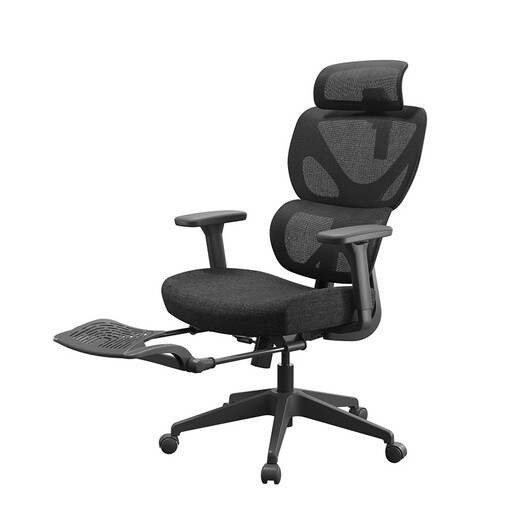
Why this product suits this profile: This chair combines features for office work and gaming, including a footrest, 132° recline, headrest and rotating armrests.
The product details list specific features rather than making a general claim about comfort. Check the latest product information for the maximum weight capacity before buying.
10 cm thick seat cushion, elastic lumbar support, headrest and extendable footrest, according to the product description.
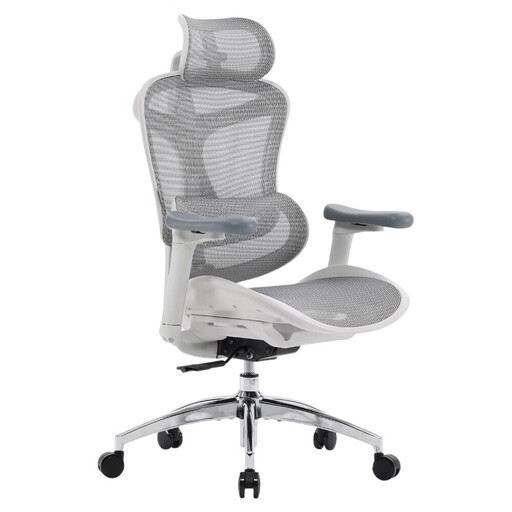
Why this product suits this profile: For regular days working from home or in the office, this model offers several adjustment options and a breathable mesh back.
The details specify a backrest that adjusts vertically by 6 cm, three recline angles and a weight capacity of 150 kg. This makes key buying criteria easy to check.
3D armrests, self-adjusting lumbar support, mesh back and stated standards including EN1335, REACH, TÜV and SGS BIFMA.
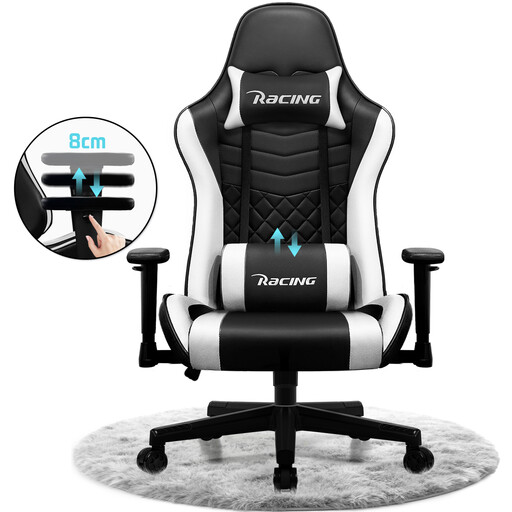
Why this product suits this profile: This model is designed for people looking for a padded gaming chair with adjustable lumbar support and a higher weight capacity.
The product description lists armrests that adjust vertically by 8 cm, height-adjustable lumbar support and a maximum weight capacity of 150 kg.
Steel frame, 360° swivel, tilt function, headrest and stated SGS certification for the gas lift, according to the product description.
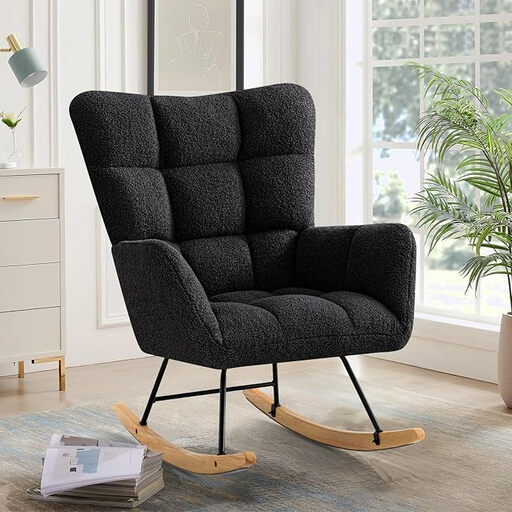
Why this product suits this profile: This upholstered rocking chair is designed for reading, feeding and relaxing in the living room, bedroom or nursery — not for use as a desk chair.
Its intended use is clearly stated. Bear in mind the maximum weight capacity of 113 kg and the assembly required before use.
Steel frame, beechwood runners, Sherpa upholstery, padded armrests and non-slip floor protectors, according to the product description.
We’ve put together a complete, regularly updated list of products that meet these strict selection criteria and fully comply with the safety regulations in force in the EU.
Start with the seat height: both feet should rest firmly on the floor. Then adjust the seat depth, backrest and lumbar support. The armrests should support your forearms without pushing your shoulders up. Your monitor and keyboard should also be positioned to suit your sitting position.
A chair’s lifespan depends on how often it’s used, its construction and materials, and how well it’s maintained. Regularly tightening the screws, cleaning the castors and checking the gas lift can help keep it safe to use. Worn castors, loose connections or damaged padding are all reasons not to continue using the chair as it is.
A suitable chair can help you adjust your sitting position, but it doesn’t replace movement breaks. Regularly alternate between sitting, standing and taking short walks. If you have persistent discomfort, seek medical advice about your individual circumstances.