Joybuy Insights

Ergonomic Office Chair: 2026 Buyer's Guide and Recommendations

Long hours at a desk are a staple of modern work life. An ergonomic office chair is designed to support the body and promote a neutral posture during these periods. Selecting the right model involves analysing adjustability options, materials, and mechanical features tailored to individual physical needs. This article breaks down the technical criteria essential for choosing a chair for your home office or workplace.


Buyer's Guide: What to Look for in an Ergonomic Office Chair

The functionality of an office chair is determined by the interplay of its components. The following technical features are crucial for making an informed decision.

1. The Chair Mechanism: The Heart of the Chair's Movement

The mechanism controls the movement of the seat and backrest. There are two common systems to consider:

  • Synchronous Mechanism: With this mechanism, the backrest and seat tilt in a synchronised ratio (e.g., 2:1 or 3:1). When you lean back, the seat pan tilts up slightly. This promotes dynamic sitting by opening the angle between your torso and thighs, which can improve circulation.
  • Tilt Mechanism: Here, the backrest and seat are rigidly connected. When you lean back, the entire chair tilts backwards. This mechanism is simpler in design and is often found in more budget-friendly models or in an executive chair.

2. Custom Adjustability: The Key to Ergonomics

A height-adjustable office chair is standard, but true ergonomics lies in the details of adjustability.

  • Seat Height: Your feet should rest flat on the floor with your knees at an approximate 90-degree angle. Height adjustment via a gas lift is the norm for this.
  • Seat Depth: The space between the back of your knees and the front edge of the seat should be about two to three fingers wide. Adjustable seat depth allows for customisation to different thigh lengths.
  • Lumbar Support: An office chair with lumbar support stabilises the lower back (lumbar spine). Ideally, this support is adjustable in height and sometimes in depth to perfectly match the natural curve of your spine.
  • Armrests: Adjustable armrests relieve tension in the shoulder and neck area. They are categorised as:
    • 2D Armrests: Height and width adjustable.
    • 3D Armrests: Additionally depth adjustable (forward/backward).
    • 4D Armrests: Additionally pivotable.

3. Material Selection: Function and Comfort

The upholstery material directly impacts seating climate and durability.

  • Mesh: A mesh office chair offers high breathability. Air can circulate, which is particularly beneficial during long periods of sitting and in warmer environments.
  • Fabric Upholstery: Padded fabric chairs often provide a softer seating feel. The quality of the foam (density in kg/m³) is an indicator of its longevity and shape retention.
  • Leather/Faux Leather: These materials are robust, durable, and easy to clean. They offer a premium look but are less breathable than mesh or fabric upholstery.

Our Top Picks for 2026

Based on an analysis of technical specifications and functional features, we present three models that cater to different needs.
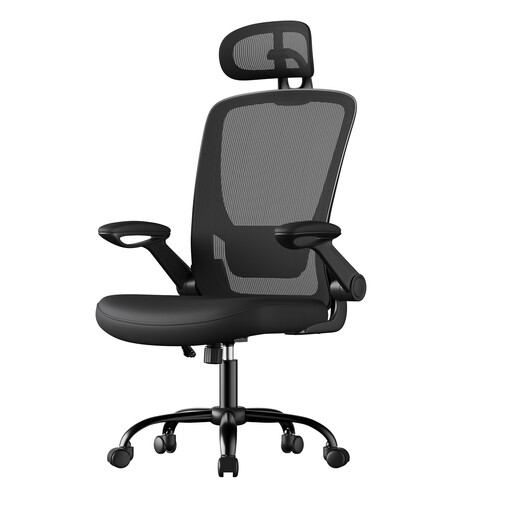
1. Ochama x SONGMICS Home Office Mesh Chair

Ochama x SONGMICS Home Office Mesh Chair

  • Why we recommend it: This model combines essential ergonomic functions with a practical design. The S-shaped contoured backrest, adjustable lumbar support, and headrest are aimed at promoting a healthy posture. A standout feature is the flip-up armrests, which allow the chair to be pushed under the desk to save space.

  • Pros:

    • Breathable mesh fabric for a comfortable seating climate.
    • Customisable lumbar and headrest for targeted support.
    • Space-saving design with flip-up armrests.
    • Rocking function (90-105°) for flexible seating positions.
  • Who it's for: This model is a functional choice for users in the home office chair segment who value fundamental ergonomic adjustments, good ventilation, and a space-saving solution.

View details for the Ochama x SONGMICS Mesh Chair
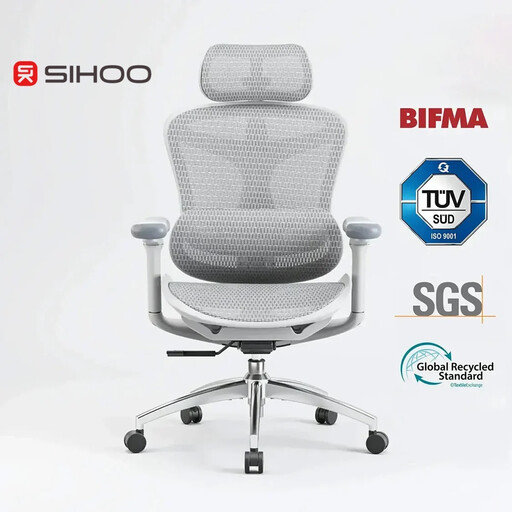
2. Sihoo Doro C300 Ergonomic Office Chair

Sihoo Doro C300 Ergonomic Office Chair

  • Why we recommend it: The Sihoo Doro C300 stands out with its advanced adaptive technologies. The dynamic lumbar support automatically adjusts to the user's movements. The 3D armrests coordinate with the backrest's recline. An intelligent weight sensor and a three-position lockable backrest (110°, 120°, 130°) enable a highly personalised setup. According to the manufacturer, the product meets standards such as EN1335 and is SGS BIFMA certified.

  • Pros:

    • Self-adjusting, dynamic lumbar support.
    • Coordinated 3D armrests for continuous arm support.
    • High maximum weight capacity of 150 kg.
    • Intelligent weight sensor for the recline mechanism.
  • Who it's for: This swivel chair is aimed at users who sit for many hours a day and seek maximum adaptive and dynamic support for their body. It is suitable for individuals willing to invest in advanced ergonomic features.

View details for the Sihoo Doro C300
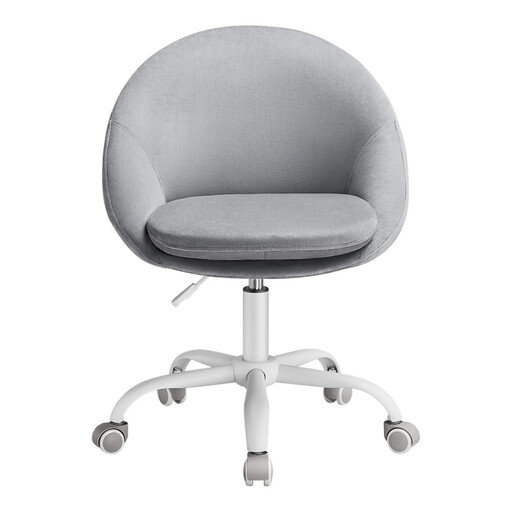
3. Ochama x SONGMICS Office Chair Makeup Chair

Ochama x SONGMICS Office Chair Makeup Chair

  • Why we recommend it: This model focuses on design and versatility. With its cotton-linen blend upholstery and clean geometric design, it integrates well into living rooms and bedrooms. The armless design makes the chair particularly compact, allowing it to be pushed completely under a desk. The thick foam padding and curved seat shape provide comfort for shorter work or study sessions.

  • Pros:

    • Stylish and modern design with fabric upholstery.
    • Compact, armless design for maximum space efficiency.
    • Versatile use as a desk chair, study chair, or vanity chair.
    • Simple and quick assembly.
  • Who it's for: Ideal for students, users with limited space, or individuals looking for a functional chair with an appealing aesthetic for flexible use cases where maximum ergonomic adjustability is not the top priority.

View details for the Ochama x SONGMICS Office Chair


Explore More Options

If the models presented here do not fully meet your specific requirements, you can find a wider range of products in our main category. There, you can compare various designs, materials, and feature sets.

Discover more models in the Home Office Furniture category.


Frequently Asked Questions (FAQ)

1. How do you correctly adjust an ergonomic office chair? Adjustments are typically made in this order:

  1. Seat Height: Adjust the height so your feet are flat on the floor and your knees form an angle of about 90 degrees.
  2. Seat Depth: Adjust the depth so there is a gap of 2-3 fingers between the back of your knees and the front edge of the seat.
  3. Backrest & Lumbar Support: Adjust the lumbar support to support the natural curve of your lower spine. The backrest should support your entire back.
  4. Armrests: Adjust the height so your forearms rest comfortably and your shoulders are relaxed.

2. What is the difference between a synchronous mechanism and a tilt mechanism? The synchronous mechanism allows the backrest and seat to tilt in a linked but differentiated manner. This promotes "dynamic sitting" as the hip angle opens when you recline. The tilt mechanism tilts the seat and backrest backwards at the same angle, which offers less dynamic movement but is sufficient for relaxed reclining.

3. How important is lumbar support in an office chair? Lumbar support is a key feature of an ergonomic office chair. It fills the inward curve of the lower back, helping to maintain the natural S-shape of the spine. This can help reduce the strain on the intervertebral discs in the lumbar region and counteract back muscle fatigue during long periods of sitting. Support that is adjustable in height and depth offers the greatest benefit.