
Lieferung heute & morgen

Qualitätsgarantie

Willkommens-Angebote freischalten: KOSTENLOSE Lieferung | Bis zu 80 % RABATT | Kostenlose 30-Tage-JoyPlus-Testphase
App herunterladen
Long hours at a desk, whether in a corporate building or a home office, place significant demands on the body. Improper seating can lead to muscle tension, fatigue, and, in the long run, postural damage. An ergonomic office chair is therefore a fundamental component of a healthy and productive workspace. It adapts to your body, promotes correct posture, and can help reduce physical strain.
This guide presents objective criteria to help you select the right chair and showcases a curated selection of models with various features to meet different needs.
Choosing the right chair depends on individual needs, the duration of daily use, and the specific tasks you perform. The following points provide a framework for your decision.
An ergonomic chair is defined by its adaptability. Look for the following adjustment options to precisely tailor the chair to your body's dimensions:
The material of the seat and backrest affects both comfort and durability.
Additionally, check the specified maximum weight capacity. A chair rated for up to 150 kg offers a more robust construction and greater stability, which is an important safety feature for many users.
Modern office chairs often offer more than just basic ergonomic functions. Depending on your usage patterns, the following extras can significantly enhance comfort:
Here is a selection of chairs that represent different ergonomic concepts and feature sets.
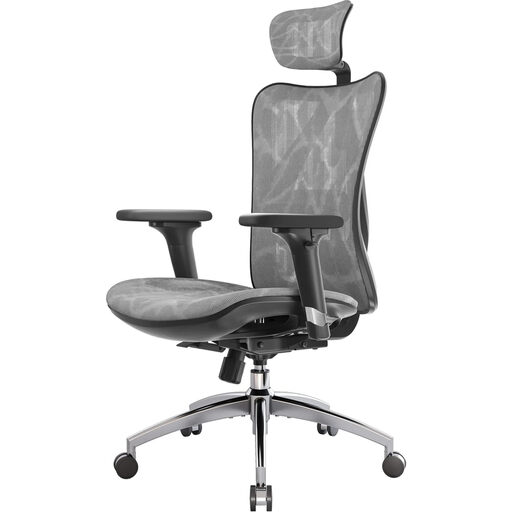
Why it stands out: The Sihoo M57S focuses on core ergonomics with comprehensive adjustment capabilities. Its full-mesh backrest design ensures excellent air circulation. With five key adjustment modes, including customisable lumbar support and 3D armrests, it can be precisely tailored to the user.
Pros:
Who it's for: This model is ideal for individuals in a home office or professional office environment who sit for many hours a day and prioritise maximum breathability and precise ergonomic customisation.
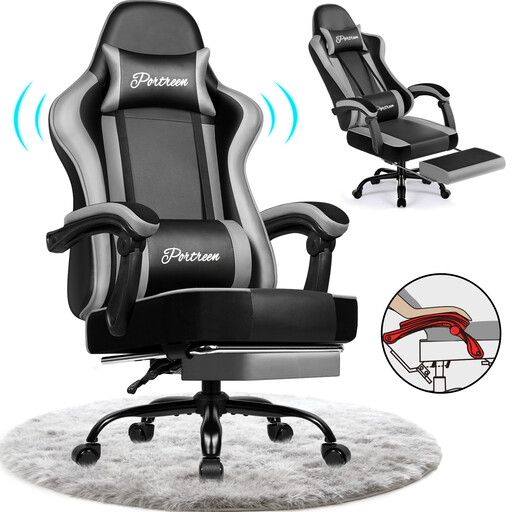
Why it stands out: The GTIMEX chair blends the aesthetics of a gaming chair with the functionality of an ergonomic office chair. Its standout feature is the integrated, telescopic footrest, which, combined with a backrest that reclines up to 170 degrees, is designed for relaxation.
Pros:
Who it's for: This chair is aimed at gamers and home office users who want a versatile piece of furniture for both focused work and relaxing breaks. Anyone who prefers a desk chair with a footrest will find this to be a suitable solution.
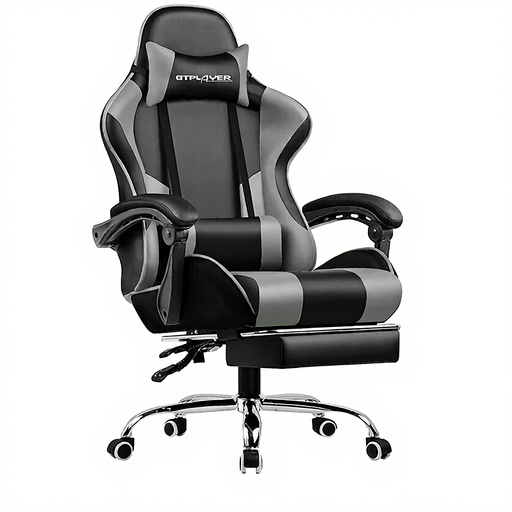
Why it stands out: This model distinguishes itself with its USB-powered massaging lumbar cushion. This feature is designed to actively alleviate fatigue in the lower back. Combined with a footrest and an adjustable backrest, the chair offers a comprehensive comfort package.
Pros:
Who it's for: Users who want to specifically target tension in the lumbar region and appreciate an active support function. It combines the features of a gaming chair with an added wellness factor.
The models presented cover specific needs. If you are looking for other designs, colours, or feature combinations, you may find the right model in our broader collection.
? Discover our full range of grey ergonomic office chairs
An office chair is considered ergonomic if it has multiple adjustment options to fit the user's individual body dimensions. This includes, at a minimum, an adjustable seat height, seat depth, backrest, and armrests. The goal is to promote a healthy and natural sitting posture and to support the body at key points, such as the lumbar spine.
Lumbar support is a very important feature. It supports the natural curve of the lower spine (lordosis) and prevents the back from collapsing into an unhealthy, rounded position. This can reduce strain on the intervertebral discs and prevent back pain caused by prolonged sitting. Height-adjustable lumbar support is ideal, as it can be precisely aligned with the user's lumbar region.
Both materials have specific advantages and disadvantages.