
Lieferung heute & morgen

Qualitätsgarantie

Willkommens-Angebote freischalten: KOSTENLOSE Lieferung | Bis zu 80 % RABATT | Kostenlose 30-Tage-JoyPlus-Testphase
App herunterladen
For many remote professionals and students, long hours spent at a desk are the new normal. A poorly designed chair can quickly lead to muscle tension and discomfort. That's why selecting the right chair isn't a luxury—it's an essential investment in your daily comfort and focus.
This article serves as your guide. We will outline the objective criteria that define a functional ergonomic office chair and present a selection of models tailored to the needs of users in modern work environments.
With so many options available, the search for the right chair can be overwhelming. Focus on a few key features to make an informed decision.
A chair should adapt to your body, not the other way around. Essential adjustment options are crucial for promoting a neutral and supportive posture.
The material affects comfort during long periods of sitting, while the design determines how well it integrates into your living space.
Based on these criteria, we have curated a selection of chairs that offer functionality and a thoughtful design for your daily work routine.
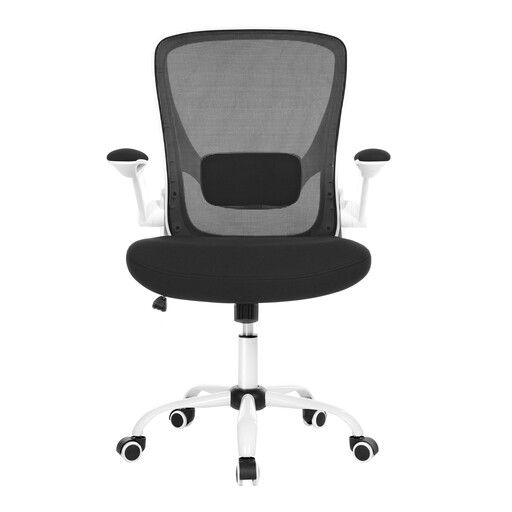
Why this model stands out: This model combines essential ergonomic features with a modern, two-tone design. The curved backrest with integrated, adjustable lumbar support is designed to relieve pressure on the spine. The flip-up armrests make it a flexible choice for various workspaces.
Benefits at a glance:
Who is this model for? Ideal for users looking for a functional swivel chair for the home office or a student's room, who value a balance of ergonomic features and space-saving design.
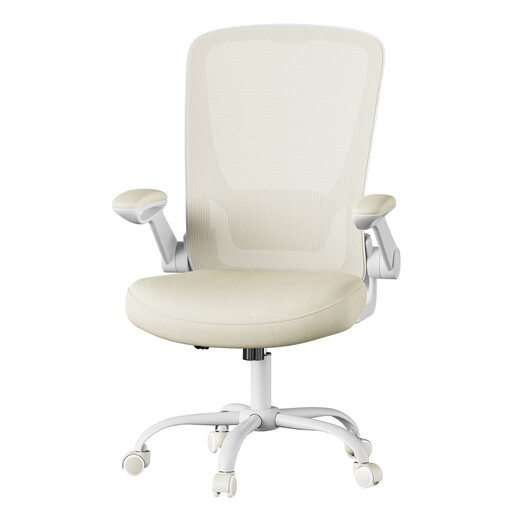
Why this model stands out: With its light, beige design, this chair blends harmoniously into bright and minimalist workspaces. It offers the same core features as the black and white model, including adjustable lumbar support and flip-up armrests, but adds a different visual accent.
Benefits at a glance:
Who is this model for? A great choice for anyone seeking an ergonomic chair for students or the home office who prefers a light, welcoming colour scheme without sacrificing key adjustment features.
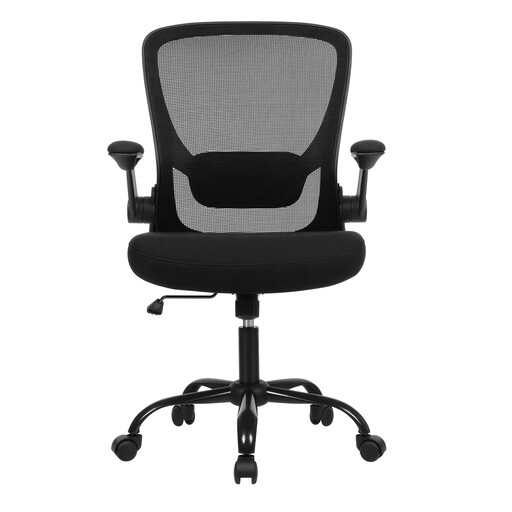
Why this model stands out: This model features a classic black fabric upholstery, offering a warmer, more residential feel than mesh. The padded lumbar support provides targeted support for the lower back. Here too, the flip-up armrests and rocking mechanism ensure flexibility and comfort.
Benefits at a glance:
Who is this model for? Suitable for users who prefer the look and feel of fabric upholstery and need a reliable, ergonomic office chair for daily use in their home office.
If the models presented here don't perfectly match what you're looking for, or if you're seeking different materials and designs, you'll find a wider selection in our category. Browse through more options to find the perfect chair for your needs.
Discover more models in black fabric.
An ergonomic office chair is defined by its adaptability. Key features include adjustable seat height, a backrest that supports the natural S-curve of the spine, lumbar support, and adjustable armrests. The goal is to enable a neutral posture that relieves stress on the joints and allows muscles to relax.
Lumbar support is a very important feature because it provides targeted support to the lower back (lumbar spine). During long periods of sitting, many people tend to slouch, which puts strain on the spinal discs. The support fills the gap between the chair's backrest and your lower back, helping you maintain a more upright, healthier posture.
Yes, flip-up armrests are highly practical in two particular scenarios. First, they allow the chair to be pushed completely under the desktop. This is ideal for small spaces like a compact home office or a student's room, as it saves space. Second, they offer flexibility: for activities that require more freedom of movement for the arms (e.g., drawing or playing a musical instrument), the armrests can simply be flipped up and out of the way.