
Lieferung heute & morgen

Qualitätsgarantie
App herunterladen
Kategorien
For many professionals and gamers, the daily time spent sitting at a desk often exceeds eight hours. This level of strain demands a seating solution that provides adequate body support and can be tailored to individual needs. An ergonomic office chair is not a luxury, but a functional tool for maintaining comfort and focus during sedentary activities. This guide analyses the key technical criteria for selecting the right model for your home office or gaming setup.
The selection of a suitable chair should be based on objective, technical features. The following parameters are central to a chair's functionality and benefits.
The mechanism determines how the seat and backrest move. A synchronous mechanism is a common industry standard. It links the recline of the backrest to the tilt of the seat, typically at a 2:1 or 3:1 ratio. This promotes dynamic sitting by opening the angle between the torso and thighs, which can improve circulation.
Essential adjustment options include:
The choice of material affects durability, breathability, and ease of maintenance.
Based on the technical criteria mentioned, we present two models that are suited for different user profiles due to their specific features.
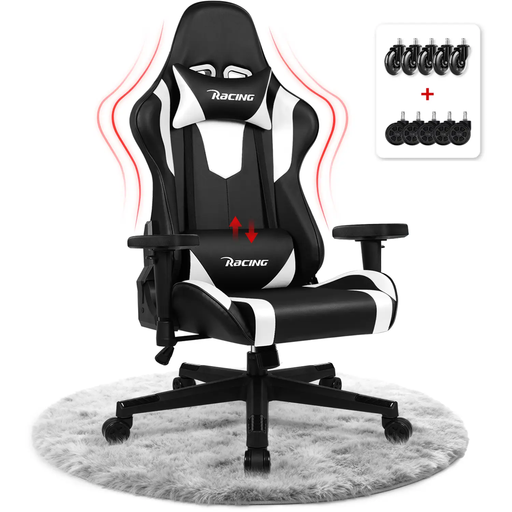
This gaming chair is tailored to the needs of esports athletes and users who engage in long, intensive sitting sessions. Its design focuses on stability and comprehensive adjustment options.
Why we recommend this product: The model combines a high weight capacity of up to 150 kg with a very wide backrest recline angle (90°–170°). The pronounced side bolsters on the shoulders and hips (135° support) offer additional stability during dynamic movements. The use of a metal frame and a German-made gas lift underscores its commitment to durability.
Pros:
Best for: This model is a functional choice for gamers and power users looking for a PC chair with high stability, extensive recline functions, and a racing-inspired seat design. It is suitable for individuals with a height of 158 cm to 190 cm.
See product details on Joybuy.de
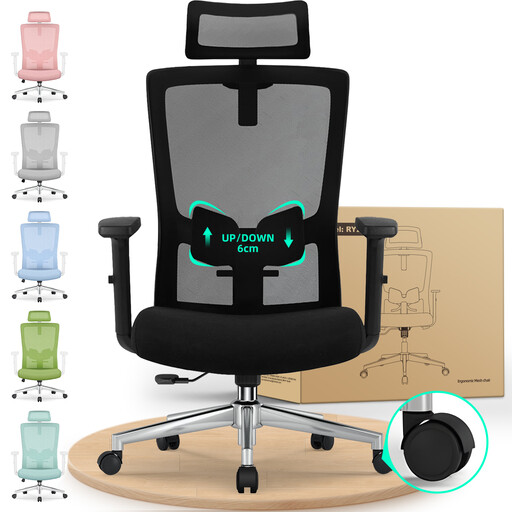
This ergonomic desk chair focuses on breathability and certified components. Its design is optimised for classic office and home office use.
Why we recommend this product: The backrest, made of high-elasticity mesh, ensures constant air circulation, which enhances comfort, especially during long workdays or in warmer environments. According to the manufacturer, the gas lift and base are BIFMA and SGS certified, indicating tested safety and load-bearing capacity. The S-shaped backrest, combined with the 6 cm adjustable lumbar support, promotes a natural posture.
Pros:
Best for: This swivel chair with lumbar support is designed for home office or corporate users who value breathability and a certified, reliable mechanism. It is designed for individuals with a height of 155 cm to 185 cm.
See product details on Joybuy.de
While a dedicated ergonomic office chair is the foundation for long hours at a desk, other applications may require different seating solutions. For flexible or temporary workspaces, for example, a director's chair can be a lightweight and portable option.
1. What makes a good ergonomic office chair? A good ergonomic office chair is characterised by a high degree of individual customisation. Key features include an adjustable seat height, adjustable seat depth, a height- and depth-adjustable lumbar support, a reclining backrest (ideally with a synchronous mechanism), and multi-dimensional adjustable armrests.
2. How do I adjust my office chair correctly? Start with the seat height, so your feet are flat on the floor and your knees form a 90-degree angle. Adjust the seat depth so there is a hand's width of space between the back of your knees and the front edge of the seat. Position the lumbar support at the level of your pelvic crest to support your lower back. Set the armrests so that your forearms rest comfortably at a 90-degree angle and your shoulders are relaxed.
3. How important is the weight capacity of an office chair? The specified maximum weight capacity is a key indicator of the chair's stability and longevity. A chair designed for a higher weight (e.g., 150 kg) typically has a more robust frame, a sturdier base, and a stronger gas lift. Choosing a model with a weight limit significantly above your own body weight can extend the chair's lifespan.