
Lieferung heute & morgen

Qualitätsgarantie

Willkommens-Angebote freischalten: KOSTENLOSE Lieferung | Bis zu 80 % RABATT | Kostenlose 30-Tage-JoyPlus-Testphase
App herunterladen
Long workdays at a desk, whether in a corporate office or a home office, often leave their mark in the form of neck tension and back pain. An ergonomic office chair is frequently presented as the solution, but the market is confusing and full of marketing promises. As your Joybuy Product Recommendation Officer, I'll help you identify the crucial features and avoid common purchasing traps, ensuring your investment pays off in the long run.
Many buyers discover after just a few months that their supposedly ergonomic chair causes more problems than it solves. This is often due to three common pitfalls:
To avoid a bad purchase, you should focus your attention on verifiable technical parameters. These three aspects are non-negotiable for daily comfort and the long-term health of your spine.
A crucial feature for finding an ergonomic chair to combat back pain is the office chair with lumbar support. However, there are significant quality differences. A simple, fixed curve in the backrest is insufficient. Look for a dynamic or adaptive lumbar support. This type adjusts to your movements, continuously supporting the natural S-curve of your lumbar spine and preventing your lower back from slumping during prolonged sitting. It should ideally be adjustable in height and depth to be perfectly tailored to your body.
A good home office desk chair must adapt to you, not the other way around. Check for the following adjustment options:
The longevity of a chair is directly dependent on the materials used and its construction. A chair for long periods of sitting should have a breathable mesh backrest that ensures good air circulation and reduces sweating. The base and frame should be made of robust steel or aluminium. Pay attention to the specified maximum weight capacity—an office chair up to 150 kg offers a more stable and durable construction. Certifications like the T?V-GS mark (Geprüfte Sicherheit - "Tested Safety") or the American BIFMA standard confirm that the chair has been tested for safety, durability, and structural stability.
Here are some recommendations tailored to different needs and work styles that meet the quality criteria mentioned above.
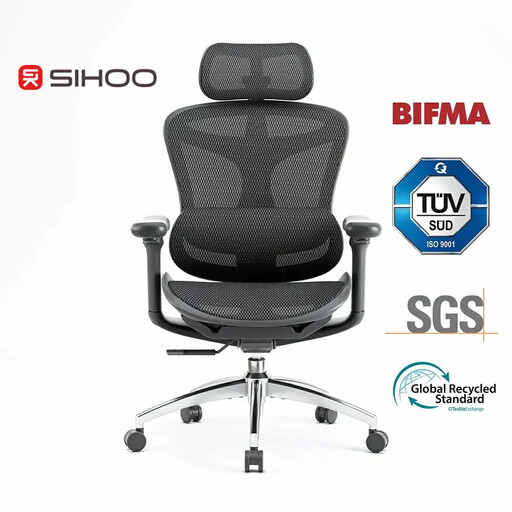
Why This Fits Their Persona: Ideal for professionals who spend over eight hours a day at their desk and need a certified, highly adaptable solution to prevent back pain.
It bypasses the "one-size-fits-all" trap with a self-adaptive lumbar support and coordinated 3D armrests. T?V and BIFMA certifications guarantee material quality and safety.
Intelligent, weight-sensitive tilt mechanism and a weight capacity of up to 150 kg. The backrest can be locked in four positions.
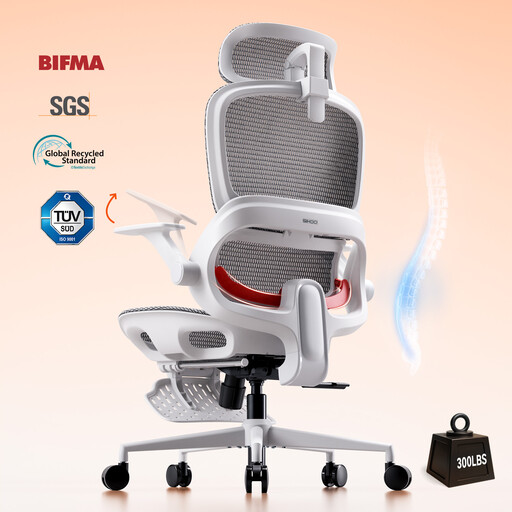
Why This Fits Their Persona: A practical choice for users who need a chair for both focused work and relaxing breaks. The footrest and flip-up armrests offer flexibility for different activities and save space when needed.
This model provides genuine ergonomic features like adaptive lumbar support and a high backrest, rather than just focusing on a flashy appearance. It's a functional and well-thought-out solution.
The combination of an integrated footrest and flip-up armrests offers a high degree of versatility for both work and relaxation.
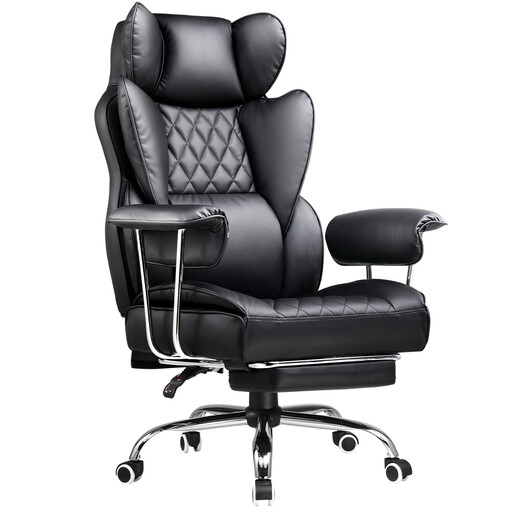
Why This Fits Their Persona: Suitable for users who use their desk space for both work and extensive gaming sessions and want a chair with a deep recline and leg rest for relaxing moments.
Although it has a gaming aesthetic, it avoids the "design over function" trap by including useful features like a high backrest, a separate lumbar pillow, and a retractable footrest for genuine comfort.
The deep recline function of the backrest, combined with the integrated footrest, allows for a nearly flat position, ideal for breaks or media consumption.
We have compiled a complete, up-to-date list of products that fully meet these strict selection criteria and German safety regulations.
Correct adjustment is crucial for comfort. Follow these steps:
The lifespan heavily depends on the material quality and usage. A chair with a robust steel frame, high-quality mechanics, and certifications like BIFMA can easily last 5 to 10 years with daily use. Cheaper models without these quality features often show significant signs of wear after just 1-2 years, such as flattened cushioning or a faulty gas lift.
Yes, a chair for long periods of sitting often benefits from a mesh back. The main argument is breathability. The mesh fabric allows for constant air circulation, which prevents overheating and sweating, especially on warm days or during long, focused work sessions. High-quality mesh fabrics also provide flexible yet firm support that adapts well to the shape of your back. However, individuals who prefer a very soft seating experience might find a model with thicker padding more comfortable.