
Lieferung heute & morgen

Qualitätsgarantie
App herunterladen
Kategorien
For many professionals and students, long hours at a desk are a daily reality. Choosing the right seating is therefore a critical factor for comfort and maintaining proper posture. An ergonomic office chair is specifically designed to support the body and adapt to the user's individual needs. This article analyses the technical features that define a high-quality desk chair and presents a selection of top models for 2026.
The selection of a suitable chair should be based on objective, technical criteria. The following features are essential for the functionality and benefits of an office chair.
A fundamental aspect is the chair's ability to adapt to the user's body dimensions.
The lumbar support is a specially shaped component in the lower part of the backrest. Its function is to support the natural S-curve of the spine in the lumbar region. An office chair with lumbar support can help reduce the strain on the intervertebral discs. Ideally, this support is adjustable in height and depth to precisely match the user's unique spinal curvature.
The chair's material affects both seating comfort and durability.
The foundation of any swivel chair is its base and casters.
Based on the technical criteria mentioned above, we have compiled a selection of office chairs for various user profiles.
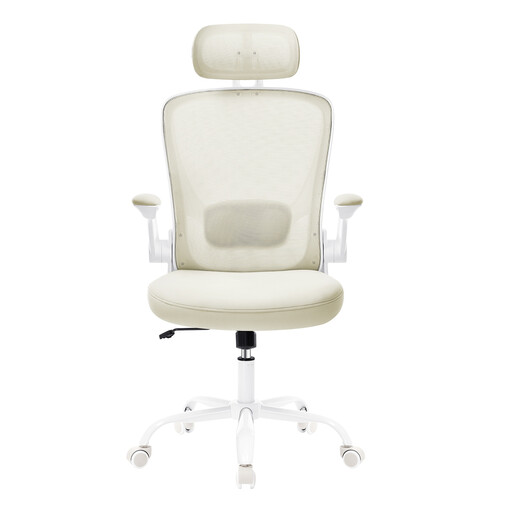
Why We Recommend It: This model combines essential ergonomic features with a space-saving design. The flip-up armrests allow the chair to be pushed completely under the desk, making it an excellent office chair for a home office with limited space. The S-shaped backrest with adjustable lumbar and head support provides a solid foundation for correct posture.
Pros:
Who It's For: Home office users looking for a functional and space-saving swivel chair with the most important ergonomic adjustments.
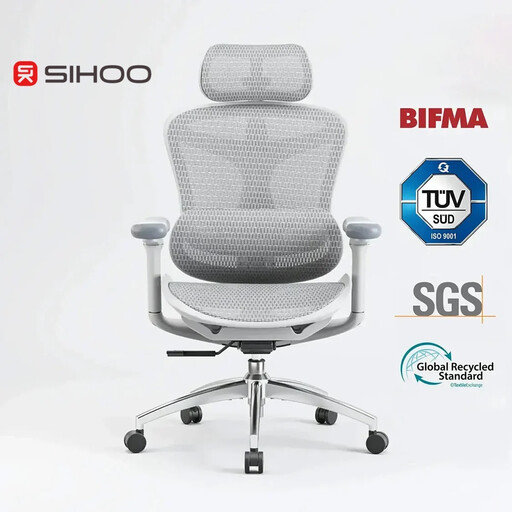
Why We Recommend It: The Sihoo Doro C300 stands out for its dynamic adjustment mechanisms. The self-adaptive lumbar support and 3D armrests, which synchronise with the backrest's recline, offer a high degree of automated, body-contouring support. The intelligent weight-sensing mechanism adjusts the backrest tension to the user.
Pros:
Who It's For: Individuals who sit for extended periods and prefer a chair with advanced, dynamic support systems that actively adapt to their movements.
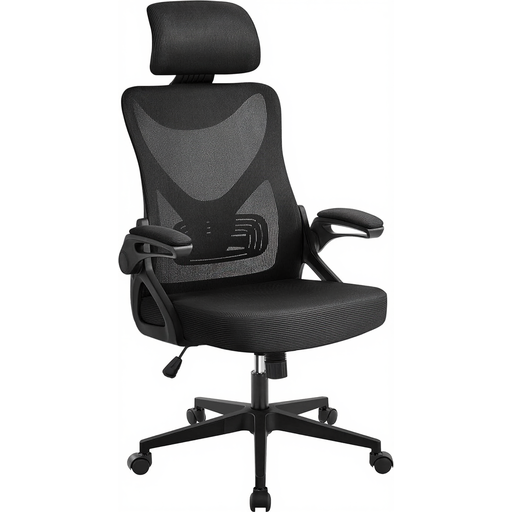
Why We Recommend It: This executive chair model combines a professional aesthetic with certified ergonomics. The high backrest, adjustable headrest, and 5 cm adjustable lumbar support allow for precise customisation. The BIFMA and EN1335 certifications confirm the construction's stability and safety for professional use.
Pros:
Who It's For: Users who want a chair with a classic executive aesthetic but do not want to compromise on modern ergonomic adjustment options and certified safety.
If you need a more flexible or space-efficient seating option for various work locations, other solutions might be worth considering. For maximum portability and a minimal footprint, options like telescopic stools promote active sitting and are easy to transport.
1. What makes an office chair ergonomic? An office chair is considered ergonomic if it offers a wide range of adjustments to adapt to the user's individual height and body shape. This includes adjustable seat height, seat depth, backrest, and armrests, as well as targeted support for the lumbar spine (lumbar support).
2. How high should an ergonomic office chair be adjusted? The seat height is correctly adjusted when your feet are flat on the floor and your upper and lower legs form an angle of about 90 to 100 degrees. The armrests should be adjusted so that your forearms rest comfortably, and your shoulders are relaxed.