
Lieferung heute & morgen

Qualitätsgarantie

Willkommens-Angebote freischalten: KOSTENLOSE Lieferung | Bis zu 80 % RABATT | Kostenlose 30-Tage-JoyPlus-Testphase
App herunterladen
Long days at a desk, whether in the office or at home, have become the norm for many. However, sitting for hours can lead to tension and discomfort if your workspace isn't properly equipped. A key element for maintaining healthy posture is the right chair. This article serves as a guide, presenting objective criteria to help you choose a suitable model. We also feature a selection of products that stand out for their specific features.
The choice of a chair should be based on individual needs and measurable features. Three main aspects are particularly relevant.
A crucial feature of an ergonomic desk chair is adjustable lumbar support. This supports the natural S-curve of the lower spine and can help reduce pressure on the intervertebral discs. Ensure that the office chair with lumbar support not only has this feature but that it is also adjustable in height and, ideally, in depth. This allows it to be precisely adapted to the contour of your back.
The material of the backrest and seat affects both comfort and durability. An office chair with mesh offers high breathability. Air can circulate, which reduces heat and moisture build-up, especially on warmer days or during long periods of sitting. Additionally, the flexible mesh fabric conforms to the body and distributes pressure evenly without creating pressure points.
An ergonomic computer chair can be tailored to your body like a custom-fit tool. Important adjustment options include:
Based on the criteria mentioned, we have compiled a selection of models that are well-suited for use as an office chair for a home office and in professional environments due to their functionality and specific features.
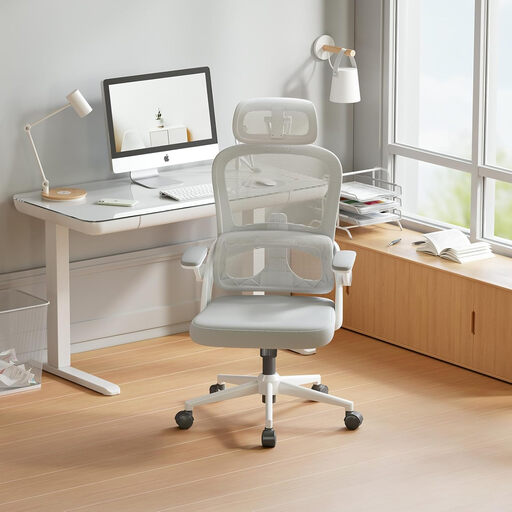
Why it stands out: This model is distinguished by its separately adjustable lumbar support and high weight capacity, making it a versatile option for various body types.
Advantages:
Who it's for: Users looking for a sturdy chair with a high weight capacity and targeted, customisable lumbar support.
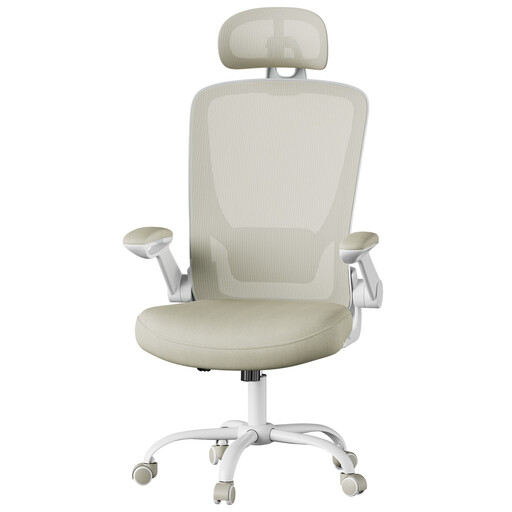
Why it stands out: This model combines ergonomic features with a bright, modern design. The flip-up armrests make it particularly practical for compact workspaces.
Advantages:
Who it's for: Users who appreciate a light aesthetic and need a space-saving solution for their home office or bedroom workspace.
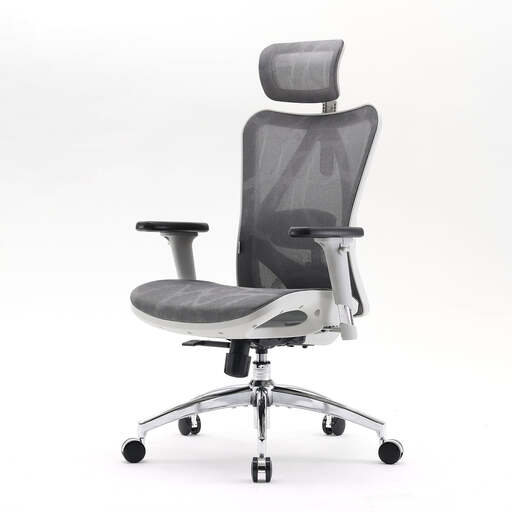
Why it stands out: The SIHOO office chair M57S sets itself apart with its robust aluminium alloy frame and extensive 3D adjustment options for the armrests.
Advantages:
Who it's for: Users seeking a chair with advanced adjustment options, durable materials, and a focus on detailed ergonomic customisation.
If a mesh office chair doesn't match your aesthetic preferences, or if you're looking for materials that blend seamlessly into a specific interior design concept, other alternatives are available. For those who love an elegant and cohesive decor, leather furniture, for example, could be an interesting option. Discover our selection of light grey leather furniture to complement your office in style.
A correct adjustment is typically done in this order:
The main difference lies in adjustability. An ergonomic office chair offers numerous adjustment options (seat height, depth, armrests, lumbar support, tilt angle) to adapt the chair to the user's individual body measurements and needs. A standard office chair often only has basic functions like height adjustment.
Even the best ergonomic chair is no substitute for movement. It is recommended to change your sitting position regularly and to stand up, stretch, and walk a few steps at least once an hour. Dynamic sitting, where the position is frequently changed, is more beneficial for the body than remaining in a static posture.