
Lieferung heute & morgen

Qualitätsgarantie

Willkommens-Angebote freischalten: KOSTENLOSE Lieferung | Bis zu 80 % RABATT | Kostenlose 30-Tage-JoyPlus-Testphase
App herunterladen
An ergonomic office chair should provide practical support during your working day at your desk. However, many buyers focus first on the design or an eye-catching list of features. This can mean overlooking important details such as seat height, lumbar support, weight capacity and the actual range of adjustment. Particularly with an office chair for long periods of sitting, making the wrong choice can lead to unnecessary returns or an early replacement.
Terms such as “ergonomic”, “dynamic” or “multifunctional” say little on their own about how practical a chair is in everyday use. What matters is whether the features can be adjusted to suit your height and sitting position. For example, an adjustable-height office chair should offer a sufficiently wide range of seat heights. If it is set incorrectly, your feet may dangle or your knees may be too high.
You should therefore look for specific information about:
An office chair with lumbar support is not automatically suitable for everyone. Fixed or minimally adjustable support may sit in the wrong place. Clear information about the height or depth range is more useful. With self-adjusting systems, you should also check how the mechanism works and whether the adjustment is linked to your body weight.
The product description should clearly distinguish between fixed padding, manually adjustable lumbar support and a dynamic design.
An office chair with a headrest can provide additional support when reclining. However, it is only useful for focused work if its height and angle suit your sitting position. A footrest is mainly suitable for breaks or reclined positions. It does not replace the correct seat height and should not be used as a step.
When seated, your feet should ideally rest fully on the floor. There should be a little space between the front edge of the seat and the backs of your knees. Seat-depth adjustment is therefore particularly useful if several people will use the chair or if your height differs significantly from average.
Some product specifications state specific height ranges. For example, the GTIMEX office chair is described as suitable for people between 145 and 185 cm tall. Such information provides guidance, but it does not replace comparing the chair with your own measurements.
An office chair with armrests should allow you to rest your forearms comfortably. Height-adjustable armrests make it easier to adapt your position at the desk. Depending on the model, 3D or 4D armrests also allow movement forwards, backwards or sideways.
The backrest should offer more than just a reclining function. The number of locking positions, the available angle range and, where applicable, height adjustment are all relevant. For example, a chair with a backrest recline from 105° to 140° is designed to accommodate more frequent changes between an upright working position and taking a break.
A mesh office chair can provide a breathable backrest, making it an interesting option for warm rooms or long periods of sitting. The seat and backrest may be made from different materials. PU or faux leather can usually be wiped clean easily, while mesh requires different care.
You should also check the stated maximum weight capacity. Several of the models featured here specify 150 kg. This is a technical specification provided by the manufacturer and should not be exceeded. References to BIFMA, SGS, EN 1335, TÜV or REACH should always be checked in the specific product listing and within the relevant scope. Certification of individual components does not automatically mean that every usage situation is covered.
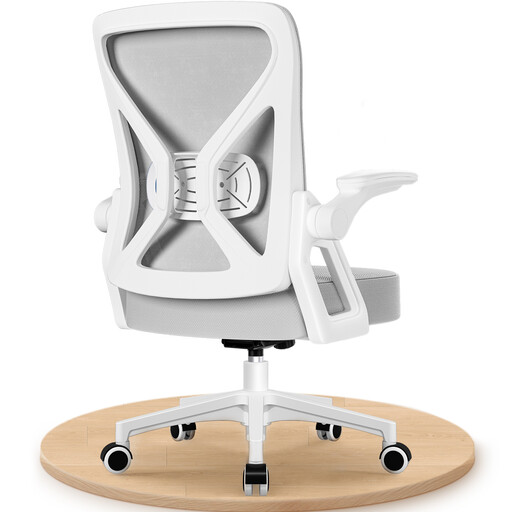
Why this product suits the profile: The adjustable lumbar support, seat height of 43 to 53 cm and backrest with a 125° reclining function cover key requirements for working from home and studying.
The product specifications state specific adjustment ranges and a weight capacity of up to 150 kg, rather than relying solely on vague comfort claims.
Folding armrests, breathable mesh and 360° castors are listed as specific features.
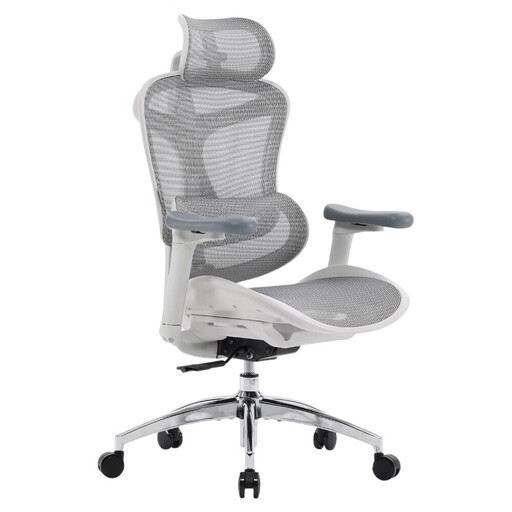
Why this product suits the profile: This model combines a breathable mesh backrest with self-adjusting lumbar support, 3D armrests and four backrest positions.
The specifications list specific reclining angles of 110°, 120° and 130°, as well as a vertical backrest adjustment range of 6 cm.
The product is specified as supporting up to 150 kg, with a 3-year warranty and REACH, EN1335, TÜV and SGS-BIFMA references.
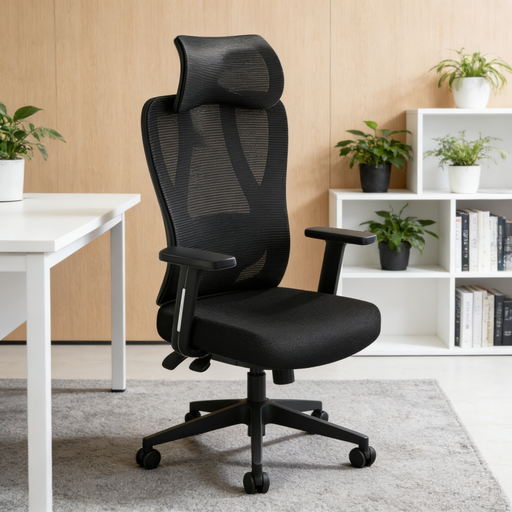
Why this product suits the profile: This chair is designed for alternating between work and gaming. It offers a recline range of 105° to 140° and an adjustable headrest.
The product description clearly states the technical adjustment options: 4D lumbar support, 40 mm of backrest height adjustment and a 10.5 cm seat cushion height.
Two-layer mesh, 4D lumbar support and the stated recline range support flexible use.
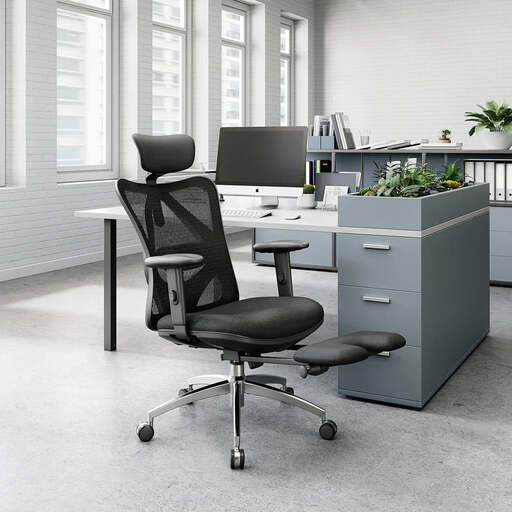
Why this product suits the profile: This office chair combines a high mesh backrest with an adjustable headrest, lumbar support, armrests and an extendable footrest.
The footrest is described as a separate relaxation feature and is not presented as a substitute for the correct working height or as a step.
The specifications state a weight capacity of up to 150 kg, five adjustment options and a breathable mesh backrest.
We have put together a complete, regularly updated list of products that fully meet these strict selection criteria and the safety regulations applicable in the EU.
After assembly, adjust your ergonomic desk chair in the following order:
Even with a well-adjustable chair, it is still a good idea to stand up regularly and change your sitting position. If you already have any discomfort, you should seek medical advice about your individual situation; an office chair is not a substitute for professional advice or treatment.
The correct height is not based on a fixed standard value, but on your sitting position. Your feet should rest fully on the floor, while your thighs and lower legs form an approximately right angle. It is also important that the desk height is suitable for your sitting position.
The lifespan depends, among other things, on the materials, daily use, load, assembly and care. Regularly check the screws, castors, armrests and gas lift. A stated warranty period, such as three years for certain models, describes the applicable warranty coverage and does not automatically guarantee a specific service life.
A gaming office chair can be suitable for working from home if the seat height, backrest, armrests and lumbar support match your height. PU leather is easy to clean, while a mesh office chair offers different material properties in warm rooms. You should therefore compare the technical specifications, not just the appearance.