
Lieferung heute & morgen

Qualitätsgarantie

Willkommens-Angebote freischalten: KOSTENLOSE Lieferung | Bis zu 80 % RABATT | Kostenlose 30-Tage-JoyPlus-Testphase
App herunterladen
An ergonomic office chair is designed to make long working days more comfortable and can be adjusted to suit your height, desk and sitting habits. In practice, however, the name alone is not enough. Home workers, office employees and self-employed professionals should check specific dimensions, adjustment options and load capacity before buying.
An office swivel chair with a headrest, armrests and lumbar support may appear well equipped at first glance. What matters, however, is whether these elements can actually be adjusted to suit you. A lumbar support that can only be adjusted in height, but not in depth, will not suit every body shape. Fixed armrests can also unnecessarily increase the distance between you and your desk.
A height-adjustable office chair should be adjustable so that your feet are completely flat on the floor and your knees form roughly a right angle. If the seat pan is too long, the front edge of the chair can press against the backs of your knees. If it is too short, your thighs will not have enough support. That is why seat height, seat width and – where available – seat-depth adjustment are important buying criteria.
The stated maximum load capacity is not a minor detail. It generally refers to the user’s body weight under the intended conditions of use. If you use the chair for many hours every day or have a larger build, you should leave a sufficient margin below the load limit. The castors, gas lift and base must also be securely fitted and checked regularly.
An ergonomic desk chair should offer at least an adjustable seat height. Depending on how you plan to use it, additional adjustments may be worthwhile:
An office chair with mesh fabric has a breathable backrest. This can feel comfortable during long periods of sitting and in warm rooms. Fabric or upholstered covers often feel softer, but require different cleaning methods and may retain more heat. Pay attention to the specific material information rather than general terms such as “Premium” or “Comfort”.
Compare the product dimensions with the space available beneath your desk. The key measurements are:
For businesses, a clear assembly guide, accessible spare-parts provision and regular checks of the screw connections may also be important. For technical standards such as DIN EN 1335, buyers should check whether the supplier states specific conformity or certification for the particular model. General advertising claims are not a substitute for verifiable product evidence.
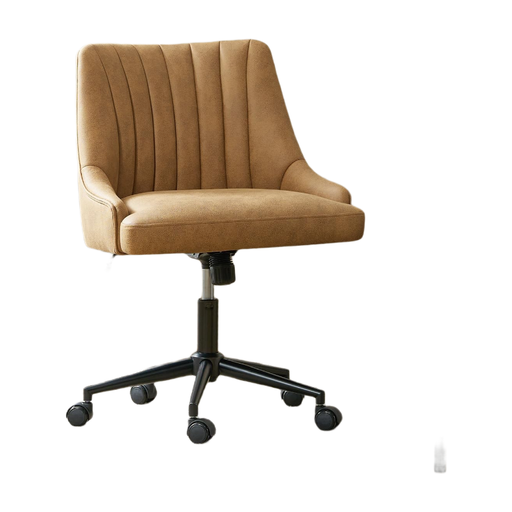
Why this product suits this profile: This desk chair without armrests takes up less space and is easier to slide beneath compact desks. The seat height is adjustable, the seat is padded and the chair swivels through 360 degrees.
The design does away with fixed armrests, which can get in the way with small desks. The maximum load capacity of 113 kg is clearly stated.
Adjustable seat height, 360-degree swivel function, padded seat and metal frame.
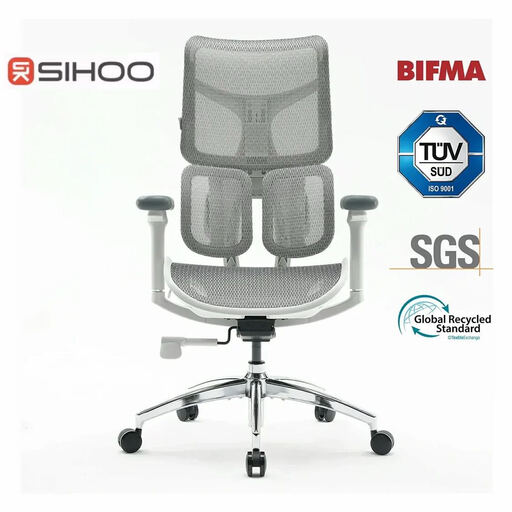
Why this product suits this profile: This model is aimed at users looking for a wide range of adjustments for the backrest, seat depth and armrests. The manufacturer states a suitable height range of 150 to 190 cm.
The product information specifies a 5 cm adjustable seat depth, an independently adjustable backrest and 4D armrests, rather than relying solely on vague ergonomic claims.
Mesh backrest, 5 cm seat-depth adjustment and 4D armrests. The manufacturer lists BIFMA and SGS in its information about the materials used.
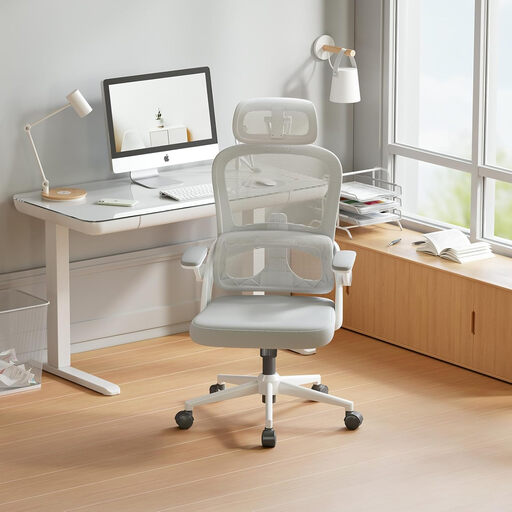
Why this product suits this profile: For long working days and frequent changes of sitting position, this model offers a high backrest, adjustable lumbar support and folding armrests. The product information states a load capacity of up to 136 kg.
According to the product description, the lumbar support can be adjusted vertically by 6 cm. The armrests can be moved forwards, backwards and sideways, and folded beneath the desk.
Mesh backrest, adjustable seat height, headrest, lumbar support and 3D armrests. The stated maximum load capacity is 136 kg.
We have put together a complete, regularly updated list of products that fully meet these strict selection criteria and the safety regulations applicable in the EU.
After assembly, the chair should not automatically be considered fully set up. First adjust the seat height so that both feet are firmly supported on the floor. There should be a little clearance between the front edge of the seat and the backs of your knees. Then position the backrest so that your back remains supported without forcing you into a rigid posture.
The armrests should not push your shoulders upwards. When working at a keyboard and mouse, your forearms should rest loosely while your shoulders remain relaxed. An ergonomic office chair is no substitute for taking movement breaks. Change your sitting position regularly and stand up between longer periods of work.
Your feet should be completely flat on the floor. Your knees should form roughly a right angle. If your desk is very high, a footrest may be more suitable than raising the chair so far that your feet no longer have secure contact with the floor.
Its lifespan depends on the load, materials, mechanism and care. With daily use, the castors, gas lift, screws and armrests should be checked regularly. A specific service life can only be assessed based on the manufacturer’s information and how the chair is actually used.
The price depends mainly on the number and quality of adjustment options, the padding, mesh material, base and load capacity. Do not compare only the purchase price. Also consider the assembly effort, warranty terms and the features you genuinely need for your workspace.